Siberian Spruce
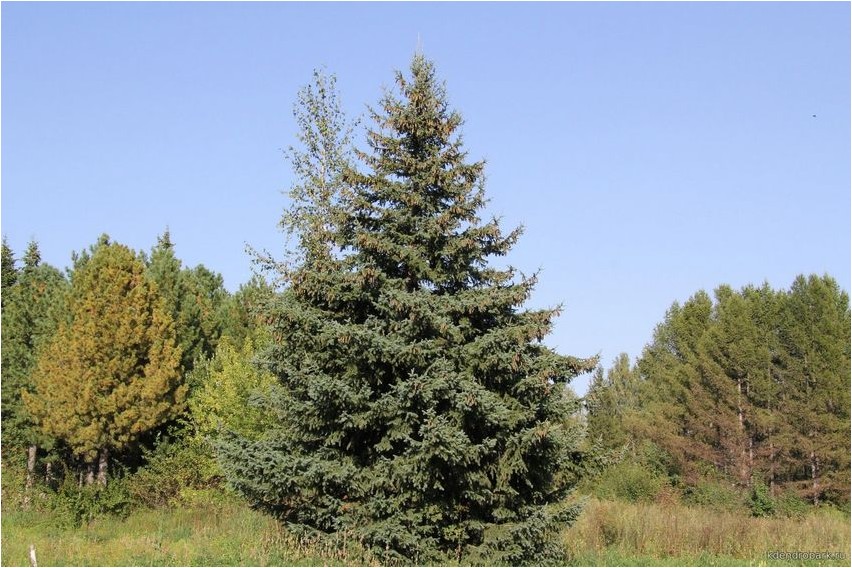
Siberian spruce is a member of the pine family. Its Latin name is Picea obovata L.
The Latin name of the Siberian spruce family itself is Pinaceae Lindl.
Description of Siberian Spruce
Siberian spruce is a well-known evergreen. It blooms from May to early June. The seeds ripen in late August, but they don’t fall from the cones until the following spring.
Description of the Medicinal Properties of Siberian Spruce
Siberian spruce has valuable medicinal properties. For medicinal purposes, it is recommended to use the young tips of leafy branches, as well as immature seed cones, buds, and the resinous sap that will leak from damaged areas of the tree. The buds should be collected in early spring: they are cut at the base and then dried in the shade. It is recommended to harvest unripe cones in August-September.
The needles of this plant contain large amounts of flavonoids, ascorbic acid, resins, tannins, phytoncides, and minerals. Anthocyanins have been found in the green cones of the Siberian spruce, and lignan compounds are released from the wood, while the bark contains tannins.
The needles have diuretic, diaphoretic, anti-inflammatory, choleretic, analgesic, and antiscorbutic properties. They can also regulate metabolism and improve circulation, and they also have bactericidal properties.

An infusion of pine needles is recommended for rheumatism. A decoction of pine cones, buds, and young branches should be used for respiratory inflammation and scurvy. A resin-based ointment is used to treat furunculosis. Spruce branches are used in baths for radiculitis. For abscesses, abrasions, and ulcers, a special mixture should be used, made by mixing resin, wax, honey, and sunflower oil in equal proportions.
To combat furunculosis, use the following ointment: it is prepared from equal parts of yellow wax, lard, and resin. For chronic bronchitis, inhalations of wax and resin vapors are performed. To prevent scurvy and strengthen the body’s resistance to various adverse environmental conditions, prepare a vitamin drink based on Siberian spruce. This drink should also be consumed in winter, as the needles contain much more ascorbic acid at this time than in summer.
An infusion prepared from spruce buds is considered a very effective remedy for the treatment of inflammatory diseases of the respiratory system, including catarrh, tonsillitis, rhinitis, and bronchial asthma. It is noteworthy that this combination preparation, made from spruce, pine, and fir needles, has a sedative effect and can enhance performance. In folk medicine, Siberian spruce needles are used to treat long-healing wounds and burns, and the tree’s sap is used to treat diarrhea, while the wood ash can be used as an antidote. It’s worth noting that Siberian spruce resin produces much larger quantities of turpentine than pine resin.
To prepare the infusion, take the crushed cones and pour boiling water over them, then boil for half an hour and let steep for another fifteen minutes. This infusion is used for inhalation and gargling for laryngitis, pharyngitis, sore throat, chronic tonsillitis, sinusitis, and catarrh of the upper respiratory tract.
Siberian spruce layering