Surepka
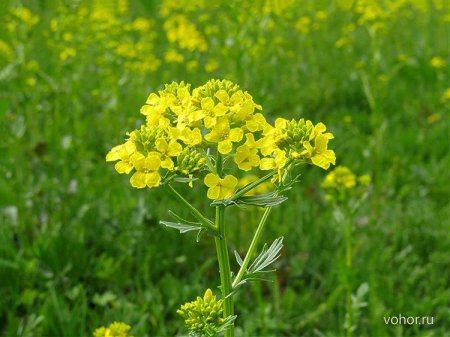
This plant captivates the respect of not some flower growers, because. It is more impressively associated with a field plant that only grows in the area as a weed. However, garden patterns of colza fit beautifully into the flower garden, adding grace. B
Crescent or barbary is grown as a biennial plant, but there are also perennial intentions.
The culture is widespread in the low-growing category, with a height of up to 15 cm. Flowering lasts only a year. The flowers are yellow, collected in inflorescences, and have a fragrant aroma. Growing in containers is acceptable. Barbarea is cared for by selected honey plants, used for consumption as food, and for no reason in folk medicine.
Care and cultivation of cress
Crescent is not difficult to grow; it is suitable for growing in any soil, but it is preferable to grow only in useful sandy loam soils. The area for cultivation is given sunny conditions. The first period after planting requires weeding.
They water tolerably, but correctly. In hot weather, watering is increased. Mineral fertilizers are paid during the period of active growth and flowering, 1-2 times per month. The colza does not require winter shelter.
Reproduction

Crepes are propagated by grains, which are sown simultaneously in the open ground, in the spring (if the earth warms up) or in boxes in April. A gentle substrate is used with the addition of sand. The grains are placed according to the surface of the sweaty substrate and sprinkled on top with a sharp discharge of sand. Crescent grains germinate at a temperature of about 22 degrees, about glass. After the emergence of seedlings, the containers with grains are placed in a bright area, where the air temperature is maintained at around 18 degrees. During the same period, glass was decorated. Seedlings are planted in open ground in May. subsequently the disappearance of frost. The seedlings are planted at a distance of about 20 cm from a friend through a benefactor.
When sowing grains simultaneously in public land, stratification is required at a temperature of about 5-7 degrees per month. The grains are buried to 1. 5 cm. After the emergence of seedlings, the need for planting is thinned out. We reach sowing around winter, in September or early October.