Hollyfolia aculifolia
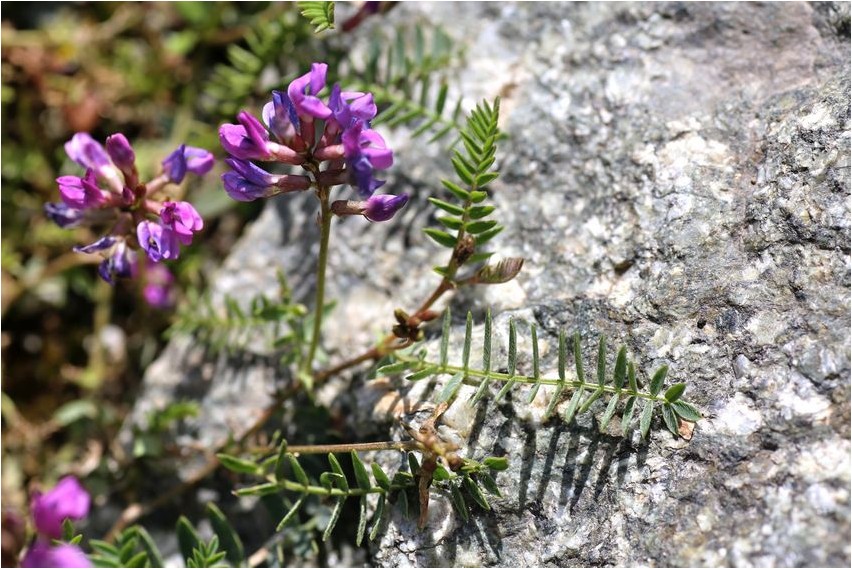
The holly leaves are part of the plant family called legumes; in Latin the name of this plant will be as follows: Oxytropis oxiphylla (Pall.) DC.
As for the name of the Aquifolia family itself, in Latin it will be: Fabaceae Lindl. (Leguminosae Juss.).
Description of the aquifolia
Hollywort is a stemless plant endowed with a peduncle, the height of which will fluctuate between ten and twenty centimeters. The thickness of the rhizome of this plant will be about five millimeters; at the top, such a rhizome will be endowed with a few shortened shoots. The length of the leaves of the holly leaves will be about eight to twelve centimeters, the leaves themselves will be oblong-lanceolate, their length is one to two centimeters, and the width is about two to five millimeters. Such leaves of this plant will be pubescent, they are collected in whorls of four pieces, in total there will be about four to eleven whorls. The flower arrows of the aquifolia aquifolia will be almost straight, and their length will be slightly longer than the leaves. This plant has only five to fifteen flowers and they are located in a dense head; the corolla, in turn, will be painted in whitish-purple tones. The length of the flag of this plant is about fifteen to seventeen millimeters, the length of the wings is twelve to seventeen millimeters, and the length of the boat is eleven millimeters. This boat of the holly leaves is endowed with a rather short spout, the length of which is equal to one millimeter. The beans will be swollen and approximately twelve millimeters long.
Flowering of the holly leaves occurs in the month of July. Under natural conditions, this plant is found in the Daursky and Angara-Sayan regions of Eastern Siberia. For growth, this plant prefers sandy, saline areas, steppes, dry meadows and rocky and gravelly slopes.
Description of the medicinal properties of the aquifolia
Hollywort is endowed with very valuable healing properties, and it is recommended to use the flowers and leaves of this plant for medicinal purposes. The presence of such valuable healing properties is recommended to be explained by the content of coumarins, essential oil, alkaloids and the following flavonoids in this plant: rhamnesin, rhamnetin and their glycosides.
It is noteworthy that experimental studies have shown that the coumarins found in the roots of this plant possess antitumor activity.

In Tibetan medicine, remedies based on this plant are quite widespread. In fact, this plant is used in a similar way to oxytrope yarrow and is also included in various medicinal mixtures intended for the treatment of cardiovascular diseases. Chinese medicine recommends the use of oxytrope yarrow for ascites.
For bleeding, anthrax, and erysipelas, the following remedy based on this plant is recommended: to prepare this remedy, take ten grams of crushed dried herb per two hundred milliliters of water. Boil the resulting mixture for three minutes, let it steep for two hours, and then strain thoroughly. Take half a glass or one-third of a glass three times daily. When used correctly, this remedy is characterized by a very high degree of effectiveness. Oxytropis acutifolia





