Arnica
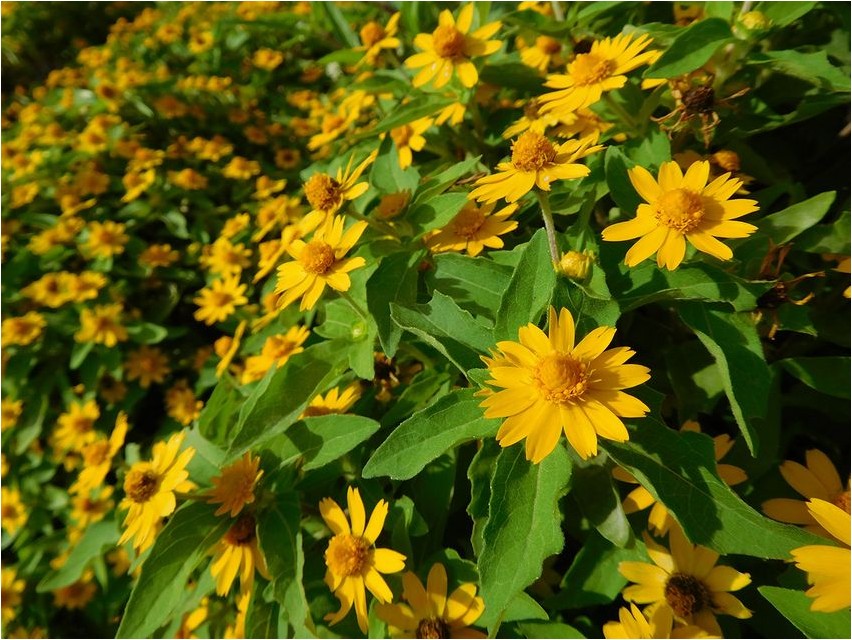
Arnica (lat. Arnica) is a herbaceous perennial that is a member of the Asteraceae family. Arnica is often called hare cabbage, throat grass, as well as mountain leotard or mutton grass, cap grass or beard grass.
Description
Arnica is a herbaceous perennial with straight and slightly pubescent stems. Its height ranges from fifty to sixty centimeters, and the oblong basal leaves are collected in small rosettes and are ovoid in shape. Yellow or orange arnica flowers form fancy baskets. You can admire the flowering of this plant throughout June and July. And arnica fruits look like pointed cylindrical achenes.
Where does it grow
Arnica can be found in the Carpathian regions of Western Ukraine, in Lithuania, as well as in Latvia, Canada and Russia. This plant is also found in North America, Belarus and a number of European countries. Most often it grows in clearings located in coniferous forests, on picturesque mountain slopes and in green meadows. Arnica is also found a little less frequently on the plains.
Application
Arnica is an excellent helper for stopping bleeding and for treating various cardiovascular diseases. And when used externally, it can significantly speed up the difficult process of resorption of hematomas.
In folk medicine, a tincture of flowers is used mainly. It is endowed with a powerful sedative effect and a pronounced anticonvulsant effect, in addition, it can be used to regulate the tone of the central nervous system. In small doses, arnica flowers help activate brain activity, but large doses of arnica tend to suppress it. A decoction prepared from flowers is an excellent anthelmintic and is successfully used to treat such an unpleasant condition as enterobiasis.
The aroma of arnica helps calm the nervous system and quickly normalize sleep. And sometimes it also acts as incense – it is used to fumigate rooms before meditation.

Arnica is one of the plants used to make the very first homeopathic preparations, although in this case mainly its underground parts were used. And the main purpose of such drugs was the treatment of dislocations, bruises, all types of sprains and birth injuries. They will also serve well in cases of retinal detachment or hemorrhages in it, as well as in cases of emphysema, excessive stomach sluggishness, coughing with or without blood, dry throat, sleep disturbances or sore throat. In addition, homeopathic preparations made from this plant can reduce the duration of the recovery period after various operations and greatly contribute to significant relief of the condition. These medications also help lower blood pressure.
As for alcoholic tinctures of arnica, it will not be difficult to stop bleeding with their help.
Arnica flowers and leaves are collected in June and July, and it is better to go for the roots in the fall. Raw materials are collected only in dry weather, after the dew has disappeared, picking off all the necessary parts of the plants by hand. And arnica should be dried very quickly (the most optimal temperature for drying will be from fifty-five to sixty degrees).
It is noteworthy that arnica continues to bloom even during the drying period, that is, if the raw materials are collected late, the flowers from the baskets will begin to crumble. Store dried raw materials in cool and dark, without the slightest access to moisture.
Contraindications
Arnica is contraindicated in cases of increased blood clotting, pregnancy and individual intolerance.





