Edible honeysuckle
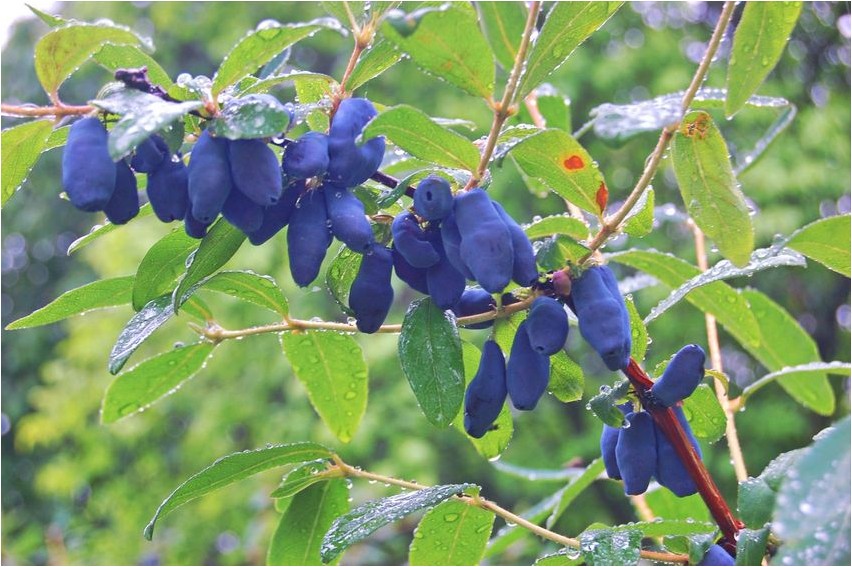
Edible honeysuckle is one of the plants of the family called honeysuckle, in Latin the name of this plant will be as follows: Lonicera edulis Turcz. ex Freyn.
As for the name of the edible honeysuckle family itself, in Latin it will be: Caprifoliaceae Juss.
Description of edible honeysuckle
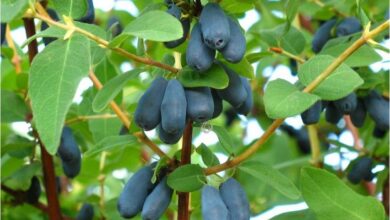
Edible honeysuckle is a low perennial shrub whose height will range between sixty and one hundred centimeters. The leaves are on fairly short petioles, the length of which is two to three millimeters. Such leaves will be oblong and linear-oblong, the length of the leaves will be about one and a half to five and a half centimeters, and the width will not exceed two centimeters. Such leaves of edible honeysuckle will be pubescent with hairs. The underside of the leaf is paler, but the flowers are numerous; they will bloom when the leaves are not fully developed. The length of the corolla of this plant is eight to thirteen millimeters, it will be funnel-shaped, completely pubescent on the outside, and the corolla is also endowed with a short tube. The length of the edible honeysuckle fruit is nine to twelve millimeters, the inflorescence is very elongated and is endowed with a rather pleasant taste.
Edible honeysuckle blooms during the period from the second half of May to the month of June. Fruiting occurs at the end of June-July. It is noteworthy that the taste of the fruits of this plant is very reminiscent of blueberries: such fruits can be eaten and prepared in the form of jam. Under natural conditions, edible honeysuckle can be found in the Far East, as well as in the following regions of Eastern Siberia: in the south of the Leno-Kolyma region, in the Daursky and Angara-Sayan regions. For growth, the plant prefers river valleys, undergrowth of floodplain forests, shrub tundra, as well as on coastal sands and the outskirts of swamps. The plant can grow either singly or in small groups. Edible honeysuckle is an ornamental plant.
Description of the medicinal properties of edible honeysuckle
Edible honeysuckle is endowed with very valuable healing properties, and it is recommended to use the berries, leaves, flowers and stems of this plant for medicinal purposes.
The presence of such valuable healing properties is explained by the content of starch in the buds and leaves, and the fruits of this plant contain carbohydrates, carbolic compounds, esters, fatty acids, betaine, alcohols, folic acid, catechins, tannins, vitamin C, leukoanthocyanins and anthocyanins.

As for traditional medicine, a decoction of the branches is used for edema of any origin and for ascites, and also as a diuretic. A decoction of edible honeysuckle leaves should be used externally as an antiseptic for sore throats, as well as for rinsing the mouth. The crushed leaves of this plant can be consumed topically as a wound healing agent.
The fruits of edible honeysuckle can be used for bradycardia, diabetes mellitus, hypertension, obesity and lack of vitamin C. The plant can also be used as a diuretic, laxative, antipyretic and sap agent, as well as for various diseases of the stomach and liver. The dried fruits of edible honeysuckle are a source of antibiotics, which is used by residents of the north. The juice of this plant is indicated for use in dermatoses. As for betaine, it was experimentally proven that this substance lowers cholesterol in the blood. The fruits can be used fresh or processed for food: as jelly, preserves, fillings and juices.