Cnidium dahurian
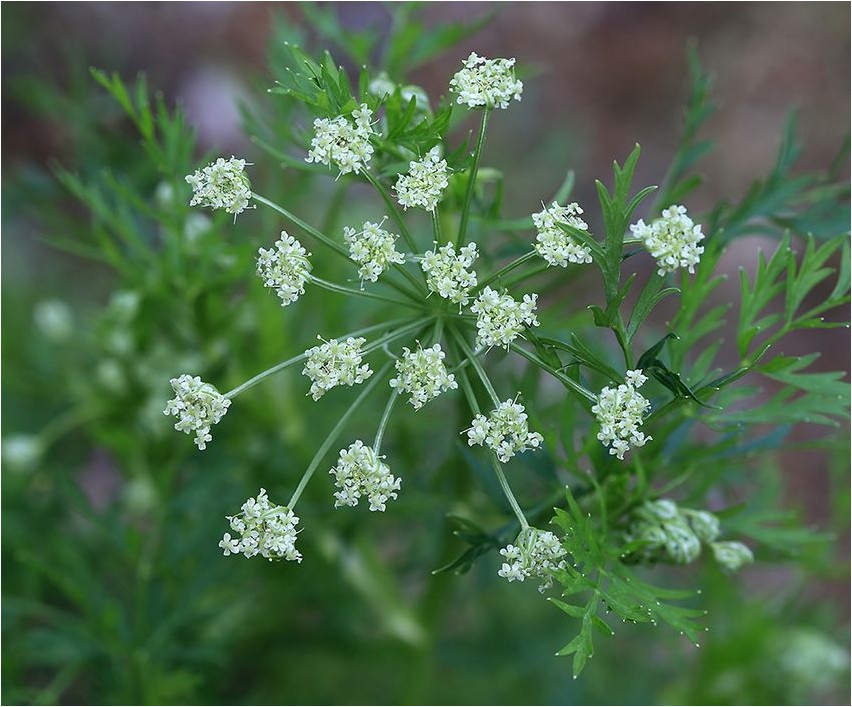
Cnidium dahurian is one of the plants of the family called Umbellaceae; in Latin the name of this plant will be as follows: Cnidium dahuricum (Jacq.) Turcz. ex Fisch. et C. A. May.
As for the name of the Cnidium Dahurian family itself, in Latin it will be: Apiaceae Lindl.
Description of Cnidium Dahurianus
Cnidium Daurian is a perennial herbaceous plant, the height of which will fluctuate in a fairly significant range between thirty and two hundred centimeters. The root of this plant is vertical, and at the top its thickness does not exceed one centimeter. The stem of Cnidium Dahurianus is straight and solitary, it will be slightly branched at the top and will also be finely ribbed, and dense inside. The leaves of this plant will be double or triple pinnately dissected. There are only a few umbrellas, the central umbrella is on a relatively long leg, and the two upper side ones will exceed the umbrella itself or may be equal to it. The diameter of the central umbrella will be about four to eight centimeters, while the diameter of the umbrellas will be about one centimeter. The involucre will consist of approximately five to seven obovate and almost entirely membranous bare leaves. The fruit of this plant is elliptical in shape, its length is three to five millimeters and its width is about three millimeters.
Cnidium dahurianum blooms from July to August.
Description of the medicinal properties of Cnidium Dahurian
Cnidium Dahurianum is endowed with very valuable healing properties, and it is recommended to use the fruits and roots of this plant for medicinal purposes. The presence of such valuable healing properties should be explained by the content of coumarins, saponins, polyacetylene compounds and terpenoids, which are derivatives of ferulol, in this plant. The herb of Cnidium Daurica contains essential oil, coumarins scopoletin and umbelliferone, as well as the following flavonoids: quercetin and hyperoside. The fruits will contain essential oil and the following coumarins: scopoletin and umbelliferone.
The fruits and roots of this plant will be included in the content of cardiac remedies, which are recommended for use in vascular atherosclerosis, and also as an antidote for various poisonings. The roots of Cnidium Dahurianum are recommended for use for enterocolitis and gastroenteritis, and also as a very effective expectorant.

For gastroenteritis and as an expectorant, it is recommended to use the following remedy based on this plant: to prepare such a remedy, you will need to take six grams of crushed roots of this plant per three hundred milliliters of water. It is recommended to boil the resulting mixture over fairly low heat for about ten minutes, then leave this mixture to infuse for two hours, after which this mixture is filtered very carefully. Take the resulting product based on Cnidium Dahurianum, one third of a glass three times a day.
And the following remedy based on Cnidium Dahurianum is considered effective against atherosclerosis: to prepare such a remedy you will need to take one teaspoon of the fruits of this plant per glass of water. The resulting mixture should be boiled over low heat for about five to six minutes, then this mixture is left to infuse for one hour, after which this mixture based on Cnidium daruscus is very carefully filtered. Take this remedy three times a day, approximately one to two tablespoons, depending on the severity of the disease.





