Fieldfare
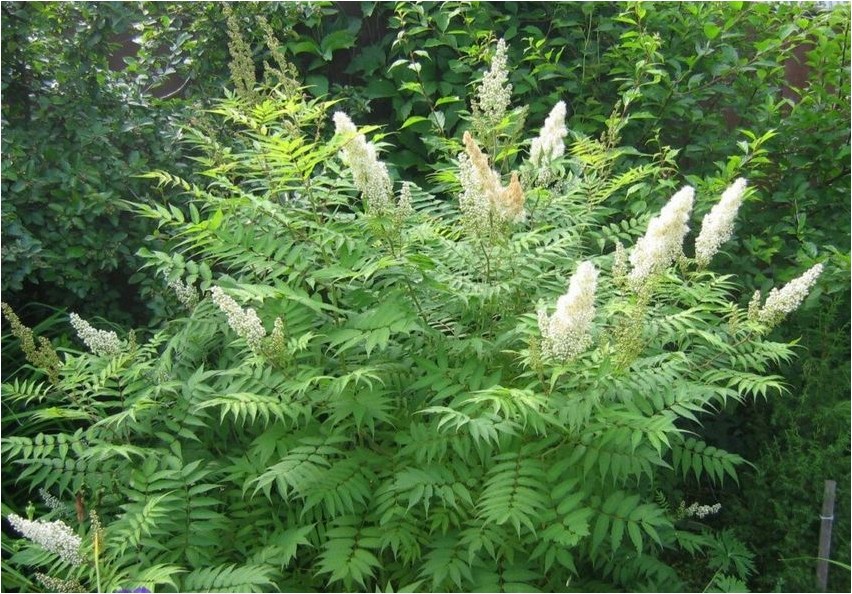
The mountain ash is one of the plants of the family called Rosaceae; in Latin the name of this plant will be as follows: Sorbifoli sorbifolia (L.) R. Br.
As for the name of the mountain ash family itself, in Latin it will be: Rosaceae Juss.
Description of mountain ash
Rowan-leafed fieldfare is a shrub whose height will vary between one and three meters. Such a plant will be endowed with abundant root shoots and finely pubescent shoots. The leaves of this plant are long-elliptical, their length is about twelve to twenty-five centimeters, and the width will be equal to six to thirteen centimeters. The mountain ash tree will be endowed with nine to twenty-one lanceolate leaves, the length of which will be equal to two and a half to eight centimeters, while the width will not exceed two and a half centimeters. The length of the mountain ash panicles will be twelve to thirty centimeters, and the width will be five to twelve centimeters. The diameter of the flowers of this plant is seven to eleven millimeters, such flowers will be endowed with almost rounded petals, the leaflets will be fluffy, and their length will be five millimeters.
The flowering of the mountain ash occurs in the period from half of June to September, and fruiting will begin in August. As for its general distribution, this plant is found in Korea, Japan, Mongolia, China and Manchuria. Under natural conditions, this plant is found in Eastern Siberia, the Altai and Ob regions of Western Siberia. For growth, this plant prefers the outskirts of swamps, floodplains of rivers and streams, as well as forests. Rowan-leaved fieldfare can grow singly, in thickets and in groups.
Description of the medicinal properties of mountain ash
The mountain ash tree is endowed with very valuable healing properties, and it is recommended to use the leaves, branches and bark of the branches of this plant for medicinal purposes.
The presence of such valuable healing properties is recommended to be explained by the content of traces of alkaloids, arbutin, saponins, cyanoglycoside, hydrocyanic acid, vitamin C and P, phenolcarboxylic acids, flavonoids, tannins and chlorogenic acid in the composition of this plant.

An infusion made from the herb of the rowan tree is indicated for various skin conditions and pulmonary tuberculosis, and a decoction of this plant is used for diarrhea. A decoction made from the branches of the rowan tree is recommended as an astringent, and for baths, this remedy is used for rheumatism. An infusion made from the branches of this plant should be used for dysentery and diarrhea.
This plant is widely used in Tibetan medicine. Tibetan medicine recommends using a decoction of the bark of the branches and leaves of the rowan tree for rheumatism and various gynecological conditions. When used correctly, these remedies are very effective.
Extracts from the flowers and leaves of this plant increase blood clotting and depress the central nervous system, as has been experimentally proven. It’s worth noting that the rowan-leaved mountain ash has also found application in veterinary medicine, where this medicinal plant is used for diarrhea. It’s worth noting that the leaves of this plant possess a very effective phytoncidal effect.





