Lupine yellow
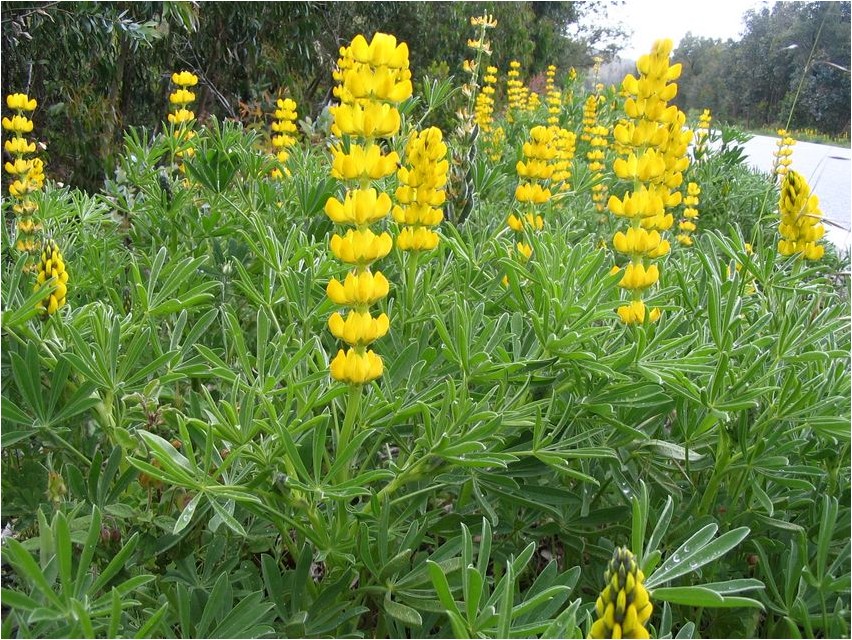
Yellow lupine (lat. Lupinus luteus) is a flowering herbaceous plant from the genus Lupin (lat. Lupinus) of the legume family (lat. Fabaceae).
Yellow lupine is a European plant, having chosen Mediterranean countries, including Italy, where its beans have been a popular everyday food since ancient times. Today they are eaten mainly pickled as a snack.
Description
Herbaceous annual plant up to 60 cm high with pubescent stems. The lower part of the plant is highly branched.
Separately palmate leaves are formed by lanceolate or oblong-ovate leaves, of which there are from 7 to 9 pieces. Outwardly, such a leaf resembles a fan, with flirtatious, unruly blades scattered at a greater distance from each other than is typical for fans. Each blade-like leaf is covered on both sides with thick hairs, adding weight to the lightness of the green natural fan.
During the first two summer months, the plant is decorated with inflorescences of yellow bisexual fragrant flowers, which are pollinated by bees.
The pollinated flowers turn into densely hairy beans, inside of which there are flattened, round, kidney-shaped seeds with all sorts of colors, from yellowish and pink to dark purple.

Edible fruits of Lupine yellow
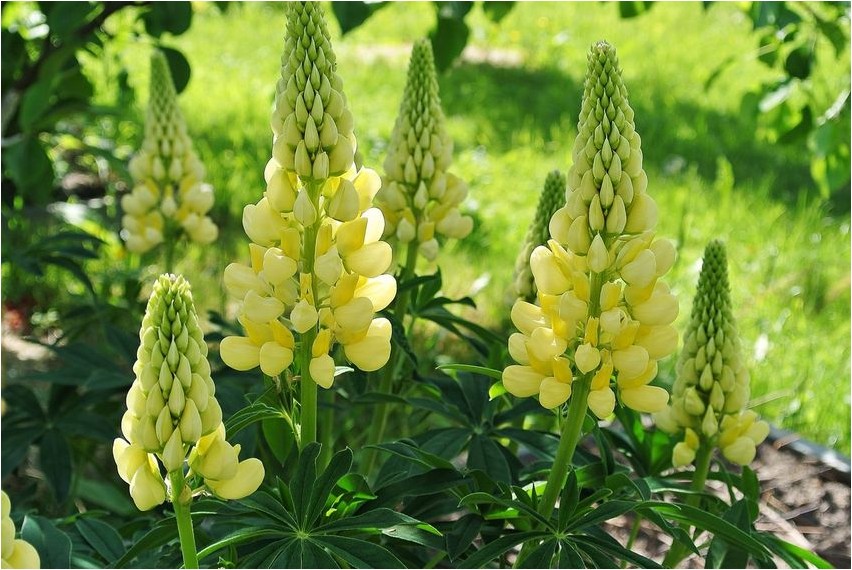
Roasted Lupine yellow seeds are an excellent substitute for coffee beans, and you can also grow them in your own garden.
Like other legumes, they are easy to prepare, while being a product rich in plant protein, which is more beneficial for the human body than animal protein.
Powdered seeds of yellow lupine are mixed with cereal flour and baked into bread and other baked goods. Such products again contribute to the good functioning of the human digestive organs.
If you come across Lupine varieties with bitter seeds containing toxic alkaloids, you can successfully get rid of the bitterness by soaking the seeds in cold water. During the soaking process, the water should be changed two or three times until all the bitterness leaves the seeds. Then the seeds are boiled and various hearty dishes are prepared from them.
The German botanist and plant breeder Reinhold Oskar Kurt von Sengbusch, in the first half of the 20th century, developed a method for determining alkaloids in Lupine plants (yellow lupine, white lupine and angustifolia lupine) in order to select species with a low content of bitter alkaloids. Through successful selection, he managed to transform a wild plant with bitter seeds into a cultivated plant with sweet seeds, from which it was possible to obtain healing and edible lupine oil.
The same work is being successfully carried out by breeders in Australia, where today Lupine is becoming a popular source for making food products rich in plant proteins.
Growing
Cultivated Yellow lupins are grown as annual plants. In the wild, where they have to take care of their own well-being, they are also perennial, living in one favorite place for up to four years.
Yellow lupine prefers places open to sunlight, and is in no hurry to grow in the shade of other plants or buildings.
For successful growth in the wild, the plant chooses sandy, light soils or soils of volcanic origin. In culture as a whole, it is unpretentious to soils; it can grow on depleted, organic-poor soils, simultaneously healing them and saturating them with nitrogen. Therefore, gardeners often use the services of yellow Lupine, using it as a green manure.
The soil should be moist, but not soggy. Excessive dampness can provoke fungal diseases of the roots, ultimately leading to the death of the plant.





