Ascocentrum
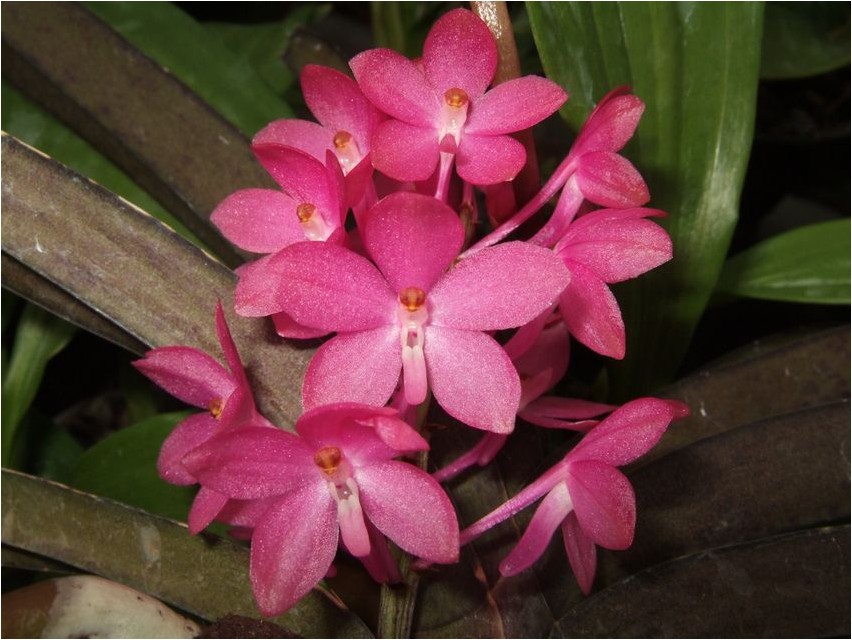
Ascocentrum (lat. Ascocentrum) is a genus of herbaceous epiphytic perennial plants with bright inflorescences, belonging to the Orchid family (lat. Orchidaceae).
Being plants of the humid tropics, orchids of the genus Ascocentrum and their many-sided hybrids with plants of other genera of the family have become popular members of plant communities in botanical gardens, greenhouses and indoor window sills, in which people took care of creating comfortable conditions for their life.
What’s in your name
The genus of orchids “Ascocentrum” was first described by the German botanist Rudolf Schlechter, whose full name is Friedrich Richard Rudolph Schlechter (10/16/1872 – 11/15/1925), who devoted several of his works to plants of the Orchidaceae genus.
The Latin name of the genus “Ascocentrum” is based on two Greek words, which translated into Russian mean: “bag” and “spur”. The reason was the structure of the plant flower, at the base of the lip of which there is a large spur for collecting and storing nectar.
In floriculture literature, the name of the genus is shortened to 5 letters – “Asctm”. You can also find the synonymous name “Ascolabium” under photographs of plants of this genus.
Description
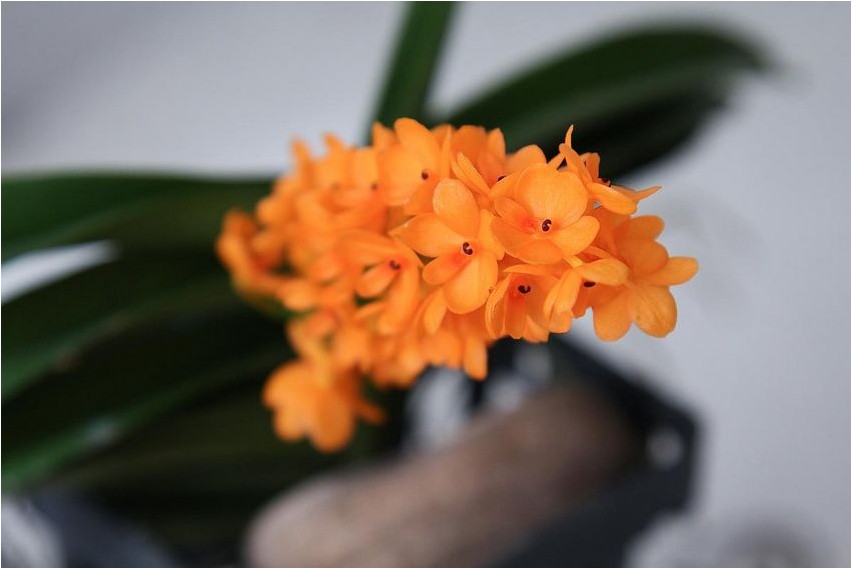

Plants of the genus Ascocentrum are often epiphytes, that is, they grow on trees of tropical forests, feeding on sunlight and the surrounding moist air. To do this, their roots float freely in the air, and do not rush deep into the earth. Less commonly, they are lithophytes, capable of living on rocky or rocky areas of land.
Ascocentrums are not very tall and are considered “miniature orchids”, representing low-growing plants with green, strap-shaped leaves that can be erect or have their tips gently curving towards a horizontal surface. In appearance, they are very similar to plants of the genus Vanda (lat. Vanda) of the Orchidaceae family and often form joint hybrids with them.
The drooping or erect racemose inflorescence is formed by numerous small flowers, looking at the world with their wide-open petals. The small size of the flowers does not prevent them from having a complex structure, characteristic of all orchid flowers. On the reverse side of the “lip” there is a “spur” or “nectary” that attracts pollinating insects.
The colors of the flowers are bright and varied: yellow, pink, crimson, orange, red, purple..
Varieties
The genus Ascocentrum is not numerous. According to some data, it unites 13 species in its ranks, one of which has two subspecies. The number of species in different literary sources may differ from that indicated.
A large number of intergeneric orchid hybrids have been bred, in which species of the genus Ascocentrum, famous for their bright flowers, took an active part.
All species of plants of the genus Ascocentrum are protected by the International Convention on Trade in Wild Plant Species in order to protect them from the threat of extinction from the face of the Earth.
Usage
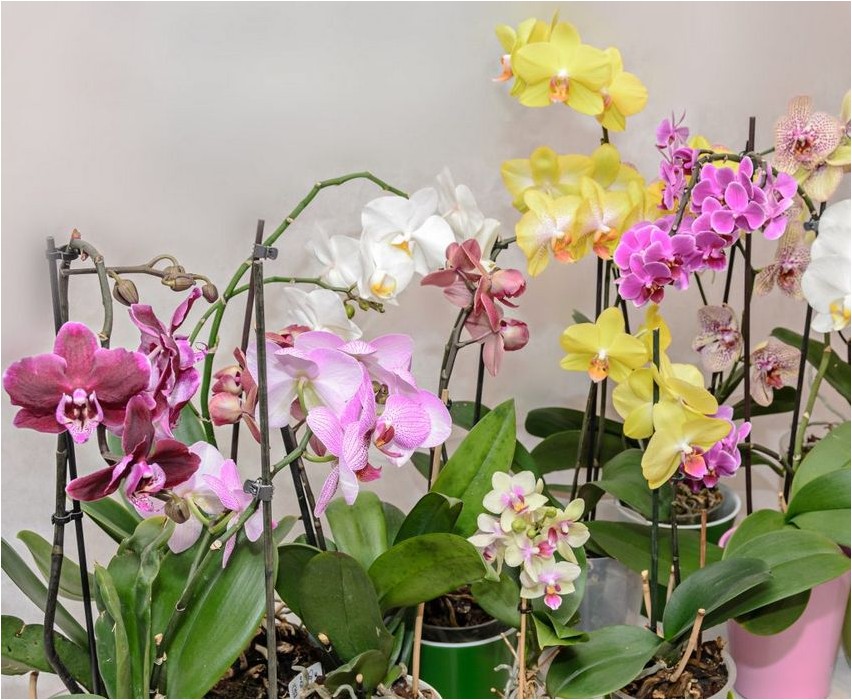
The compact shape and variety of bright flower colors have turned species of the genus Ascocentrum into popular greenhouse and indoor plants. True, for successful development and abundant bright flowering, orchids require a number of conditions in their environment.
For plants accustomed to heat, high air humidity and plenty of light, it is very important to maintain the temperature within 18-23 degrees Celsius in the summer and not lower than 15 degrees in the winter.
To maintain the required air humidity in the range from 60 to 90 percent, watering is carried out throughout all 12 months of the year. The frequency of watering depends on the growing method: on a fragment of bark (or “per block”), in a basket for epiphytes, in a ceramic or plastic pot. Plants grown on blocks require more frequent watering.
Orchids should also be provided with indirect, bright light, as in a rainforest.
Only under favorable living conditions will plants respond to the grower with brightness and abundance of flowering.