Sarothamnus (Zharnovets)
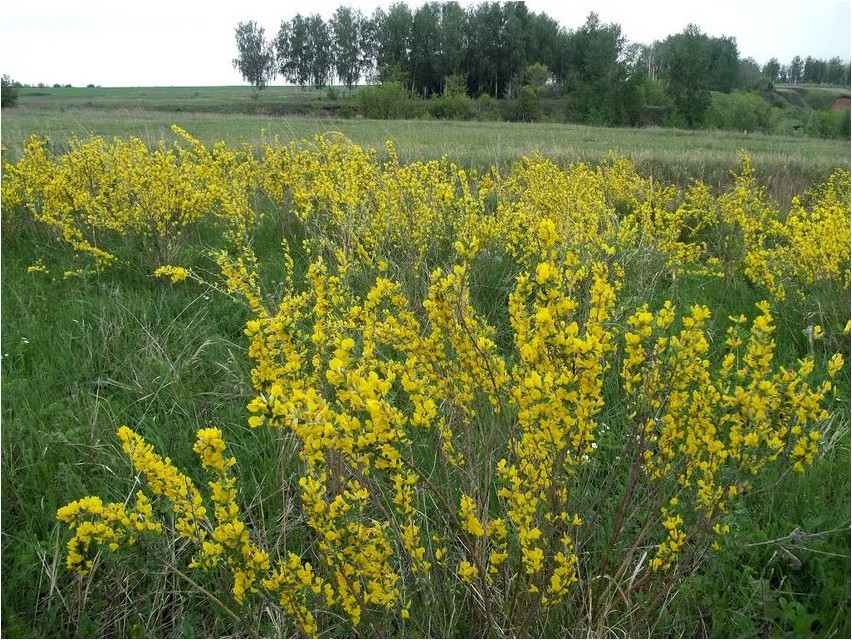
Sarothamnus (Zharnovets) is a genus of perennial shrubs in the legume family. Currently, there are 12 common species, which grow primarily in European countries, both wild and cultivated. In Russia, Sarothamnus is used as an ornamental plant and can be found in the European part of the country, the Southern Urals, and Western Siberia. Typical habitats include pine and mixed forests, railway embankments, roadsides, dry forest edges, hillsides, and even sandy plains.
Cultivation Characteristics
Sarothamnus is a beautifully flowering ornamental shrub up to 2 m tall with rod-shaped pentagonal branches, bright green stems, and a strong taproot. The leaves are small, obovate, glabrous on the outer side and covered with silky hairs on the inner side. Medium-sized, golden-yellow flowers have a characteristic structure typical of all members of the legume family. The flowers profusely cover the plant’s shoots. The fern blossoms in May and June (the timing largely depends on climatic conditions). During flowering, the shrubs are very impressive, especially when planted in groups. The fruit is a multi-seeded pod that splits open when ripe.
Growing Conditions
Fernose fern is not a demanding plant; it thrives in almost any location, but sites with humus-rich soils should be avoided. This plant is known for its sun-loving and drought-tolerant nature. If neglected and exposed to unfavorable growing conditions, the plants quickly become wild, turning into a featureless, greenish-yellow mass that is completely unattractive.
Propagation and Care
Fernose fern is propagated primarily by cuttings and seeds, and less commonly by grafting onto laburnum. The seeds are very small, so for ease of use, they are mixed with sand and lightly ground before sowing. This process is necessary to break the seed coat. Zharnovets can be sown in both spring and fall. In the latter case, it should be sown under cover with peat or other organic material.
Zharnovets care is simple and consists of occasional watering during dry periods, weeding and loosening the root zone, annual fertilizing, and sanitary and thinning pruning. This last procedure is especially important for the plant; it promotes abundant flowering and a harmonious appearance. Both organic and mineral fertilizers can be used for fertilizing.
Application
Zharnovets is a striking example of an ornamental shrub, often used in garden landscaping. It looks beautiful both individually and in groups. It can be grown along garden paths and near gazebos and other seating areas. Zharnovets will create a captivating garden setting and allow you to enjoy the beauty of nature.

Zharnovets is a poisonous plant; all parts of the plant contain large amounts of alkaloids. Furthermore, zharnovets is rich in essential oils, glycosides, biogenic amines, and tannins. This is why it has become widely used in folk medicine. It is most often used to treat cardiac arrhythmia, but only under the guidance of a physician; otherwise, consuming infusions from the plant can lead to adverse health effects. Zharnovets is also useful as a sedative.
Today, zharnovets is used to make various medications aimed at treating heart disease. These preparations can be used over long periods of time and are not addictive. Long-term treatment with preparations based on this plant has a positive effect on the human cardiovascular system and overall well-being.
Many doctors note that fern grass successfully combats various gynecological conditions. This is due to the high content of sparteine, which has an effect similar to quinine. In addition to the above-mentioned uses, fern grass is used for low blood pressure, kidney stones, rheumatism, and various rashes.
It is not recommended to use fern grass during pregnancy. It is also important to remember that an overdose of fern grass can lead to paralysis and even cardiac arrest. Only doctors prescribe medications containing fern grass as the main active ingredient; such decisions should not be made independently.





