dyeing serpukha
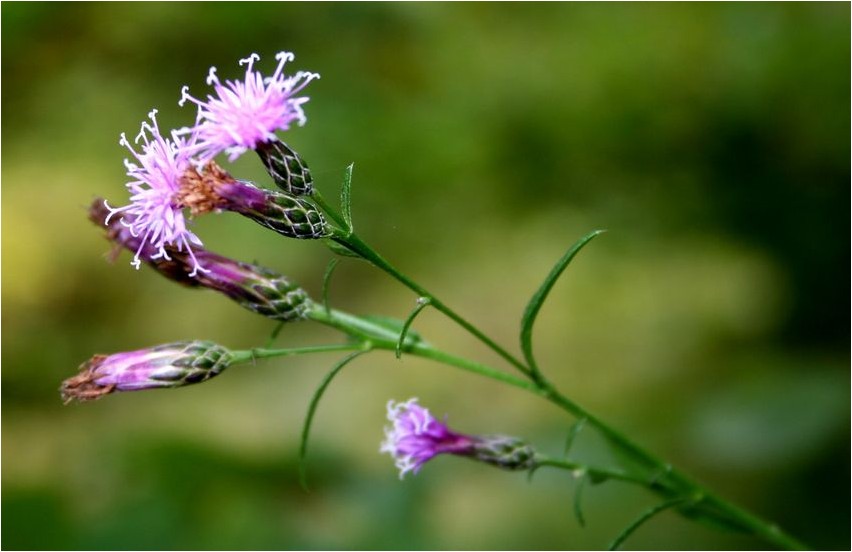
The family name of Serratula tinctoria L. is Asteraceae Dumort. (Compositae Giseke). Serratula tinctoria L. (Serratula inermis Gilib.) is a member of the Asteraceae or Compositae family. Its Latin name is Serratula tinctoria L. (S. inermis Gilib.).
Description of Serratula tinctoria
Serratula tinctoria is known by many common names: yalova, dusty grass, iris, deer grass, serpukha, sickle, kong, lapushok, and kaur. Serratula tinctoria is a perennial herbaceous plant whose height ranges from thirty to one hundred twenty centimeters. The stem of this plant is branched at the top, and the basal leaves are petiolate, entire, or pinnately divided, and oblong-ovate in shape. The cauline leaves of the Serratula tinctoria are sessile, and at the base, they are pinnately divided. The purple flowers are borne in flower heads, which are gathered into a corymbose panicle. The flower heads of this plant are dioecious and unisexual, with the male flowers being oblong, while the female flowers are small and ovate. Serratula tinctoria has only five stamens, and the ovary is unilocular and inferior, possessing a single style. This style is undivided in male flowers, while in female flowers, it is bilobed at the very top.
Serratula tinctoria blooms in the second half of summer. In the wild, this plant is found in Moldova, Belarus, the Carpathian Mountains, and the Dnieper region of Ukraine, as well as the following regions of European Russia: Trans-Volga, Baltic, Lower Don, Upper Volga, Volga-Don, Black Sea, and Volga-Kama. Serratula tinctoria prefers shrubby habitats, limestone outcrops, moist, alkaline meadows, clearings, forest edges, and open forests. It is worth noting that this plant is a highly valuable honey plant.
Description of the medicinal properties of Serratula tinctoria
Serratula tinctoria has valuable medicinal properties, and it is recommended to use the herb of this plant for medicinal purposes. The herb includes the leaves, stems, and flowers. These valuable medicinal properties are attributed to the presence of phytoecdysones, rubber, and the flavonoids luteolin and apigenin.
The herb of this plant is used in baths for rabid dog bites as a detoxifier. It is noteworthy that the grass and roots of serpukha have the ability to dye wool yellow. When boiled, this plant can be used as feed for dairy cows. It should be noted that the ecdysterone in the inflorescences of the tincture plant is endowed with the activity of molting hormones.
A decoction prepared from the rhizomes of sickleweed is indicated for oral use for gonorrhea, gastralgia and diarrhea. As a wound-healing agent, an infusion based on the herb of this plant is used topically in the form of lotions for festering wounds, abrasions and cuts.

For neuroses, the following remedy based on this plant is very effective: to prepare such a healing remedy, you will need to take two teaspoons of dry crushed serpucha tinctiva herb and pour it into a thermos. The resulting healing mixture should be poured with one glass of boiling water, left to infuse for about three hours and strained thoroughly. Take the resulting healing remedy based on serpukha tincture three times a day before meals, one tablespoon.
How to distinguish Thistle and Serpukh





