Voskovnitsa
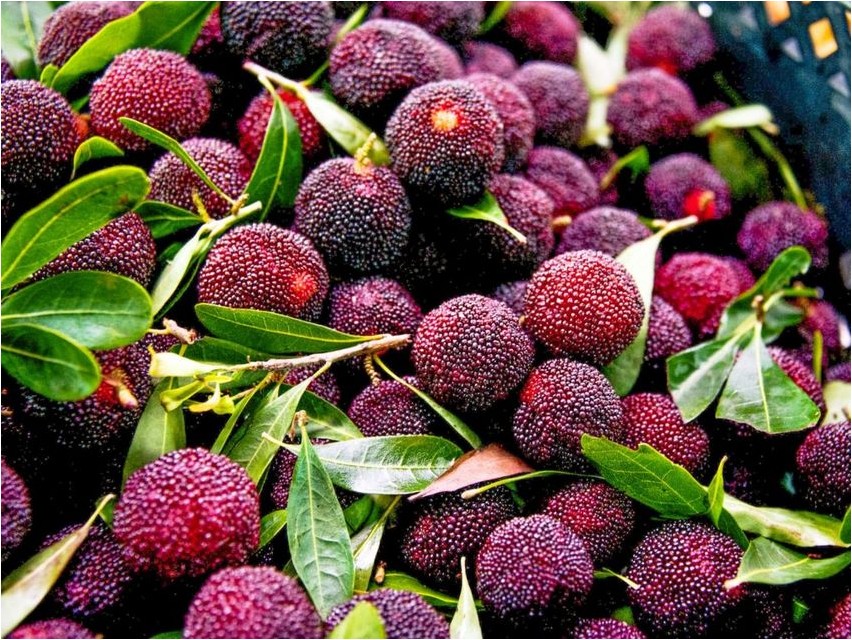
Voskovnitsa (lat. Myrica) is a genus of shrubs and trees of the Voskovnitsa family. The genus includes about 50 species, distributed mainly in Europe, Asia, Africa, South and North America.
On the territory of Russia, the waxweed is found in Sakhalin, Kamchatka and the Primorsky Territory.
Characteristics of culture
Voskovnitsa is a deciduous or evergreen shrub or tree up to 20 m high. The leaves are simple, leathery, resinous, dotted, very fragrant, pointed at the tips, often with jagged edges, up to 12 cm long, arranged in a spiral shape. The flowers are small, male and female, as a rule, develop on different plants, and are formed in the form of earrings.
The fruit is a clustered drupe, often with a waxy coating, up to 0. 5-0. 6 cm in diameter, hanging on the branches throughout the winter. Waxwort is an excellent sand fixer and is sometimes used to decorate wetlands and voids, since representatives of the genus accept almost all types of soil. Plants fit harmoniously into heather gardens.
Growing conditions
Sites for growing waxwort are preferably well-lit; light partial shade is not prohibited. The crop does not make any demands on soil conditions; it can grow on sandy areas, along the banks of reservoirs, in swampy areas and even heather.

Nitrogen-fixing bacteria that live on the roots help plants survive in any type of soil. The culture does not differ in cold-resistant properties; some species are not able to withstand frosts belo w-5C.
Reproduction and planting features
Waxwort is propagated by seeds, root shoots and green cuttings. The seed method is quite labor-intensive, but effective. Before sowing, the seeds are subjected to three months of stratification. The seeds are kept in damp sand at a temperature of 10C. Cuttings of waxweed are carried out in spring or summer. Before planting in the substrate, cuttings are treated with growth stimulants, for example, “Kornevin”.
Planting of crop seedlings is carried out in spring or autumn. Seedlings must be purchased only from specialized nurseries. Planting holes are prepared at least 2-3 weeks in advance. The root collar is not deepened when planting. The distance between plants should be at least 90-100 cm. On heavy soils, it is recommended to provide drainage. To do this, a ten-centimeter layer of sand, gravel and crushed stone is laid at the bottom of the pit.
Care
Water only in dry weather; 3-4 waterings per season is sufficient. The recommended watering rate is 8-10 liters per plant. Young plants require more frequent watering. The plant responds well to fertilizer. Fertilize once every two years; Kemira Universal is ideal for this purpose.
Loosening and weeding are equally important care procedures for the bayberry. In winter, the soil around the trunk is mulched with peat or dry leaves (5-6 cm thick). Preventative pruning is recommended; the plants respond well to this procedure. Bayberry is resistant to diseases and pests.
Try Yamberi or “Chinese Strawberry”
Voskovnitsa
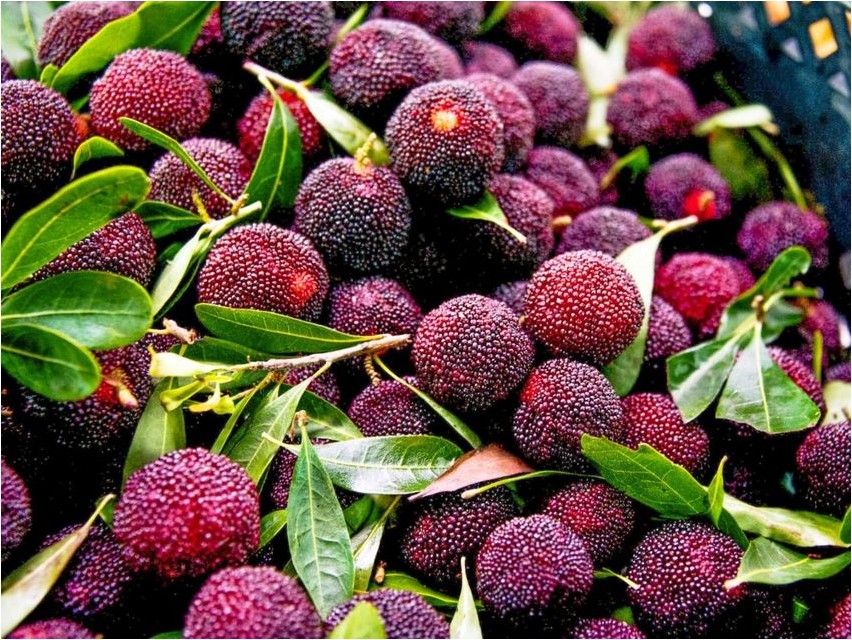
Voskovnitsa (lat. Myrica) is a genus of shrubs and trees of the Voskovnitsa family. The genus includes about 50 species, distributed mainly in Europe, Asia, Africa, South and North America.
On the territory of Russia, the waxweed is found in Sakhalin, Kamchatka and the Primorsky Territory.
Characteristics of culture
Voskovnitsa is a deciduous or evergreen shrub or tree up to 20 m high. The leaves are simple, leathery, resinous, dotted, very fragrant, pointed at the tips, often with jagged edges, up to 12 cm long, arranged in a spiral shape. The flowers are small, male and female, as a rule, develop on different plants, and are formed in the form of earrings.
The fruit is a clustered drupe, often with a waxy coating, up to 0. 5-0. 6 cm in diameter, hanging on the branches throughout the winter. Waxwort is an excellent sand fixer and is sometimes used to decorate wetlands and voids, since representatives of the genus accept almost all types of soil. Plants fit harmoniously into heather gardens.
Growing conditions
Sites for growing waxwort are preferably well-lit; light partial shade is not prohibited. The crop does not make any demands on soil conditions; it can grow on sandy areas, along the banks of reservoirs, in swampy areas and even heather.
Nitrogen-fixing bacteria that live on the roots help plants survive in any type of soil. The culture does not differ in cold-resistant properties; some species are not able to withstand frosts belo w-5C.
Reproduction and planting features
Waxwort is propagated by seeds, root shoots and green cuttings. The seed method is quite labor-intensive, but effective. Before sowing, the seeds are subjected to three months of stratification. The seeds are kept in damp sand at a temperature of 10C. Cuttings of waxweed are carried out in spring or summer. Before planting in the substrate, cuttings are treated with growth stimulants, for example, “Kornevin”.
Planting of crop seedlings is carried out in spring or autumn. Seedlings must be purchased only from specialized nurseries. Planting holes are prepared at least 2-3 weeks in advance. The root collar is not deepened when planting. The distance between plants should be at least 90-100 cm. On heavy soils, it is recommended to provide drainage. To do this, a ten-centimeter layer of sand, gravel and crushed stone is laid at the bottom of the pit.
Care
Water only in dry weather; 3-4 waterings per season is sufficient. The recommended watering rate is 8-10 liters per plant. Young plants require more frequent watering. The plant responds well to fertilizer. Fertilize once every two years; Kemira Universal is ideal for this purpose.
Loosening and weeding are equally important care procedures for the bayberry. In winter, the soil around the trunk is mulched with peat or dry leaves (5-6 cm thick). Preventative pruning is recommended; the plants respond well to this procedure. Bayberry is resistant to diseases and pests.