Ceylon cinnamon
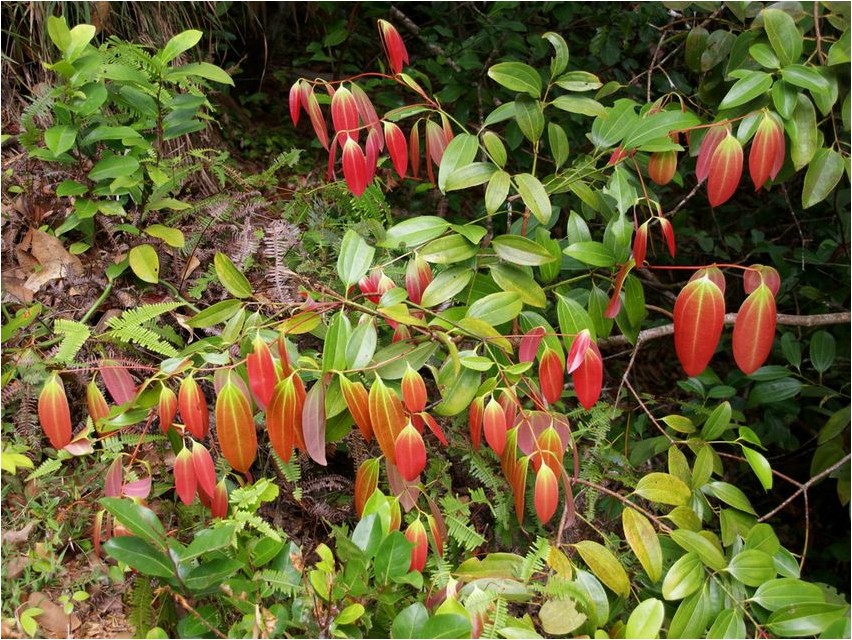
Ceylon cinnamon, or cinnamon (lat. Cinnamomum verum) is a species of evergreen trees of the genus Cinnamon (or Cinnamon laurel) of the Laurel family.
Cinnamon is also the name given to dried tree bark that is used as a spice. You can find cinnamon on sale, both in powder form and in the form of pieces of bark wrapped in tubes. Today the crop is cultivated in China, India, Malaysia, Ceylon, Madagascar, Java, Egypt, Sri Lanka, Guiana, Indonesia and Brazil. In Russia and European countries, plants are grown only in greenhouses and indoor conditions. Botanists say that the best cinnamon grows in Ceylon and China.
Characteristics of culture
Ceylon cinnamon is an evergreen tree or shrub with cylindrical triangular branches. The leaves are leathery, short-petioled, oval-oblong, up to 18 cm long, and have 2-7 distinct veins. The flowers are small, greenish, collected in paniculate inflorescences, and have an unpleasant odor. The fruit is a purple single-seeded berry, reaching 0. 5-1 cm in diameter.
Cinnamon is a photophilous and heat-loving crop; it grows well only in tropical climates. It is not adapted to the conditions of central Russia; it dies with the onset of cold weather, so cultivation is possible only in winter gardens and rooms with sufficient temperature and high humidity.
Growing
It is recommended to grow the crop in intensely lit areas, semi-shaded on a hot afternoon. Soils are preferred to be light, well-drained, moderately moist, and rich in minerals. The area for Ceylon cinnamon must be completely free of rhizomatous weeds.
In countries with hot climates, seeds are sown in open ground, in the middle zone – in pots or any other containers filled with a mixture consisting of leafy soil and sand in a ratio of 1:1:1. After sowing, the soil is watered abundantly with rain; at home, you can use a spray bottle.

Cinnamon is also propagated by semi-lignified cuttings. The cuttings are planted immediately after cutting in damp sand. The optimal temperature for rooting is 20-25C. Caring for cinnamon consists of regular watering, weeding and pruning.
The first bark is removed no earlier than two years later. After which the plants are cut off at the root. Subsequently, under optimal growth conditions, the hemp forms new shoots. The bark is collected every two years. The top woody layer of the bark is removed and the rest is dried. As a result of drying, the bark curls into tubes.
Application
Ceylon cinnamon bark is used in cooking as a spice or aromatic additive. Cinnamon is especially valuable in the confectionery industry; it is added when making chocolate, cookies, candies and various desserts. In eastern countries, cinnamon is added to lamb and chicken dishes. In the USA, ground cinnamon bark is added to coffee, cereals and fruit dishes.
Cinnamon tree bark is widely used in folk medicine. Essential oils extracted from cinnamon are used in aromatherapy, and its extracts are useful for colds. Essential oils are also used in perfumery, or more precisely when creating eau de toilette and perfumes with oriental notes.
#Ceylon cinnamon and Cassia.
https://www. youtube. com/watch? v=dt63CpnEyWQ