Licorice naked
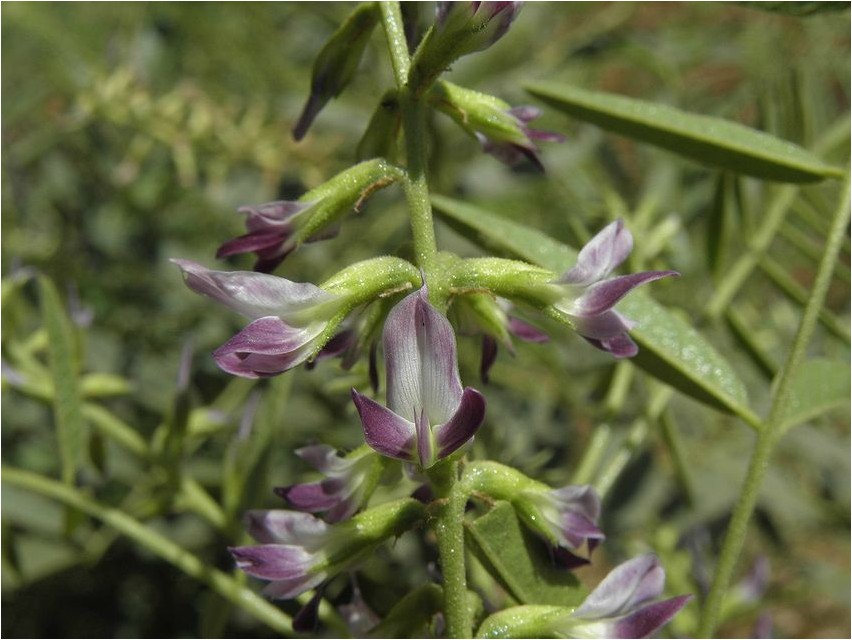
Licorice glabra is one of the plants of the family called legumes; in Latin the name of this plant would be as follows:
Glycyrrhiza glabra L. (G. glandulifera Waldst. et Kit. G. violacea Boiss., G. glabra L. var. glandulifera (Waldst. et Kit.) Regeb. Et Herd., G. glabra L. var. turica regel. et Herd.). As for the name of the licorice family itself, in Latin it will be: Fabaceae Lindl. (Leguminosae Juss.).
Description of licorice naked
Licorice glabra is a perennial herbaceous pubescent plant whose height will vary between fifty and one hundred centimeters. The stems of this plant are glandular, strong, branched and erect. It is noteworthy that the rhizome of licorice glabra will form a multi-tiered underground network, which will consist of intertwining vertical and horizontal sections. The roots will penetrate to a depth of seven to eight meters, and such roots can reach the groundwater level. The leaves of this plant are compound, petiolate, alternate, odd-pinnate and sticky, they are endowed with deciduous subulate-shaped stipules. Glycyrrhiza glabra flowers are small in size, axillary and papilionaceous, they are located in spike-shaped racemes and are colored whitish-purple. The fruits of this plant are oblong brown beans, the length of which reaches thirty millimeters. Such fruits can be either naked or mostly seated with glandular spines.
This plant blooms in the summer, while the fruits ripen from August to September. Under natural conditions, licorice is found in the Caucasus, the coast of the Azov and Black Seas in Crimea, Moldova, the Irtysh and Verkhnetobolsk regions of Western Siberia, the Donetsk and Lugansk regions in Ukraine, as well as the following regions of the European part of Russia: the Trans-Volga, Lower Volga, Black Sea, Lower Don and Volga-Don regions. For growth, licorice prefers crops, fallow lands, dried river beds, deserts, steppes, semi-deserts, oases, oxbow lakes, banks of ditches, streams and irrigation ditches, meadows, ravines and saline soils.
Description of the medicinal properties of licorice
Licorice glabra is endowed with very valuable healing properties, and it is recommended to use the rhizomes and roots of this plant for medicinal purposes. The presence of such valuable healing properties should be explained by the content of carbohydrates, sucrose, fructose, glucose, mannitol, cellulose, starch, polysaccharides, essential oil, aromatic compounds, higher aliphatic acids, ketones, organic acids and their derivatives in the roots of this plant. The aerial part of licorice, in turn, contains flavonoids, tannins, carbohydrates, steroids, coumarins, ascorbic acid and carbohydrates.
Preparations created on the basis of this plant will be endowed with very valuable and multifaceted biological activity. Preparations based on licorice root are endowed with antiallergic properties, have the ability to regulate water-salt metabolism, and will also have an anti-anaphylactic effect.

It should be noted that alcoholic and aqueous extracts of this plant turn out to be very suitable for creating various preparations that will not be soluble in water, and in addition also for creating foam aerosols.
In addition, preparations based on licorice glabra are endowed with antiviral effects. It is noteworthy that the greatest activity against viruses will be inherent in the saponins of the grass of this plant, while the sodium salt at the base of the roots of this plant is active against protozoa.





