Kohlrabi
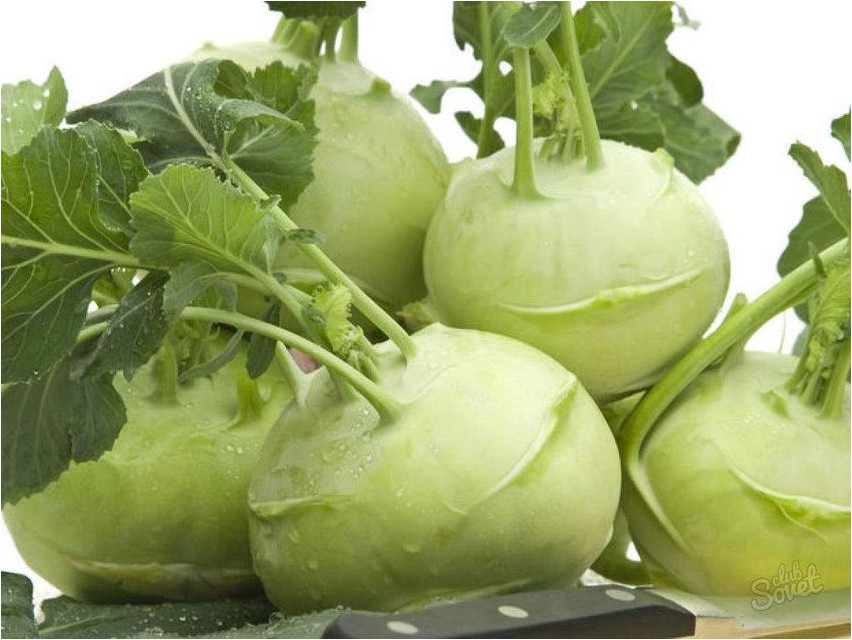
Kohlrabi (lat. Brassica oleracea var. gongyoides) is a vegetable crop; biennial plant of the Brassica family. Kohlrabi is native to the Mediterranean. The plant has been cultivated since the times of Ancient Rome.
Characteristics of culture
Kohlrabi is a herbaceous plant 30-110 cm high, which in the first year of life forms a short compacted stem with an oval, round, flat-round or ovoid stem fruit of pale green, green or purple.
The leaves are lyre-shaped, prostrate, bluish-green in color. The flowers are small, cream, yellow or white, appearing in the second year. The fruit is a pod.
Growing conditions
Kohlrabi is a heat-loving plant that does well in sunny areas protected from cold winds. The preferred soils are light, moderately moist, loamy, with a rich mineral composition and a neutral reaction. Kohlrabi is demanding of the presence of macro and microelements in the soil, including boron, molybdenum and copper. The best predecessors are green manure, onions, cucumbers, potatoes, grains and legumes.

It is not advisable to plant kohlrabi after plants of the Cruciferous family (cabbage, turnips, rutabaga, radishes, etc.), as well as tomatoes and beets. The culture has a negative attitude towards thickening and shade; such conditions significantly reduce the quality of stem crops; plants are more often affected by various viral and fungal diseases. The optimal growing temperature is 18-20C.
Growing seedlings and planting in open ground
Kohlrabi is grown in seedlings. Before sowing, seeds are treated: first in hot water (50C), then in cold water, after which they are placed in a weak solution of potassium permanganate. Kohlrabi is sown in the first ten days of March in special seedling containers filled with a soil substrate consisting of turf soil, sand and peat (1:1:1). It is not recommended to use old soil and humus to make the mixture.
Immediately after sowing, the soil substrate is watered, covered with plastic film or glass, and placed in a room with an air temperature of 20-22C. With the emergence of seedlings, the temperature is reduced to 9-10C, and after a week the seedling boxes are transferred to well-lit window sills and the temperature is maintained at 16-18C.
Kohlrabi seedlings are transplanted into separate pots (6*6 cm or 8*8 cm in size) when one or two true leaves appear on the seedlings. In the phase of three true leaves, seedlings are fed with complex mineral fertilizers. Seedlings are planted in open ground in late May — early June. A couple of weeks before the intended planting, the seedlings are treated with a solution of urea and potassium sulfate, and are also hardened, gradually accustoming them to sunlight and wind.
The site for kohlrabi is prepared in the fall, the soil is dug to a depth of 20-25 cm, humus, superphosphate, wood ash and urea are added. In the spring, the ridges are loosened, shallow holes are dug and filled with water. The seedlings are buried down to the first true leaf, sprinkled with soil and compacted. Immediately after planting, the young plants are shaded, and after a couple of weeks they are hilled up and fed with a liquid solution of mullein. To avoid damage to the crop by pests and diseases, the plants are dusted with wood ash.
Care
Kohlrabi favors watering. Watering is carried out once every 2-3 days; in case of prolonged drought, the volume of water is increased. With insufficient moisture, plants develop tasteless stem fruits. The crop needs regular weeding, loosening and fertilizing.
One of the most important tasks in caring for kohlrabi is pest and disease control. Most often, the crop is affected by blackleg, clubroot, mucous bacteriosis and downy mildew. The most common pests are cruciferous flea beetles, snails, cabbage flies, aphids and slugs. As a preventive measure, experienced gardeners advise treating kohlrabi with infusions of garlic, wormwood and other approved biological products.