Full round
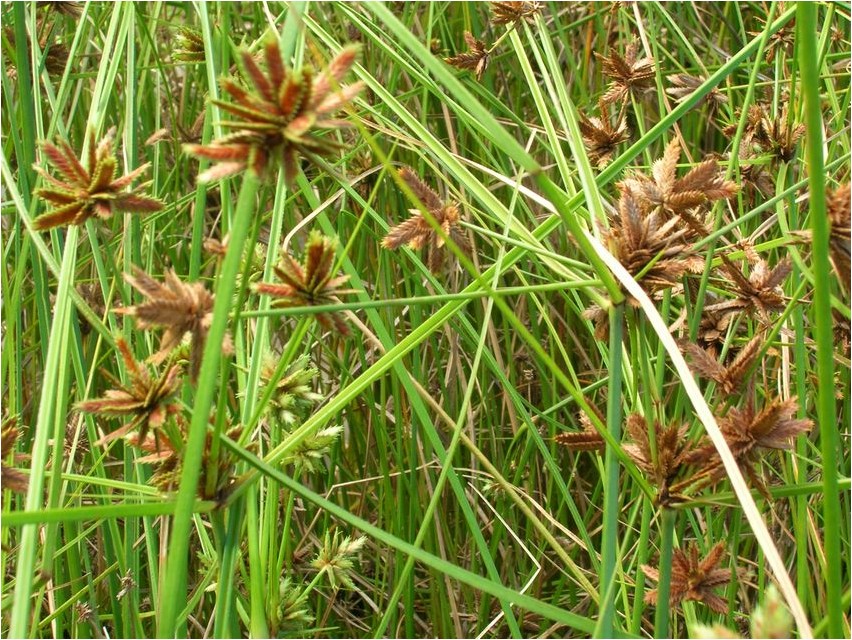
Round corn (lat. Cyperus rotundus) is a herbaceous medicinal perennial plant of the genus Syt (lat. Cyperus), belonging to the sedge family (lat. Cyperaceae).
The round beetle is found on all continents of our planet, avoiding only cold Antarctica. Its simple appearance and reputation as one of the world’s worst weeds hides the healing powers for which the nodules that form on the plant’s roots are famous. Sytya round is especially attractive for the fight against caries, the dental “plague” of our modern life.
What’s in your name
The Latin name of the genus originates from the Greek language, in which a word with a similar sound means “sedge”, that is, again associated with the sharp edges of plant leaves, like the Latin name of the genus Sedge, “Carex”. It is not for nothing that both of these genera are representatives of the Sedge family.
The Latin specific epithet “rotundus” in translation is consonant with the word “round” and is possibly associated with the shape of the nodules, which, however, is often oval-oblong rather than round.
English synonyms for the name of the plant are “Nut grass” and “Nut sedge”, due to the external resemblance of the plant’s nodules to nuts. Although morphologically and genetically the nodules have nothing to do with nuts.
Description
The powerful root system of Syti rotunda, which sends out its tentacles in all directions, has turned the plant into one of the most annoying and aggressive weeds in places on the planet where the climate is tropical or temperate, which does not prevent the reproduction of this species. Round corn is a big obstacle to harvesting a decent harvest for more than 50 cultivated food plants.

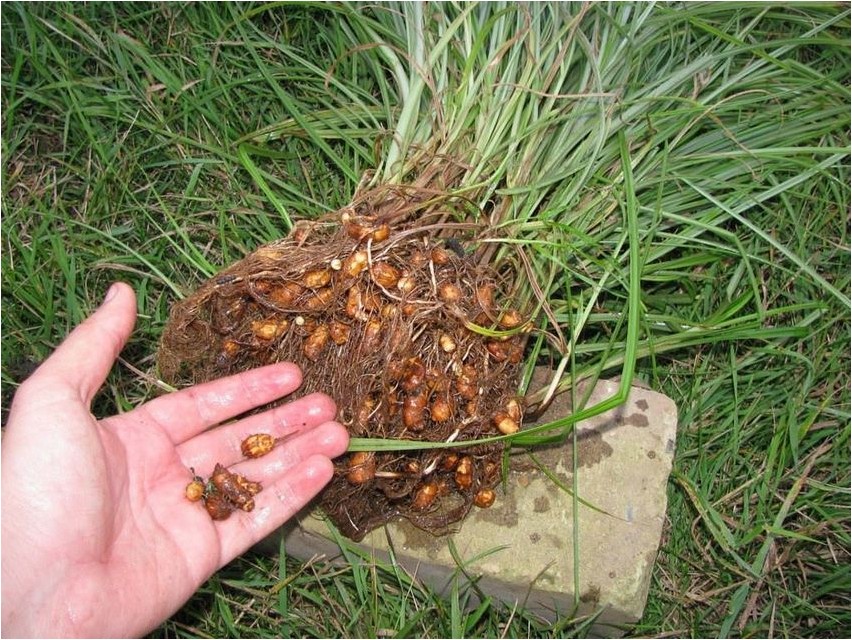
The white fleshy rhizomes of young plants create an extensive root system. Some of them grow upward, forming a bulb-like structure that gives rise to above-ground shoots and new underground roots, giving life to new rhizomes. Some of the rhizomes grow deep into the soil or grow horizontally, creating dark red-brown nodules or entire chains of such nodules. This perfect closed continuous chain of underground life gives the plant unique vitality and endurance.
It seems that the large expenditure of nutrients to create a powerful root system turns the above-ground parts of Sytya round into a very modest creation of nature. Single smooth stems with a triangular cross-section rise to the heavens to a height of 10 to 40 centimeters. Linear leaves, inferior in height to the stem, create a sparse rosette. The top of the stem branches, creating a loose umbrella-shaped inflorescence of rusty-reddish short spikelets.
The crown of the growing season is a dark gray miniature nut with three sides.
Usage
Perhaps it was not in vain that the Creator awarded Syt round a large supply of vitality. The man, without taking a closer look at the healing abilities of the plant, hastened to include the Round Weed in the list of malicious weeds that interfere with the cultivation of Cereals, the taste of which people liked more, but which are much more difficult to grow.
Our ancient ancestors treated Syti round with great respect, actively consuming its nodules in their diet. The plant was respected by the ancient Egyptians and Greeks, using the plant as an aromatic remedy, as well as for purifying drinking water from impurities harmful to humans. The plant was in demand by ancient healers.
The ability of Sytya round to inhibit or suppress the activity of bacteria called “streptococci”, which provoke various human diseases, reduces, in particular, the number of cases of dental damage to such a common disease as caries.
They treat the round and digestive system of the person, as well as bruises and wounds.
Walnut grass: description, properties and application
https://www. youtube. com/watch? v=aUholEenkC8





