Common lakfiol
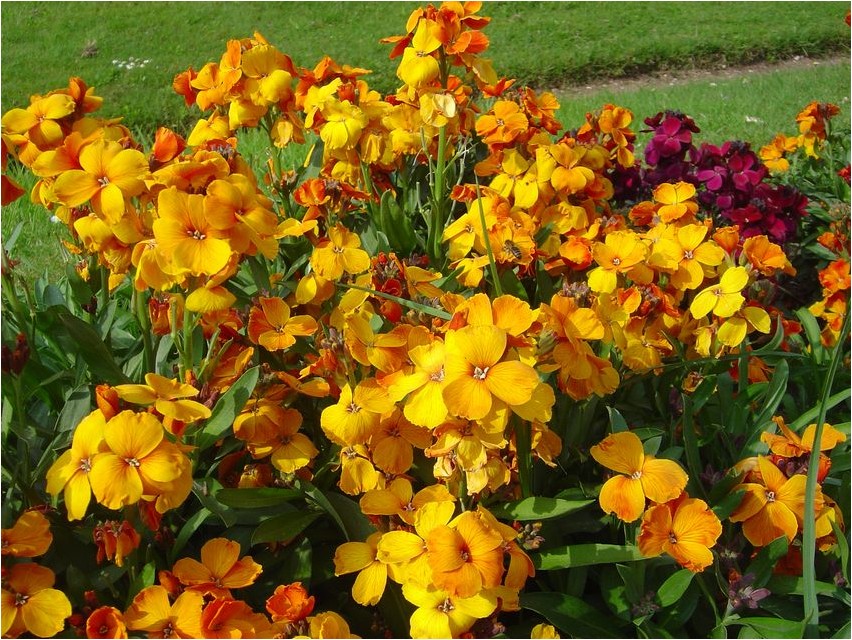
Lakfiol vulgaris is one of the plants of the family called cabbage or cruciferous plants; in Latin the name of this plant will be as follows: Cheirantuus L.
As for the name of the common lacfioli family itself, in Latin it will be: Brassicaceae Burnett.
Description of common lacfioli
Lakfiol vulgaris is a perennial herbaceous plant, which in cultivation can be either one- or two-year-old. The height of such a plant will fluctuate between forty and one hundred centimeters. The stem of Lacfiola vulgaris is simple or branched, it will be erect, and woody at the base. Like the rest of the plant, such a stem is covered with appressed hairs or will have one or two cloves along the edges. The flowers of this plant are regular, quite fragrant and they are endowed with four petals, and are also collected in racemose inflorescences. The petals of common lacfioli are colored golden-yellow, reddish-brown or dark yellow. The fruit of this plant is a pod.
Flowering of common lacfioli occurs from June to July. Under natural conditions, this plant will be found in the Crimea, and sometimes the plant can be grown in flower beds or also as a houseplant.
Description of the medicinal properties of common lacfioli
Common varnish is endowed with very valuable healing properties, and it is recommended to use the roots, seeds and herbs of this plant for medicinal purposes. The term grass includes flowers, stems and leaves. The presence of such valuable healing properties should be explained by the content of essential oil, coumarin and the following flavonoids in this plant: quercetin, isorhamnetin and kaempferol glycosides. In addition, the seeds contain the steroids cholesterol, campesterol and beta-sitosterol, as well as the following cardenolides: allizide, cheirotoxin, bitindogenin, periplogenin, usaritenin, eryzimin, erichroside, ericordin, and also fatty oil.
It should be noted that in the Middle Ages in Germany, decoctions based on this plant were used for baths for diseases of the joints and tendons, tumors of the uterus, and also to prepare emollient balms and ointments for various tumors. As for folk medicine in European countries, an infusion prepared from the fresh herb Lacfiola vulgaris is quite widespread here. This healing agent is recommended to be used in order to induce regulation that will relieve pain and cramps, and also as a laxative and absorbent.

The herb of this plant is used in homeopathy as a heart remedy. The tincture of this plant in the experiment revealed an effect very characteristic of cardiac glycosides. In this case, the most effective is the glycoside quercetin and cheirotoxin; such useful elements will be endowed with very valuable antifungal effects.
A decoction prepared from the leaves of Lacfiola vulgaris is recommended for use in cases of lacrimation and conjunctivitis, and is also used as a cosmetic for freckles. An infusion of the flowers of this plant is used as a diuretic and is also used for headaches. For enemas, Lacfiola vulgare flowers are used, which have been boiled with oil. Flowers infused with sunflower oil are used for rubbing against gouty arthralgia and rheumatism, impotence, paralysis, and liver diseases. In addition, such healing agents are also used as laxatives and cardiac agents.





