Physocarpus
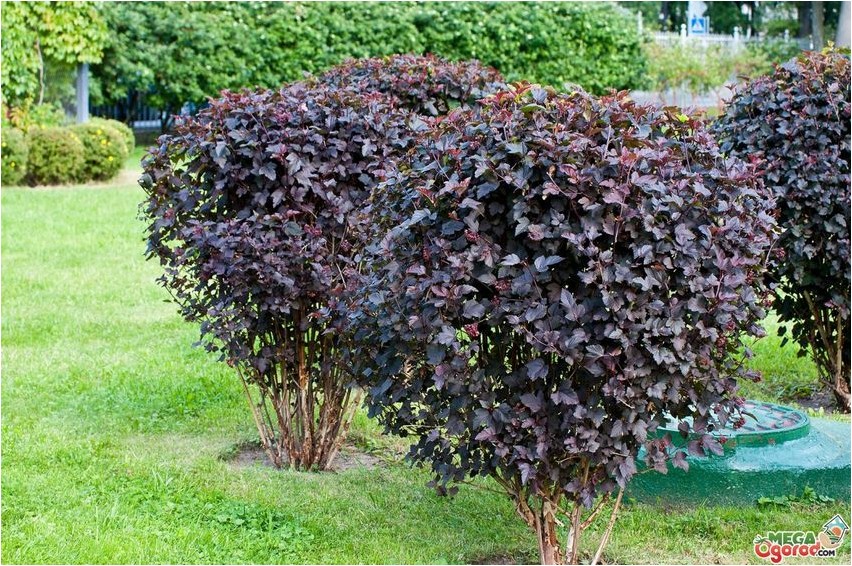
Physocarpus (Latin: Physocarpus) is a genus of ornamental deciduous shrubs in the Rosaceae family. The genus comprises 14 species, distributed primarily in East Asia and North America.
Popular Species and Their Characteristics
Physocarpus is a highly ornamental plant, often used for landscaping in homesteads and summer cottages. The two most common species are Physocarpus amurensis and Physocarpus viburnum-leaved.
*Physocarpus amurensis (Latin: Physocarpus amurensis) is a shrub up to 3 m tall with a broad, spherical crown. The leaves are dark green and smooth on the upper surface, while the underside is pubescent with a grayish tint. The fruits are red. In the wild, Physocarpus amurensis grows on rocky slopes, in the undergrowth of mixed forests, in shrub thickets, and on rocky ridges. Physocarpus opulifolius is a light-loving mesophyte, calciphyte, metatroph, microtherm, and an ascector of undergrowth and shrub plantings.
*Physocarpus opulifolius is a shrub up to 3-4 m tall with a broad, rounded crown and peeling bark. The leaves are green, three- or five-lobed, turning golden-yellow in autumn. The flowers are small, whitish-pink or white, gathered in spherical umbels. The fruit is reddish when unripe, and reddish-brown when mature. Physocarpus opulifolius blooms in early summer. There are several decorative forms of this species, differing only in leaf color.
Growing Conditions
Physocarpus opulifolius is undemanding and can easily grow in both sunny and semi-shaded areas. Exception: the “Darts Gold” and “Diabolo” varieties, which thrive only in brightly lit areas. Fertile, well-drained, neutral or slightly acidic soils are preferred. Physocarpus does not tolerate waterlogged, saline, waterlogged, or highly acidic soils. They also do not tolerate low-lying areas with accumulated meltwater and cold air. The plants are distinguished by their increased wind resistance and are relatively frost-hardy, but in severe winters they can freeze right down to the roots.
Application
Physocarpus is often used in group and singly planted along railway lines and roads. The plants are also suitable for creating hedges, both free-growing and shaped. Physocarpus is decorative throughout the gardening season, and retains its attractiveness even in winter.

Propagation and Planting
Physocarpus is propagated by seeds, cuttings, layering, and division. Seeds are sown in the fall or spring, with a month-long stratification period in the latter case. Propagation by layering yields good results. To do this, a healthy, strong lower shoot is bent to the ground, placed in a pre-prepared trench, pinned with wooden staples (metal staples are not recommended), covered with soil, and watered generously. It is advisable to carry out this procedure in the spring so that the layers have developed a good root system by fall. In early September, the layers are separated with a shovel and transplanted to their permanent location. For the winter, young plants are covered with a thick layer of peat or humus.
Cutting is an equally effective propagation method for this crop. Cuttings taken from green shoots of the current year are used as planting material. Before planting, the cuttings are treated with growth stimulants. The substrate is composed of sand and peat. After planting, the substrate is watered generously, and the cuttings are covered with plastic film. Caring for the cuttings involves regular ventilation and watering. Rooted cuttings are transplanted to a permanent location the following spring.
Care
Physocarpus sennas do not require special care; they adapt well to any growing conditions. However, regular watering, fertilizing, weeding, and loosening the trunk area will not harm the plants, but will only benefit them.
Since physocarpus sennas grow rapidly, they require sanitary and formative pruning. This procedure not only helps create a beautiful crown but also stimulates branching, which is also important. Physocarpus senna tolerate pruning well and recover easily. Pruning is performed in early spring, before bud break. To achieve a fountain-like shape in bladder senna, trim all thin shoots at the very base, leaving 5-6 stronger, healthier shoots.
Bladder senna responds well to fertilizing. In the spring, plants are fed with mullein, ammonium nitrate, and urea, and in the fall, with nitroammophoska. The plant is resistant to diseases and pests, so preventative treatments are not required.





