Sessile oak
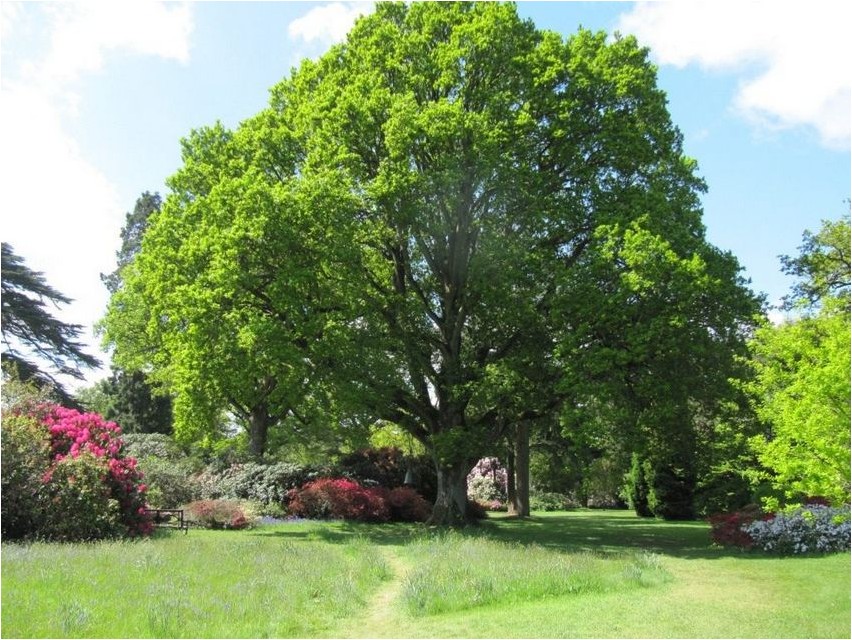
Sessile oak or sessile oak is one of the plants of the family called beech; in Latin the name of this plant will be as follows: Quercus petraca (Mattuschka) Lindl.
As for the name of the beech family itself, in Latin it will be: Fagaceae Dumort.
Description of sessile oak
Sessile oak is a tree whose height can reach twenty to thirty meters. The length of the leaves of this plant will be about eight to twelve centimeters, and the width will be three and a half to seven centimeters. The leaves will remain withered on the plant until spring, being bare and bright green on top and pale underneath. The length of sessile oak acorns will be about one and a half to two and a half centimeters. Sessile oak blooms from April to May.
Under natural conditions, this plant is found on the territory of Russia in the Black Sea region and Crimea, as well as in the Caucasus and in the following regions of Ukraine: in the Carpathians and in the Dnieper region. For growth, sessile oak prefers mountain slopes up to a height of about one and a half thousand meters above sea level. It is noteworthy that sometimes the plant forms pure stands.
Description of the medicinal properties of sessile oak
Sessile oak is endowed with very valuable healing properties, and it is recommended to use acorns, bark, leaves and galls of this plant for medicinal purposes.
The presence of such valuable healing properties is explained by the content of tannins and acids in the plant. The wood contains tannins, the bark of the plant contains triterpenoids and tannins, and paraffin and flavonoids are found in the leaves.

It is noteworthy that this plant is a coffee substitute. A decoction of oak bark, prepared in a ratio of one to ten, is used in the treatment of acute and chronic inflammatory diseases of the oral cavity, as well as in the form of applications and rinses for gingivitis and stomatitis.
The plant can be used as an antidote for poisoning with henbane, dope and mushrooms, as well as alkaloids, and food poisoning. To do this, you need to use a twenty percent decoction of oak bark as repeated gastric lavages.
Also, a twenty percent decoction of oak bark in the form of applications is used for burns and frostbite: napkins moistened with a cold decoction are applied to the affected areas on the first day. For childhood diathesis and various skin diseases, it is recommended to use a decoction of sessile oak bark in the form of local and general baths, as well as washes and applications. For sweating, local baths made from a ten percent decoction of sessile oak bark or a decoction of the bark taken in equal proportions with a sage decoction are considered quite effective. For various gynecological diseases: erosion of the uterus and vaginal walls, colpitis, vulvovaginitis, prolapse of the vaginal walls, prolapse of the vaginal and uterine walls, you should douche with a ten percent decoction of this plant.
Sessile oak bark is used for colitis, enterocolitis, dysentery, peptic ulcers, gastrointestinal bleeding, paraproctitis, proctitis and hemorrhoids. A twenty percent aqueous solution of sessile oak leaf extract is used as part of the complex treatment of purulent-septic diseases in newborns.
For chronic enterocolitis, hemorrhoidal bleeding, stomach ulcers, diarrhea, frequent urination and mushroom poisoning, it is recommended to use the following remedy based on sessile oak: to prepare it you will need to take ten grams of bark per glass of boiling water. The resulting mixture is infused for two hours and then filtered. Take this remedy one or two tablespoons three to four times a day.





