Eremogone rush
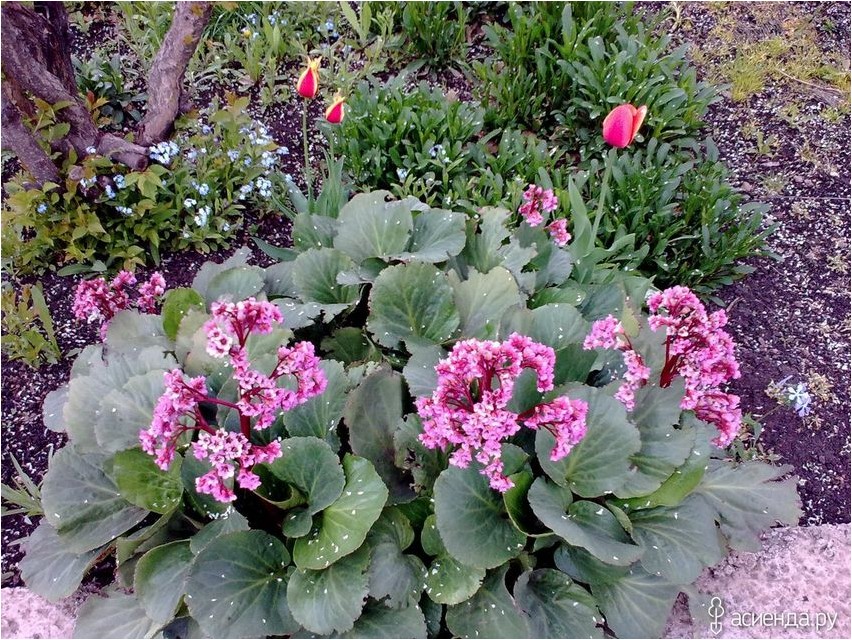
Eremogone juncea is one of the plants of the family called Cloveaceae; in Latin the name of this plant will be as follows: Eremogone juncea (Bieb.) Fenzl.
As for the name of the family of the Eremonea ruminaceae itself, in Latin it will be: Caryophyllaceae Juss.
Description of heremogone sitnikova
Eremogone rush is a perennial herbaceous plant, the height of which varies between twenty and sixty centimeters. The root of this plant is quite thick, it is endowed with numerous remains of dead leaves. The stems of this plant will be numerous and straight, at the very base they are bare, and higher up they will be already pubescent. At the base of the stem there are bunches of long, bare, narrow and hard leaves, which are almost equal to the stems and are finely serrated along the edges.
The middle leaves of this plant will be about six to ten centimeters in length, and the length of the upper ones will be one and a half to three centimeters. The flowers of eremogone rush are quite numerous; they are collected in corymbose inflorescences, which will consist of separate semi-umbrellas. Such half-umbrellas will bear one or two flowers, which are on long and glandular-pubescent pedicels. The sepals will be ovoid, they are pointed upward, and their length is five to five and a half millimeters. The petals can be either broadly oval or obovate; they are two to two and a half times longer than the calyx, and the length of such petals is six to eight millimeters.
Flowering of this plant occurs in the period from July to August. Under natural conditions, this plant can be found in the Daursky region of Eastern Siberia, as well as in the Amur region and Primorye of the Far East. For growth, the plant prefers places along river valleys, as well as open mountain slopes.
Description of the medicinal properties of eremogone sitnikova
Eremogon rush is endowed with quite valuable healing properties, and the roots and herbs of this plant should be used for medicinal purposes. The concept of grass includes the leaves, stems and flowers of this plant. The presence of such valuable healing properties is due to the content of vitamin C, trace elements and flavonoids in the plant.

As for traditional medicine, a decoction prepared from the roots of Eremogone sibirica is used for pneumonia and tuberculosis, and a decoction of the herb is used as a painkiller during childbirth.
For pneumonia and tuberculosis, it is recommended to use a fairly effective remedy based on eromogone. To prepare such a product, you will need to take eight grams of crushed roots per three hundred milliliters of water. The resulting mixture should be boiled over low heat for six to seven minutes, and then this mixture is infused for an hour, after which it is filtered very carefully. This remedy is taken one hundred milliliters three to four times a day.
As a pain reliever during childbirth, you can also use a product prepared on the basis of eremogonum. To prepare such a remedy, you should take one tablespoon of crushed dry herbs per glass of water, it is recommended to boil the resulting mixture for three to four minutes over low heat, and then leave this mixture to infuse for one hour, after which it is filtered very carefully. Take the resulting remedy based on eremogone sitnica, one or two tablespoons once or twice a day. To achieve greater effectiveness, you should strictly follow all the rules for preparing and taking this product.





