Violet pubescent
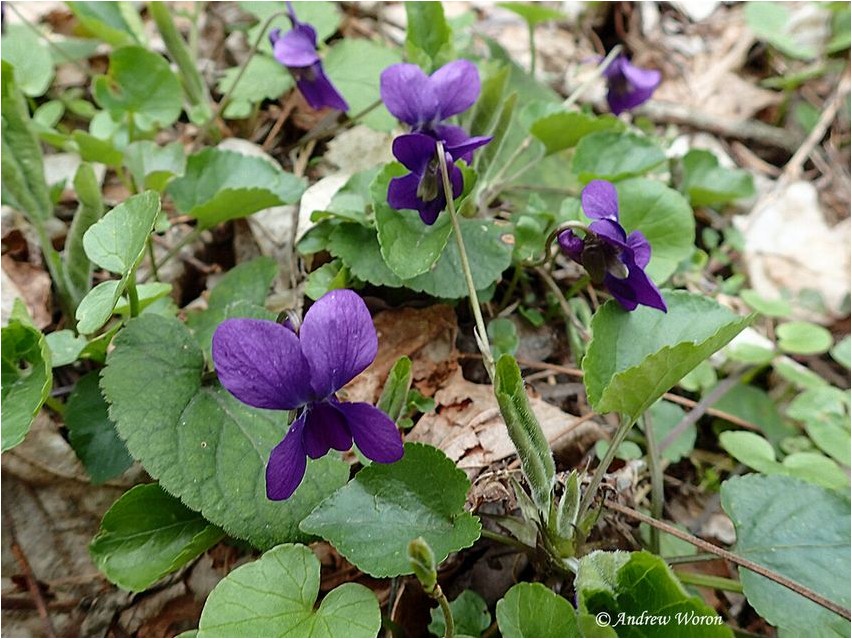
The pubescent violet (lat. Viola hirta) is a herbaceous perennial densely pubescent plant of the genus Violet (lat. Viola) of the violet family (lat.
Violaceae). It is grown in cultivation much more often than fragrant violet (lat. Viola odorata). But, since these two species are very similar in appearance, it is often mistakenly called the Fragrant Violet, although its flowers are less fragrant. The plant has healing powers. Young leaves and flowers are edible.
What’s in your name
The pubescent violet fully corresponds to the Latin name of the genus, having a purple color of flower petals. After all, the Latin word “Viola” means “purple”.
The specific epithet “hirta”, which is translated as “hairy”, was assigned to the plant for the predilection of this species of Violet to cover all its parts with whitish hairs, from which their natural colors somewhat fade, as if covered with noble gray hair.
The main name of the plant has synonyms, for example, “Short-haired violet”.
In cultivation under the guise of fragrant violet, pubescent violet or hybrids of these two species are much more often grown, since in appearance they are all very similar. Only true botanists can distinguish them by very subtle morphological characteristics, which is unknown to the ordinary gardener. But, nevertheless, there are a number of distinctive “clues”: the flowers of Violet pubescent either have a very weak aroma or are completely devoid of it; The rhizome of the fragrant violet forms stolons, superficial shoots, which is not typical for the pubescent violet.

Description
The basis of the perennial violet is a multi-headed creeping rhizome with a wide network of adventitious roots. Unlike Fragrant Violet, this species does not form stolons – above-ground shoots. From the rhizome, basal rosettes of leaves and peduncles rise to the surface of the earth. The plant is very winter-hardy.
The leaves of the basal rosette are located on long pubescent petioles. The length of the petioles and the size of the leaf blade depend on the time of year; in summer the petioles are longer and the leaves are larger in size. When young, the leaf blade is covered with dense pubescence on both sides, causing the green color to be somewhat muted, acquiring a grayish tint. As they age, the leaves gradually lose their pubescence, becoming almost bare. The shape of the leaves varies from ovate to heart-shaped. The edge of the leaf blade is decorated with a wavy, finely toothed edge, giving the leaves a decorative charm.
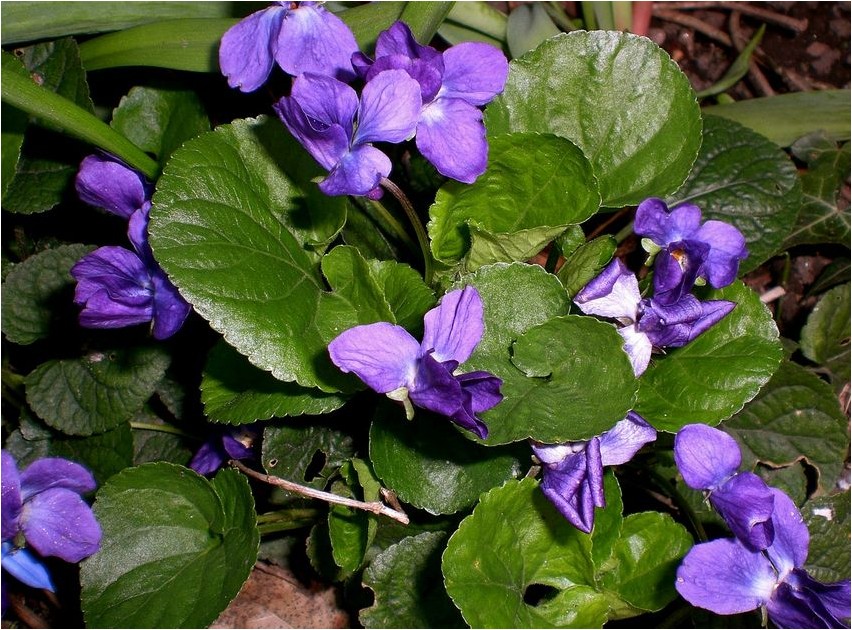
In April and May, single violet-blue or lilac flowers emerge on long, pubescent stems. Lanceolate or ovate bracts are located below the center of the stem, their edges covered with cilia. Compared to the fragrant violet, the scent of this species’ flowers is very weak or absent.
Typical of plants of the genus Viola, the bisexual flower form includes five petals of varying shapes and sizes, as well as a pointed spur.
Uses
Besides being a beautiful addition to a garden, the plant’s edible flowers, with a mild, sweet flavor, can be used to decorate salads and desserts. Young leaves and flower buds are also added to salads and soups. When cooked, the leaves resemble boiled okra (or okra, or gombo).
A tea made from the leaves and flowers has a calming effect on the nervous system. Since ancient times, the violet, along with the sweet-scented violet and wild violet, has been used by folk healers to treat ailments. All parts of the plant, from the roots to the flowers, possess a range of healing properties: they relieve headaches and insomnia; they are used as an anti-inflammatory, diaphoretic, and expectorant; and it is said to help in the treatment of cancer.
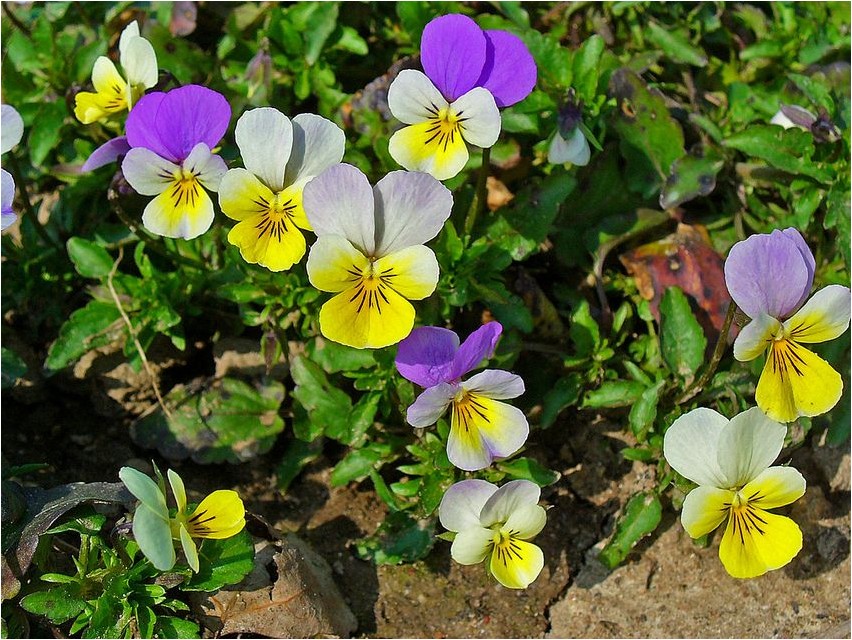
A worthy substitute for pansies
https://www. youtube. com/watch? v=BTS1LlbuPvw
Violet, pubescent violet





