Large plantain
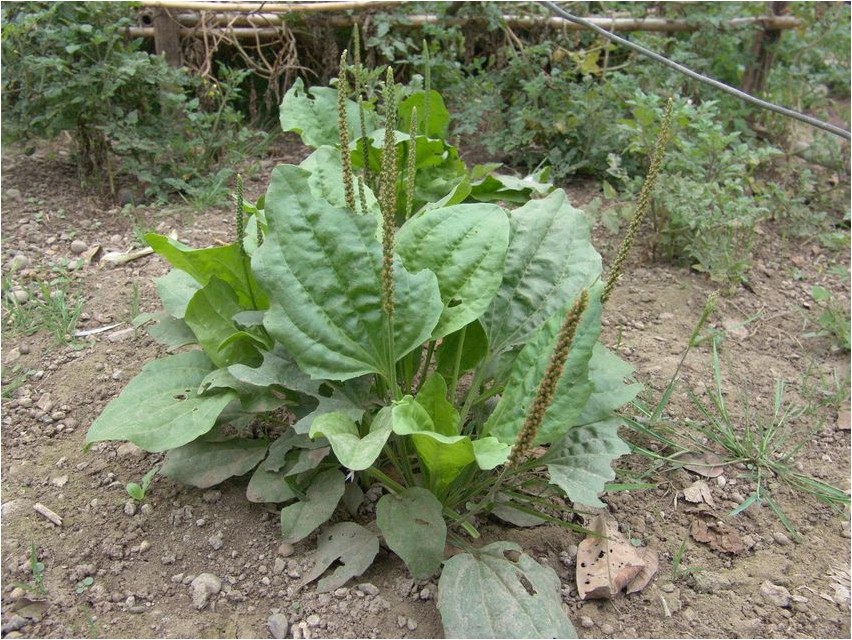
The large plantain is one of the plants of the family called plantains; in Latin the name of this plant will be as follows: Plantago major.
As for the name of the great plantain family itself, in Latin it will be: Plantaginaceae Juss.
Description of plantain
Great plantain is a perennial herbaceous plant, endowed with basal, broadly ovate leaves that are long-petiolate. The height of the peduncle of this plant will be about fifteen to thirty centimeters, such a peduncle will be bare, and it also bears a thick coconut, which in turn will consist of flowers of a brownish color. The flowers of the large plantain will be small in size, they sit one at a time in the axils of the bracts. The fruit of this plant is a multi-seeded capsule, and its seeds will be angular in shape and brown in color.
The flowering of the great plantain occurs from May to September, while the seeds ripen approximately in August-September. Under natural conditions, this plant is found in all regions of the European part of Russia, Crimea, Ukraine, the Caucasus, Moldova, Belarus, Central Asia, the Okhotsk, Amur and Kamchatka regions of the Far East, Western and Eastern Siberia. For growth, the great plantain prefers the banks of water bodies, garbage areas near housing, wastelands, clearings, forest meadows, fallow lands, edges of crops, clearings, forest roads, clearings and places near bushes.
Description of the medicinal properties of plantain
Great plantain is endowed with very valuable healing properties, and for medicinal purposes it is recommended to use the roots, leaves, inflorescences, seeds and juice of this plant.
The presence of such valuable healing properties is recommended to be explained by the content of plantain leaves containing large carotene, vitamin C, mucus, bitter and tannin substances, potassium, saponins, resin, protein substances, sterols, invertin enzymes and emulsions, essential oil, sorbitol, mannin, phytoncides and flavonoids. The seeds of this plant will in turn contain steroids, oleic acid, saponins, mucilage, fatty oil and the carbohydrate plantose.

This plant is endowed with very valuable analgesic, antiulcer, wound healing, anti-inflammatory, antiseptic, antiallergic, hypotensive, hemostatic and expectorant effects. An infusion prepared from plantain leaves will help liquefy, dissolve and remove mucus that is released when coughing. In addition, such an infusion will increase performance and hemoglobin content in the blood.
Locally, this plant is used for various ulcers and wounds: they will heal faster, and in addition to this, they will also provide hemostatic, bactericidal and anti-inflammatory effects.
Aqueous preparations prepared from the leaves of this plant have the ability to exert a regulating effect on gastric secretion: with hyposecretion, excitation will occur, while with hypersecretion there will be a decrease. Actually, this anti-inflammatory effect is achieved due to vitamin B, carotene and polysaccharides. Scientific medicine uses drugs based on this plant for dyspepsia, kidney disease, gastric and duodenal ulcers. The juice of plantain leaves is used for atherosclerosis, hypertension and acute gastrointestinal diseases.





