Teasel
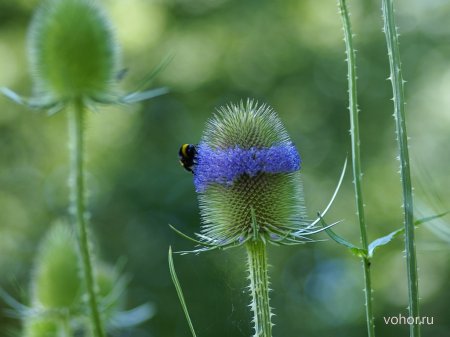 teasel or dipsacus is a biennial plant. The method has almost 15 varieties, but is widespread in culture. sowing It reaches a height of more than 1. 5 m. The inflorescence is spiny and can be snow-white, light, purple, or yellow in color. Flowering is suitable for July-August. Decorativeness describes the presence of growing in a flower garden. Often used to create cold-blooded bouquets. After drying, the cones can be painted, thereby giving them an independent look. The plant has medicinal properties and is used in folk medicine.
teasel or dipsacus is a biennial plant. The method has almost 15 varieties, but is widespread in culture. sowing It reaches a height of more than 1. 5 m. The inflorescence is spiny and can be snow-white, light, purple, or yellow in color. Flowering is suitable for July-August. Decorativeness describes the presence of growing in a flower garden. Often used to create cold-blooded bouquets. After drying, the cones can be painted, thereby giving them an independent look. The plant has medicinal properties and is used in folk medicine.
Care and cultivation of teasel
Teasel is one of the unpretentious plants that does not require special care or respect. It only grows best in sandy or loamy, tolerably damp and calcareous soils. It prefers to grow in sunny, sunless and shaded areas. Teassum is drought tolerant, but is certainly at risk for watering. It is distinguished by zealous growth, even when grown on poor soils, therefore it does not lack in feeding. Teasel is resistant to cold, therefore it does not seek winter shelter.
Reproduction
The plant is planted with grains, the sowing of which is carried out in the spring (possibly autumn sowing of grains immediately after harvesting) immediately into the open ground in the same area or in a ridge. After the emergence of seedlings, the plantings are thinned out, keeping a distance of almost 30 cm between the plants. In the fall, young plants are replanted in the same area as before they grew in the ridges. Teassum accumulates well by self-sowing.
Note

Teassus is extremely prickly, so it is not recommended to plant it along paths. In order not to get pricked, it is necessary to show fidelity to the presence of replanting the plant or cutting off the flower stalks.
Diseases and pests
It can be affected by powdery sediment; pests include field mice and teasel eel, which grows in drying cones.