Common corysh
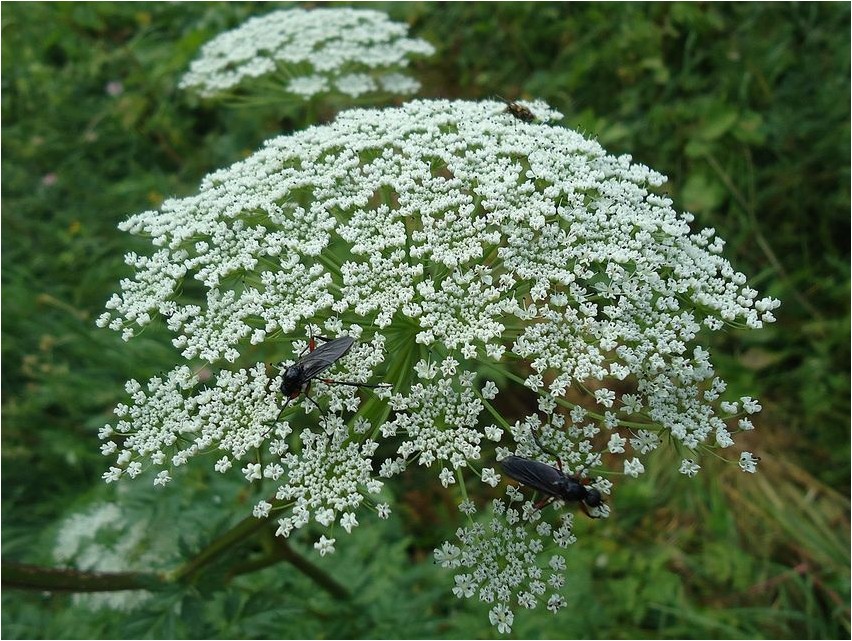
The common cory is one of the plants of the family called umbelliferae; in Latin the name of this plant will be as follows: Aethusa cynapium L.
As for the name of the common grasshopper family itself, in Latin it will be like this: Apiaceae Lindl.
Description of common korysh
Common Kokorysh is also known by the following popular names: Echinops, blekot, vekh, zaichev carrot, znoiha, omega small, parsley and dog parsley. Common kokorysh is an annual, and less often biennial, herbaceous plant, the height of which will reach eighty centimeters. The stem of this plant is hollow and branched. The leaves of the common thorn can be either double- or triple-pinnate. The leaves of this plant are deeply incised, they can be either ovoid or triangular. The upper leaves of the common cory are sessile and they are located on the enlarged vagina. Umbrellas will have twelve to eighteen rays, they are on rather long pedicels, which will be opposite to the leaves. The involucres consist of either one to three leaflets or are absent. The involucres of this plant are one-sided and consist of three linear leaves. The petals of the common korysh are painted white. The fruits are broadly ovoid and they are endowed with keel ribs.
Under natural conditions, this plant is found in the European part of Russia, Moldova, Belarus, the Caucasus and Ukraine. As for the general distribution, this plant is found in Asia Minor, Armenia, Scandinavia, the Balkan Peninsula, North America, Central, Atlantic and Southern Europe.
Description of the medicinal properties of common korysh
The common cory is endowed with very valuable healing properties, and it is recommended to use the juice and leaves of this plant for medicinal purposes. The presence of such valuable healing properties should be explained by the content of ordinary carbohydrates, steroids, essential oils, kaempferol, quercetin, isorhamnetin, pentatriacontane, glucose, mannitol and the following organic acids in the composition of the grass: butyric and formic.
The leaves of the common cory are present in quercetin, rutin, hesperidin, kaempferol, narcissin and 3-rhamnosyl glucoside of kaempferol. The fruits contain essential oil and the following flavonoids: hesperidin and quercetin 3-rutinoside.

As for traditional medicine, the use of the leaves of this plant is quite widespread. Such leaves are used in the form of poultices for anuria.
The juice of the common cory has found quite wide application in homeopathy for kidney stones, neuroses, as well as stomach and intestinal colic. Preparations prepared from the fruits of this plant have the ability to exhibit antifungal activity.
In case of kidney stone disease, it is recommended to drink the juice of the common cory. This juice should be drunk one tablespoon two to three times a day before meals for about three to four weeks. It is worth noting that such a remedy is characterized by a fairly high degree of effectiveness if all standards for taking a remedy based on the common cory are observed.
As for the economic value, when distilling fresh grass of the common coke, a small amount of essential oil is obtained, which is not endowed with practical significance. Opinions differ regarding the toxicity of this plant: the common cory is considered both a poisonous and a completely harmless plant.
An herb similar to parsley
https://www. youtube. com/watch? v=BbUgnh8kR9E





