Coleus hybrid
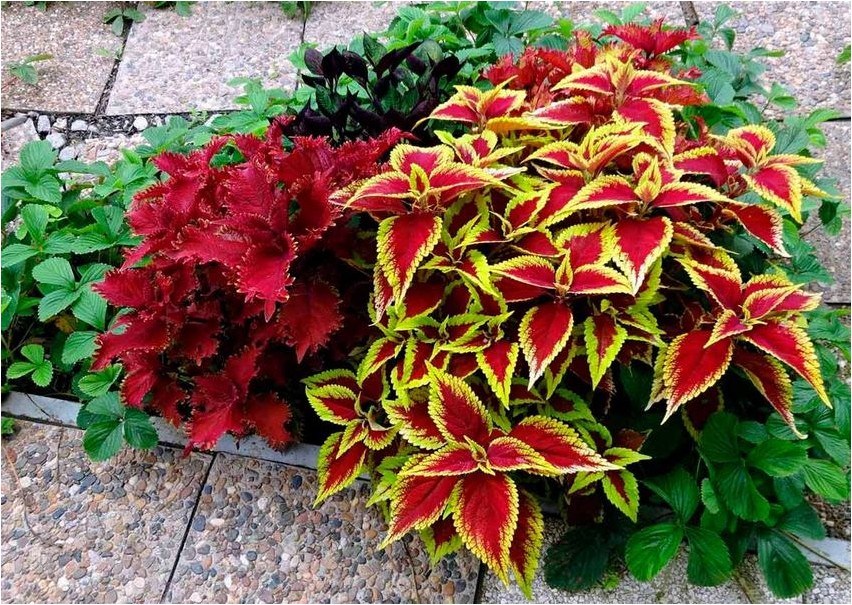
Hybrid coleus is also known under such names as decorative nettle and even hybrid solenostemon. In Latin, the name of this plant is as follows: Coleus hybridus.
This plant belongs to the family of Lamiaceae; in Latin the name is Laminaceae or Labiatae.
Description of the characteristics of growing a plant
As for the light regime, hybrid coleus prefers the sun, but the plant can develop well in partial shade. In the summer, the plant will need to be provided with abundant watering, and the air humidity should be average. The life form of this plant is a herbaceous plant. Hybrid coleus is recommended to be grown in flower beds or on the balcony as an annual plant. Also very often the plant can be found indoors on sunny windows. Also, hybrid coleus is often grown in winter gardens, and some hybrids are also grown as hanging plants in hanging baskets.
In culture, hybrid coleus can reach the following maximum sizes: this value can fluctuate between fifty and seventy centimeters. The plant will require annual replanting, and it is recommended to use standard size pots, but experts advise it is better to use cuttings to regenerate this plant. As for the degree of acidity of the soil for hybrid coleus, you will need either slightly acidic or neutral soil.
It is important to remember that in case of insufficient light, the variegated color of hybrid coleus can fade quite significantly, and flowering may also accelerate. The flowering of this plant can also be accelerated by a very significant content of potassium and phosphorus in the fertilizer. The leaves of hybrid coleus may fall off when the temperature drops to below fifteen degrees. It is important to consider that this plant is very susceptible to attacks from both spider mites and whiteflies, and aphids.
During the rest period, the optimal temperature should be about fifteen to twenty degrees. Also, throughout the entire dormant period, it will be necessary to provide both moderate humidity and moderate watering to this plant. If the plant is kept indoors, the dormant period is forced and will last from October to February. This dormant period is explained by the low air humidity, as well as the reduced illumination of this plant.

The easiest way to propagate hybrid coleus is to root its cuttings in water. In this case, reproduction is also possible through seeds. The plant will require pinching, which will lead to the formation of a lush hybrid coleus bush. If you want to get the most intense color of this plant, you will need to keep hybrid coleus not only in bright light, but also in diffused light.
It is important to remember that abundant watering and excessive amounts of fertilizing can significantly slow down the flowering of this plant, and also improve its decorative qualities. It is noteworthy that the leaves of hybrid coleus are endowed with decorative properties.
The leaves of this plant are petiolate and opposite, and their shape is very reminiscent of nettle leaves, but unlike them they will be wider and shorter. The color of the plant is a mixture of colors consisting of red, yellow, green, pink, burgundy and sometimes also a salad shade. It is worth noting that some hybrid varieties of this plant are endowed with monochromatic leaves. The largest and most vibrantly colored leaves belong to a plant called Coleus verschaffelta.