Volodushka sickle-shaped
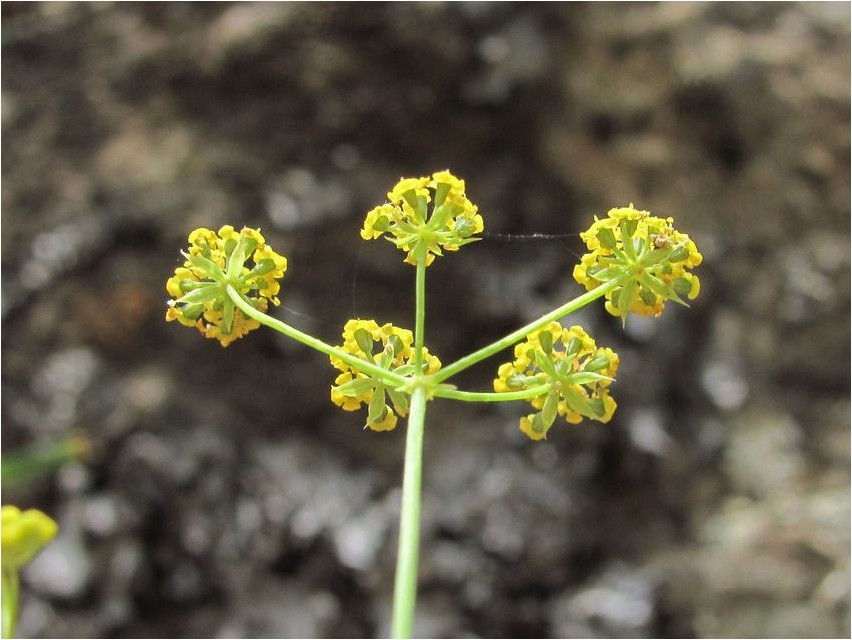
The sickle-shaped grass is one of the plants of the family called Umbellaceae; in Latin the name of this plant will be as follows: Bupleurum falcatum L.
As for the Latin name of this family itself, it will be: Apiaceae Lindl.
Description of the crescent worm
The sickle-shaped grass is a perennial herbaceous plant, the height of which can vary between twenty and eighty centimeters. The stems of this plant will be numerous and straight, they can also be slightly twisting or branched from the very base. At the same time, the lowermost leaves of this plant turn out to be larger and wider than all other leaves. In shape, such leaves can be either broadly obovate or elliptical, while their length will be about ten to fifteen centimeters, and the width will be about one and a half to two centimeters. Umbrellas are most often not numerous, they are on very short legs, and their length will be about one or two centimeters. One umbrella contains about ten to fifteen flowers, which are on short stalks approximately one millimeter long. The petals are painted in light yellow tones, the fruits themselves will be oblong, about three to three and a half centimeters long.
Flowering of this plant occurs in July, and fruit ripening occurs in August. For growth, this plant prefers the entire territory of the European part of Russia, Belarus, as well as in the Caucasus and the Dnieper region of Ukraine. The sicklewort prefers to grow in steppe shrubs, dry slopes and chalk outcrops.
Description of the medicinal properties of crescent worm
For medicinal purposes, the roots and herb of the crescent grass have become widespread. At the same time, grass and roots should be harvested throughout the entire flowering period. Phenolic compounds, coumarins, carbohydrates and adonite were found in the roots of this plant. Moreover, the leaves contain phenolcarboxylic acids, coumarins, rutin, isorhamnetin, quercetin, terpenoids and the following steroids: stigmasterol and betasitosterol. In addition, there are also derivatives of phenolcarboxylic acids: isochlorogenic and chlorogenic acid.
A decoction of crescent worm or an aqueous emulsion preparation for injection proves to be very effective against influenza and various other diseases that are also characterized by high body temperature. For the treatment of intercostal neuralgia, it is recommended to use the following medicinal product, which can consist of four to ten components: the actual component will be this plant itself, as well as peony root, fruits of Poncirus trifolia, turmeric, allspice. An aqueous decoction should be prepared from these components, which should be taken orally for particularly severe pain.

If you have the flu, you should take the following remedy: for preparation you will need to take eight to ten grams of dry crushed herb per glass of boiling water. This mixture should be infused for one hour, and then it is carefully filtered. It is recommended to take the resulting mixture before meals three to four times a day, half a glass.
For influenza, as well as febrile conditions, the use of the following remedy is recommended: to prepare it, take ten grams of crushed roots per three hundred milliliters of water. The resulting mixture is boiled over low heat for about five to six minutes, then infused for an hour and filtered. This remedy should be taken half a glass three to four times a day. When used correctly, this remedy has shown particular effectiveness.