Ampelopsis
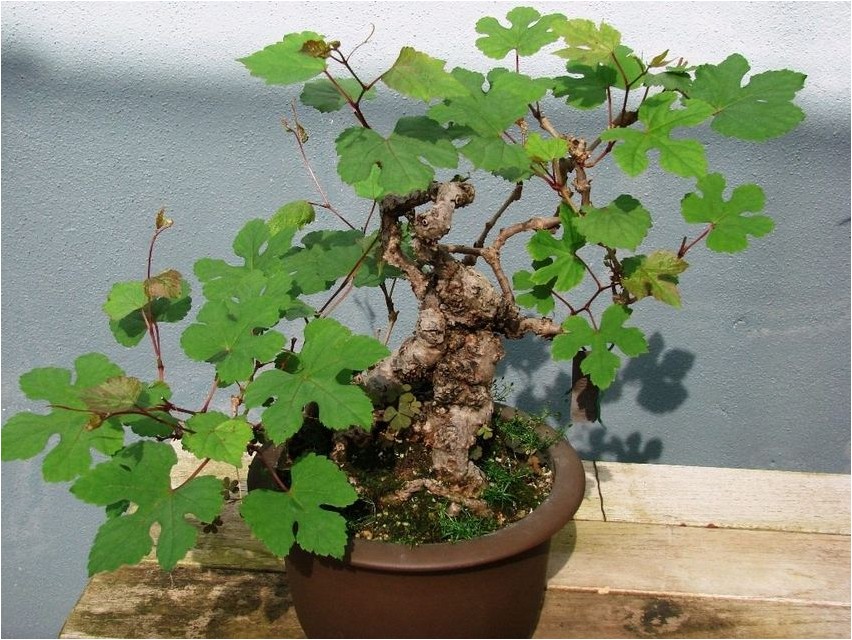
Ampelopsis (lat. Ampelopsis) is a winter-hardy woody plant from the Grape family. Another name is vineyard.
Description
Ampelopsis is an incredibly spectacular woody deciduous vine of relatively small size, endowed with deeply dissected and extremely openwork lush green leaves.
Small greenish flowers of ampelopsis are collected in paniculate pseudo-umbellate inflorescences, and the fruits of ampelopsis are inedible berries that invariably have a very bright color: they can be blue, orange, light blue, purple, pink, and so on. As for the seeds, they are always smooth in this plant and characterized by an ovoid shape.
In total, the genus Ampelopsis has up to two dozen species.
Where does it grow
Ampelopsis is most widespread in North America, as well as in East and Central Asia.
Usage
In the conditions of the middle zone, ampelopsis is often grown in culture — ampelopsis aconitolifolia has proven itself especially well. This plant can boast of being especially decorative with the onset of autumn — its colorful contrasting berries look amazing against the backdrop of luxurious crimson foliage!

Growing and care
Ampelopsis has little requirements for soil, but this plant will still feel best on well-drained, moist, deep and fairly fertile neutral loams. By the way, this beauty does not tolerate strong over-compaction and stagnant waterlogging of the soil very well.
Despite the fact that in general ampelopsis is very light-loving, it also responds quite well to light shading. In addition, this plant is also moderately wind-resistant, but if the wind gusts too strongly, its shoots can still break off. And the winter hardiness of ampelopsis is also very impressive, however, if the winter is very frosty, the shoots of the plant may freeze (this is especially typical for young specimens). It is best to plant ampelopsis in warm areas that provide reliable protection from cold, piercing winds.
In summer, ampelopsis should be watered abundantly, in the autumn and spring seasons — moderately, and with the onset of winter, watering should become very scarce and infrequent. However, they must be sufficient to maintain the viability of the plant”s rhizomes. For irrigation, it is best to use settled water at room temperature.
During the period of active growth, ampelopsis needs to be fed twice a month (this beauty especially loves organic matter), and in the winter season any feeding should be excluded.
Since ampelopsis is a fast-growing plant, regular and radical pruning of shoots is vital for it — as a rule, this is carried out in early spring. And, by the way, this procedure allows you to significantly increase the decorative effect of this handsome man!
Reproduction of ampelopsis is carried out mainly by seeds, and its seedlings begin to delight with their first flowering only from the fifth year of life. It is quite acceptable to propagate this plant by apical cuttings.
As for pests, sometimes beautiful ampelopsis can be affected by spider mites or thrips. If it is over-moistened, its roots may begin to rot (this happens especially often in the winter season), and if the air is dry or the top soil layer is excessively dry, its leaves may begin to turn yellow. If ampelopsis categorically refuses to bloom, it is possible that it is experiencing either a moisture deficiency or a lack of lighting.





