Dandelion officinalis
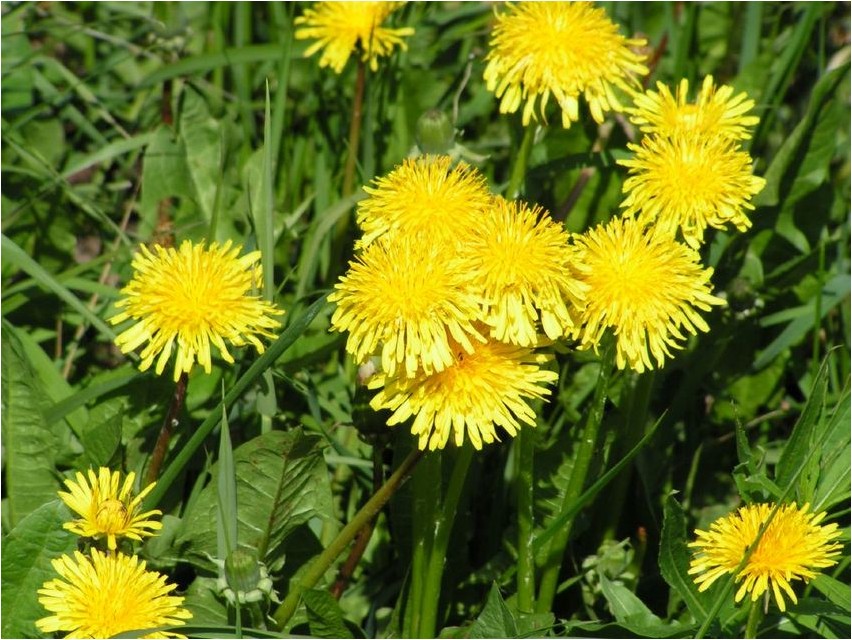
Dandelion officinale is one of the plants of the family called Asteraceae or Asteraceae; in Latin the name of this plant will be as follows: Taraxacum officinale Web.
As for the name of the dandelion family itself, in Latin it will be like this: Asteraceae Dumort.
Description of dandelion
Dandelion officinalis is a perennial herbaceous plant, the height of which will reach thirty centimeters. Such a plant will be endowed with a thick, slightly branched tap root, as well as a short rhizome. The leaves of this plant are lanceolate or oblong-lanceolate, and they will also be toothed. The length of such leaves is about ten to twenty-five centimeters, while the width will be one and a half to five centimeters. Such leaves of dandelion officinalis will be collected in a rosette. The flowers, in turn, are collected in fairly large baskets, the diameter of which will reach five centimeters. All dandelion flowers are bisexual and ligulate, and they are painted in bright yellow tones. The receptacle of this plant will be pitted, bare and flat. The fruit of dandelion is a spindle-shaped achene, endowed with a tuft, which will consist of white, unbranched hairs. The fruit itself will be colored grayish-brown.
Dandelion blooms from May to June. It is noteworthy that sometimes flowering can occur in the autumn. It should be noted that this plant is one of the most common plants. For growth, dandelion prefers clearings, meadows, orchards, vegetable gardens, parks, places near roads, near houses and on pastures. Under natural conditions, this plant will be found in Siberia, the Caucasus, Central Asia, Sakhalin, Kamchatka, the European part of Russia, Belarus and Ukraine.
Description of the medicinal properties of dandelion
Medicinal dandelion is endowed with very valuable healing properties, and it is recommended to use the roots, juice, herbs and leaves of this plant for medicinal purposes. Leaves, sap and grass should be harvested in the month of June, while roots should be harvested either in early spring or late autumn.
It is recommended to explain the presence of such valuable properties by the content of rubber substances in the milky juice of this plant. Taraxacin, taraxacerin, manganese salts, iron, calcium, phosphorus, protein, rubbery substances, choline, resins, saponins and bitter glycoside taraxacerin. The roots contain a very significant amount of inulin, as well as inositol, taraxal, asparagine, stigmasterol, laculin, beta-sitosterol and beta-amyrin, as well as many other useful substances.

Dandelion officinalis is endowed with a very effective laxative, choleretic, antipyretic, expectorant, antispasmodic, sedative and mild hypnotic effect. It is noteworthy that there is evidence that an infusion of the leaves of this plant can relieve intoxication that was caused by snake bites. An aqueous infusion prepared from dandelion leaves has the ability to improve appetite, general metabolism and digestion, and this remedy will also increase milk production in nursing women and increase the overall tone of the body.
It should be noted that the biologically active substances in this plant will help reduce fermentation processes in colitis when taking food pulp based on dandelion officinalis.