Austrian flax
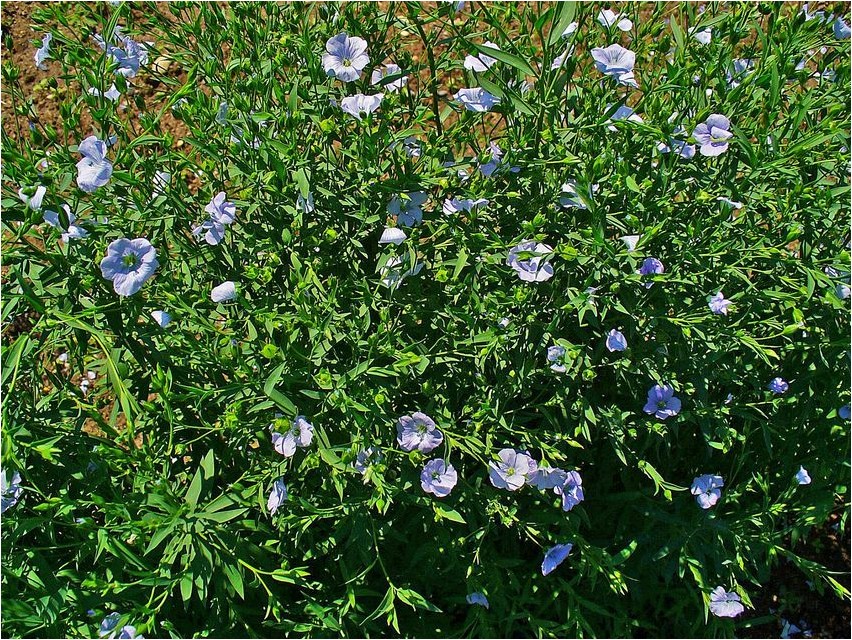
Austrian flax is one of the plants of the family called Flaxaceae; in Latin the name of this plant will be as follows: Linum austriacum L.
As for the name of the Austrian flax family itself, in Latin it will be: Linaceae S. F. Gray.
Description of Austrian flax
Austrian flax is a perennial herbaceous plant whose height will vary between ten and seventy centimeters. At the very base of this plant, rather short and leafy sterile shoots develop. The fruiting shoots of Austrian flax will be straight, and at the top they are branched. The stem leaves of this plant are linear, sessile and acute, and their length can reach one centimeter. The inflorescence of Austrian flax will be paniculate, and the flowers will be five-membered. The sepals are sharp, they have a filmy edge, and the petals, in turn, are colored blue. The fruit of the Austrian flax is a capsule, which is located on rather strongly deflected and drooping pedicels. In natural plants, this plant is found in the Caucasus, Moldova, the Irtysh and Verkhnetobolsky regions of Western Siberia, Crimea, the Carpathians and the Dnieper region in Ukraine, as well as in the northeast of the Aral-Caspian region of Central Asia and in the Black Sea, Lower Volga and Volga-Don regions of the European part of Russia. As for its general distribution, Austrian flax can be found in Asia Minor, Iran, Southern and Central Europe.
This plant can grow both in groups and scatteredly in steppes, meadows, grasslands, in forest clearings, pebbles, edges, places among bushes, on rocky, clayey and grassy slopes, along the edges of roads and fields, in vineyards, gardens, on chalk outcrops, on steppe and steppe slopes. For growth, this plant prefers chernozems and fertile meadow soils, clay and gravelly soils, as well as limestone slopes.
Description of the medicinal properties of Austrian flax
Austrian flax is endowed with very valuable healing properties. The presence of such healing properties should be explained by the content of vitamin C and D, fatty oil, essential oil and linoleic acid in this plant. The aerial part of this plant contains carotene, alkaloids and vitamins C, E, P, while the seeds contain fatty oil.
It is noteworthy that it is recommended to use Austrian flax seeds for medicinal purposes. The seeds of this plant are endowed with anti-inflammatory, emollient, and enveloping effects. Such healing agents are used for gonorrhea, enterocolitis, colitis, dysmenorrhea, and are also used externally in the form of powdered cake for poultices.

It should be noted that Austrian flax is an ornamental plant. The stem of this plant will contain fiber, which is used to make twine. In cultivation, the fiber of this plant will improve its properties and will approach low-quality varieties of fiber flax.
To prepare a healing product based on Austrian flax, you will need to take one teaspoon of Austrian flax seeds per glass of water. The resulting mixture should be boiled over fairly low heat for about four to five minutes, then the mixture is left to infuse for one hour, and then filtered very carefully. After this, such a healing mixture should be supplemented with boiled water up to the original volume. Take the resulting healing remedy based on Austrian flax before meals three times a day, two tablespoons.





