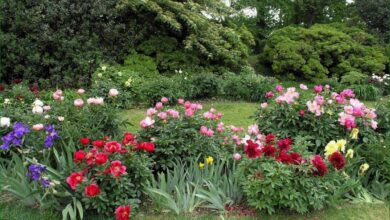
Ankhusa (oxwort)
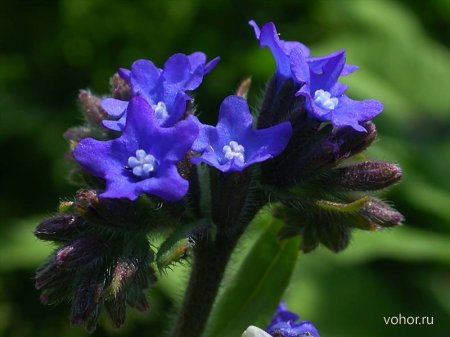
Ankhusa or cowwort are related to unpretentious annual plants, but there are still perennial species.
The plant forms luxurious bushes 25-100 cm high. The flowers are miniature and come in blue, blue, and violet colors. Flowering starts in June and lasts throughout the summer. Some species have medicinal properties.

care and cultivation of ankhusa (cowweed)
Anhuza prefers to grow in sunny or slightly shaded areas. Well-drained, light soils appear to be most suitable.
Volovik is provided with moderate watering on dry and scorching days. There is no need for more abundant and frequent watering. Excess moisture negatively affects the condition of the plant.
Organic fertilizers are applied during planting or in the spring as mulching; ankhusa does not need additional fertilizing.

Tall varieties need support. Due to the influence of heavy rain or wind, the stems have a good chance of dying. Timely removal of faded flower stalks will activate re-blooming.
In autumn, the ground component is cut off at the root, and the plantings are covered with spruce branches. Current events are relevant only to perennial species.

reproduction
ankhusa is propagated by seeds, which are sown in March, in a moist and loose substrate. The grains are germinated at a temperature within 18 degrees Celsius, under film. Seedlings are planted in deep soil in early May, when the threat of return frost has passed. Before planting, add humus or compost to the ground. The first period of time after planting young plants water systematically plants are planted at a distance of 20-30 cm from each other.
Seeds of perennial varieties are sown before winter or in spring for seedlings. Volovik is able to reproduce by self-sowing.

diseases and pests
May suffer from aphids or be affected by powdery mildew.
Usage
Low species are often used to organize borders; they are grown in containers and pots for landscaping balconies and terraces. Tall species are planted along fences and used as an accompanying plant in a varied flower garden. Cowweed goes well with seaside cineraria, mullein, marigolds, Iberis, flax, and lobularia.

note
volovik is related to poisonous plants. It is not recommended to purchase and plant it if you have children.