Birch
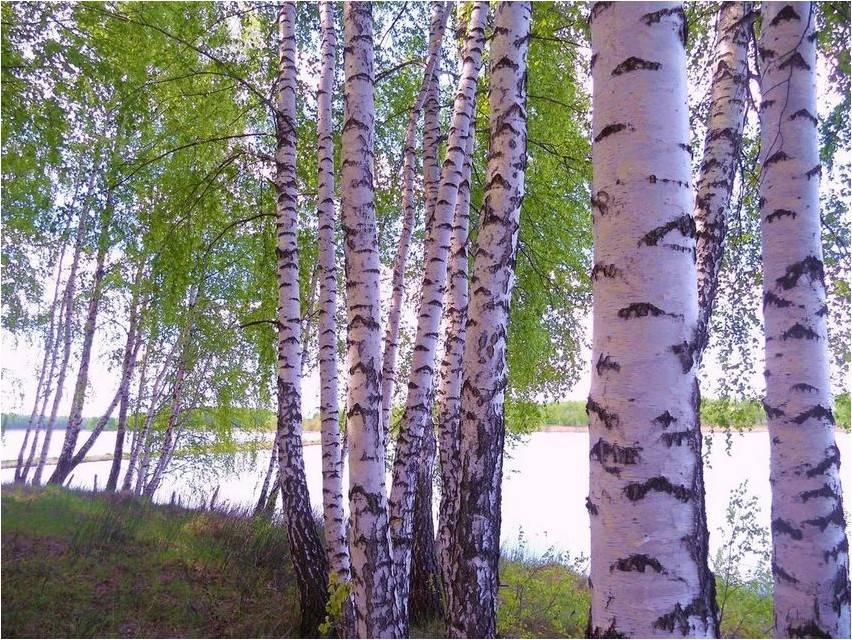
Birch (lat. Betula) is a genus of deciduous shrubs and trees of the Birch family. Includes more than 100 species. It is considered one of the most widespread and important forest-forming species in Russia. It grows naturally in the Northern Hemisphere.
Typical places are plains, dry rocky slopes, hot steppes, damp river banks, swampy tundra and mountains. Used in landscaping, farming, medicine, cooking and other purposes. It is a soil-improving crop.
Characteristics of culture
Birch is a deciduous shrub or tree up to 45 m high with a powerful root system and a trunk covered with white, pinkish, yellowish or reddish-brown, gray or black bark. The birch bark (outer bark) peels off in ribbons of varying sizes. As it grows, the lower part of the trunk becomes black and fissured. The buds are sessile, covered with sticky scales.
The leaves are green, smooth, entire, triangular-ovate or ovate-rhombic, with a wedge-shaped base, often truncated, arranged alternately. In autumn the foliage turns yellow or golden yellow. The male flowers are small, green, collected in erect earring-shaped thyrsi, up to 4 cm long. In autumn, the inflorescences droop and become brown in color. The outside of the inflorescences are covered with a resinous substance that protects them from moisture.
Female catkins are formed on the tops of shortened shoots, which are formed from the buds of last year”s shoots. Women”s catkins bloom at the same time as men”s, differing in the structure of their scales and length. The fruit is a flattened lentil-shaped nut, formed from fertilized female catkins. The fruits ripen in July-September and fall quickly. The seeds are small.
Subtleties of growing and planting
Birch trees develop well on moderately moist, loose, fertile soils, with an optimal content of humus and minerals. The culture has a negative attitude towards overly calcareous, waterlogged and poor substrates. Birch trees are photophilous, although they grow well in shaded areas and even in dense shade. Intensely lit areas should be reserved for decorative species. Birch trees are frost-resistant plants; they easily tolerate sudden temperature changes and spring frosts.

Birch trees are propagated by seeds, which are collected when the catkins turn brown. Sowing occurs in the fall or early spring. After felling, the tree is replanted by stump suckers forming at the root collar. This applies not only to young trees but also to 60- to 70-year-old specimens. Propagation by root suckers can produce interesting multi-stemmed forms that will enhance any garden or summer cottage.
Plant 3- to 5-year-old birch saplings in early spring, while older trees should be planted a couple of months before the onset of persistent cold weather. Planting timing depends on the regional climate. The optimal distance between plants is 3-4 m. Do not bury the root collar. The soil mixture is composed of leaf mold, washed river sand, and peat in a ratio of 2:2:1. A 10- to 15-cm layer of drainage is recommended. Care
Ornamental birch trees require annual fertilization. Fertilize in early spring (before the leaves appear). Recommended fertilizers include mullein (1 kg), urea (10 g), and ammonium nitrate (15 g). Dissolve the specified amount of fertilizer in 30 liters of water and water. The resulting solution is suitable for 10-20-year-old trees; for mature trees, increase the dosage.
Water only during prolonged droughts. Loosen and weed as needed. Loosen the soil to a depth of 3-4 cm. Mulching the trunk area is optional, but it will significantly facilitate plant care. Peat compost, wood chips, pine litter, or wood chips can be used as mulch. Formative pruning is not necessary, but sanitary pruning is mandatory. This involves removing dry and damaged shoots. The most dangerous pests for birch trees are pipe roller beetles, nun moth caterpillars, and cockchafers. If insects or their larvae are detected on plants, immediately treat them with insecticides, remove damaged leaves, and dig around the trunks.
Uses
Most birch species are widely used in landscape design. They are suitable for gardens, parks, and alleys. They are used to create open groves, dense stands, and protective shelters. Ornamental, low-growing varieties look magnificent in solitary plantings and as a backdrop to lawns. They combine well with both coniferous and deciduous shrubs and trees. Perennial and annual flowers and various grasses can complement this combination. Birch branches are especially often used to make bath brooms. The species is also used for firewood.