Broccoli
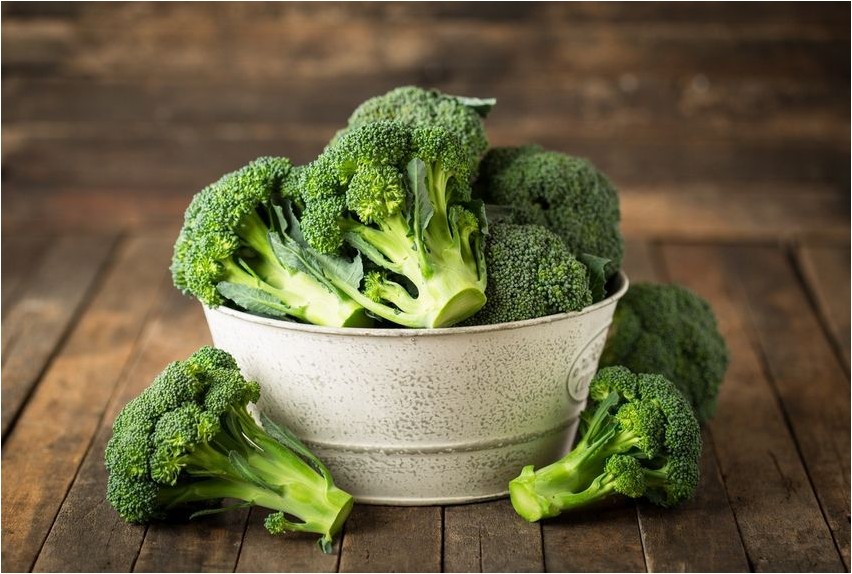
Broccoli (lat. Brassica silvestris) is a vegetable crop; annual plant of the Cruciferous or Brassica family. Genetic predecessor and closest relative of cauliflower.
Italy is considered the birthplace of broccoli. The crop has not yet become widespread, but it continues to be cultivated in private gardens and summer cottages.
Characteristics of culture
Broccoli is a plant with a dense stem 60-100 cm high, forming at the top a large number of succulent flower stalks ending in groups of small buds of green, purple or bluish color. Succulent flower stalks with buds are collected into a loose head, which is cut off before the buds form yellow flowers that are not suitable for food. The leaves are large, entire, petiolate, wavy curved at the edges. The leaf blades have a waxy coating.
Unlike its relative cauliflower, broccoli, even after removing the apical head, is capable of forming suckers in the leaf axils. Broccoli is a cold-resistant crop; adult plants can withstand frosts down t o-7C. The plant is sensitive to elevated temperatures, especially during the formation of heads. Broccoli is moisture-loving, the optimal soil moisture should be 70-80%, and air moisture — 85%. The growing season is 75-100 days.
Growing conditions

Broccoli grows best in cool, damp climates. The optimal growing temperature is 18-23C. The preferred soils are fertile, moist, medium loamy and neutral. Acidic soils are not suitable for broccoli. Growing crops in floodplains is not prohibited. Broccoli is light-loving and, unlike cauliflower, does not need shading.
Soil preparation and sowing
The soil for growing the crop is prepared in the fall: it is carefully dug up and rotted humus is added. In the spring, the ridges are loosened and fed with mineral fertilizers, wood ash and dolomite flour.
Broccoli is grown by sowing seeds in the ground and using seedlings. Seeds are sown for seedlings in three periods: the first — from March 15 to April 15, the second — from April 15 to June 15, the third — from June 15 to July 1. The first sowing is carried out in seedling boxes, the second and third — in greenhouses or greenhouses. The seeding depth is 0. 5 cm. The air temperature in the room before germination should be 20-22C, then it is reduced to 10-12C, and then gradually raised to 20C. The seedlings are planted in separate containers until 1-2 true leaves appear on the seedlings.
Seedlings of the first sowing are planted in open ground in May, the second — in mid-June, and the third — at the end of July. Overgrowth of seedlings should not be allowed. The planting pattern is 70*20 cm or 60*30 cm. When sowing seeds directly into the ground, the rows are placed at a distance of 60 cm from each other, the distance between plants should be 20-30 cm.
Care
1. 5-2 weeks after planting the seedlings, the young plants are hilled up and fed with liquid mullein. The second feeding is carried out before the formation of broccoli heads. One of the most important measures for caring for broccoli is watering. With a lack of moisture, plants form loose and tasteless heads. To preserve moisture for a longer period, the soil near the stem zone is mulched. This procedure will also retard the growth of weeds.
Harvesting and storage
Broccoli is harvested either early in the morning or late in the evening. cut off well-formed heads with a diameter of 10-20 cm. Heads with inflorescences that have appeared are not suitable for food and should not be collected. It is not recommended to overcook the heads, as their taste deteriorates.