Woolly hornwort
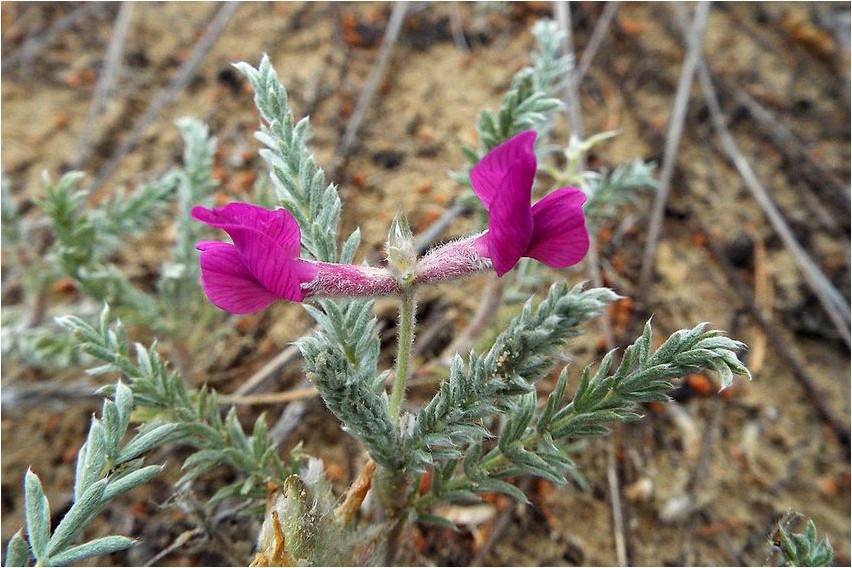
The woolly plant is one of the plants of the family called legumes; in Latin the name of this plant will be as follows: Oxytropis lanata (Pall.) DC.
As for the very name of the family of the woolly cactus, in Latin it will be like this: Fabaceae Lindl. (Leguminosae Juss.).
Description of the woolly beetle
The woolly plant is a perennial stemless plant, the height of the peduncle will be about five to seven centimeters. The underground shoots of this plant will be elongated, they are covered with imbricated, overlapping woolly stipules. The length of the leaves of the woolly oysterwort will be about five to seven centimeters, and the width will not exceed one and a half centimeters; such leaves will be endowed with twelve to eighteen whorls. In total, one whorl will have about four to eight leaves, their length is three to twelve millimeters, and their width will be about one to two and a half centimeters; at the top, such leaves will be blunt. The flower shoots of this plant are densely protruding and woolly, and the flowers are located in broadly ovate heads. The corolla of the woolly plant is colored in reddish-pink or purple tones, the length of the flag of this plant is twenty to twenty-five millimeters, and the length of the wings is eighteen to twenty millimeters. The length of the boat of the woolly moth will be approximately fifteen to sixteen millimeters, the length of the spout is two millimeters. The bean of this plant will be ovoid, its thickness is six millimeters, and its length will be twelve to fourteen millimeters.
The flowering of the woolly oysterwort occurs in the period from June to July. Under natural conditions, this plant is found in the Angara-Sayan and Daursky regions of Eastern Siberia. For growth, the woolly moth prefers sandy pine forests, river valleys and sand dunes. It is noteworthy that this plant is also a very valuable honey plant.
Description of the medicinal properties of the woolly plant
The woolly herb is endowed with very valuable healing properties, and it is recommended to use the herb of this plant for medicinal purposes. The term grass includes leaves, flowers and stems.
The presence of such valuable healing properties is recommended to be explained by the content of flavonoids, coumarins and alkaloids in this plant. In turn, the composition of the aerial part of the woolly alkaloid contains alkaloids, rhamnetin, rhamnazin and their derivatives, saponins, triterpene soyasapogenin, astragalin, myricetin, phenolcarboxylic acids and their derivatives.

As for Tibetan medicine, here this plant is quite widespread. Here a decoction prepared from the leaves and flowers of this plant is used as a diuretic, hemostatic and antipyretic.
It should be noted that experimental studies have proven that preparations based on this plant and the amount of flavonoids in the composition of the woolly plant have the ability to exhibit vasodilating and hypotensive properties.
A decoction prepared from the herb of the woolly herb is recommended for use for various cardiovascular diseases. In addition, experimental studies have shown that the aqueous-alcoholic extract of this plant is endowed with antiviral activity against the Sendai virus.