Cephalophore
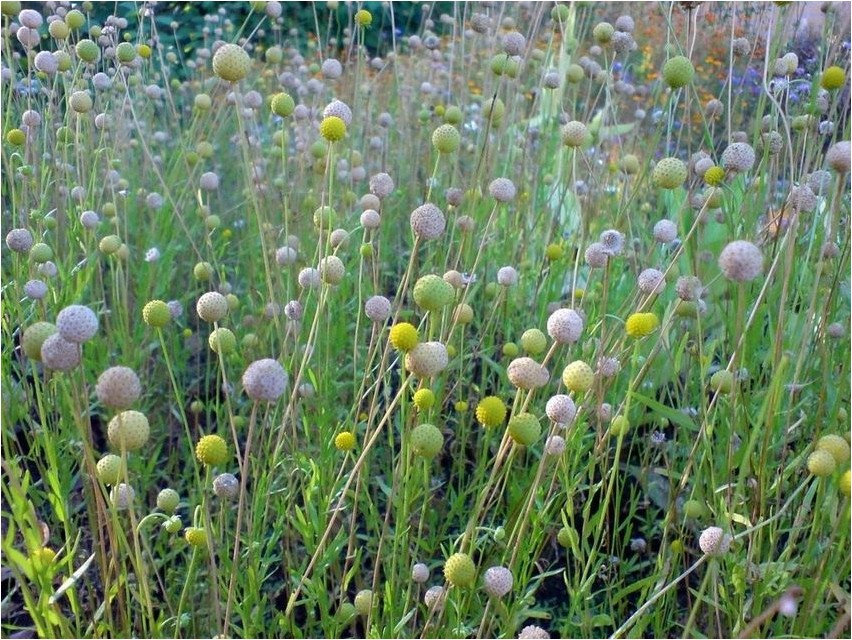
Cephalophora (lat. Cephalophora) is an annual plant of the Asteraceae, or Asteraceae, family. The plant’s origin is considered to be Central America.
In nature, cephalophora is found in mountainous subtropical regions. Widely cultivated in America, Western Europe, Central Asia and in the southern part of Russia. In the Urals and Siberia, cephalophora is cultivated on personal plots as a spicy and aromatic plant.
Characteristics of culture
Cephalophora is an annual herbaceous plant up to 75 cm high with a highly branched taproot that goes deep into the soil. The leaves are dark green, lanceolate, sparsely toothed or entire, alternate, pubescent with small felt hairs, covered with small punctate glands, and have no petioles. The flowers are small, yellow in color, collected in single capitate inflorescences of a spherical shape. The fruit is a dark brown achene, up to 1. 5 mm long.
Subtleties of cultivation
The cephalophora does not have any special requirements for soil conditions, but for its cultivation it is recommended to allocate areas with fertile, loose, light, moderately moist, neutral soils. The location is sunny, openwork shade will not interfere with the normal development of the culture. Cephalophora loves space; in free areas the bushes look more lush, voluminous and attractive. Cephalophora blooms in June – July, usually for 25-35 days.
The crop is propagated by seeds. Seed germination lasts 4-5 years. Seeds ripen in large quantities in late August – early September. The seeds are sown immediately in open ground; the seedling method is not prohibited. The optimal sowing time is early May. The planting depth is 0. 2-0. 5 cm. Shoots appear a week after sowing. Young plants cannot withstand even short-term frosts, so they need shelter at night. Night cold snaps will not cause any harm to adult cephalophores. When 1-2 true leaves appear on the seedlings, the crops are thinned out, leaving a distance of 30-40 cm between plants.
Harvest
The cephalophora is harvested during the period of mass flowering. Inflorescences, stems and leaves are harvested for medicinal and food purposes. Plants are cut at a height of 10-15 cm. The workpieces are dried in a suspended state in a well-ventilated area, protected from direct sunlight, and then placed in paper bags, having previously been crushed. Cephalophora inflorescences are stored separately.

Application
Cephalophora is widely used in cooking, folk medicine and ornamental gardening. In addition, dry inflorescences are used to create winter bouquets. The aerial part of the cephalophora has a pleasant aroma of fresh strawberries, which is due to the presence of fragrant essential oil in the plants.
Cephalophora has a beneficial effect on metabolism, so it is often used to make various medicinal balms. In cooking, plants are used to prepare first and second courses, salads and flavoring of alcoholic and non-alcoholic drinks. In small quantities, cephalophore is added to baked goods and flour confectionery products, marinades and sauces.





