Jujube
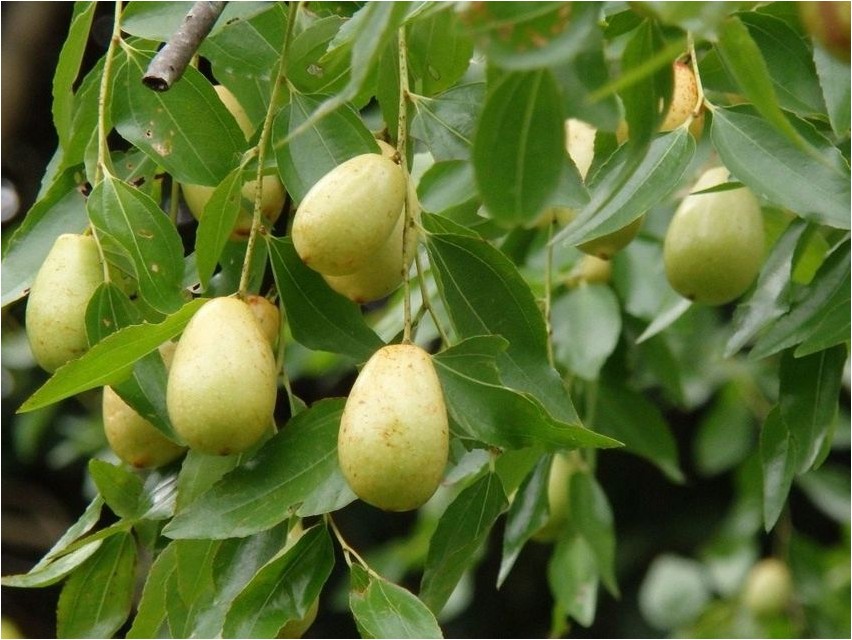
Zyzyphus is one of the plants of the buckthorn family; in Latin the name of this plant will be as follows: Zyzyphus jujuba Mill.
As for the name of the jujube family itself, in Latin it will be: Rhamnaceae Juss.
Description of jujube
Jujube is also known under the following names: jujube and unabi; this plant is a spreading thorny shrub or a small tree, the height of which does not exceed four meters. This plant will be endowed with bare and red-brown spreading branches. The leaves of this plant are alternate and medium-sized, they are ovoid in shape and pointed, as well as leathery and equipped with jagged edges.
The stipules of jujube are spiny and quite large, while the flowers are quite small. The flowers are bisexual, star-shaped in shape, they are endowed with five fused petals, they can be either single or collected in groups of three to five in dense glomerular inflorescences. Such jujube flowers are colored in greenish tones. The fruits of this plant will be spherical and small in size, they are shiny and colored in red-brown tones, and are also endowed with whitish powdery sweet pulp and have a pleasant aroma. It should be noted that jujube fruits are edible.
Under natural conditions, this plant can be found in Central Asia and Transcaucasia. For growth, jujube prefers dry, sunny slopes of mountains and hills. In total, there are about a hundred different species that grow in the subtropical and tropical regions of Australia, Asia and Africa.
Description of the medicinal properties of jujube
Jujube is endowed with very valuable healing properties. The presence of such medicinal properties is explained by the content of tannins in the plant, which are found in the bark of the roots. The leaves contain anesthetic substances, resins, alkaloids, vitamin C, phytoncides, glycosides, while the fruits contain sugars and organic acids. It should be noted that by the time they are kept, the fruits contain even more carotene, rutin and vitamin C.

Even in ancient times, Arab doctors used the healing properties of jujube against kidney stones, pulmonary diseases, bronchial asthma, kidney and bladder diseases, and also as a mild laxative only when the fruits of this plant are ripe. If the fruits are still unripe, then they are recommended to be used for diarrhea.
The fruits of this plant are believed to strengthen the stomach and help relieve diarrhea, stop hair loss, stop bleeding, and strengthen and lengthen hair. The leaves can soften hot swellings and can even dissolve them, and jujube leaves are also useful for treating lung diseases and asthma.
Dried jujube fruits made into syrup are recommended for chest pain and coughs: approximately five to ten jujubes are recommended. This remedy is quite effective.
As for the infusion of this plant, it should be consumed as a diuretic and tonic. Combined with other herbs, this jujube-based infusion should be used to treat neurasthenia, as well as an expectorant and emollient for catarrhal conditions and sore throats, and also for bronchial asthma. Ziziphus bark, along with other plants, is used as an astringent for diarrhea, as well as fever and rheumatism. The seeds of this plant are very effective sedatives. Remarkably, the fruits of this plant have valuable antibacterial properties.





