Bryonia
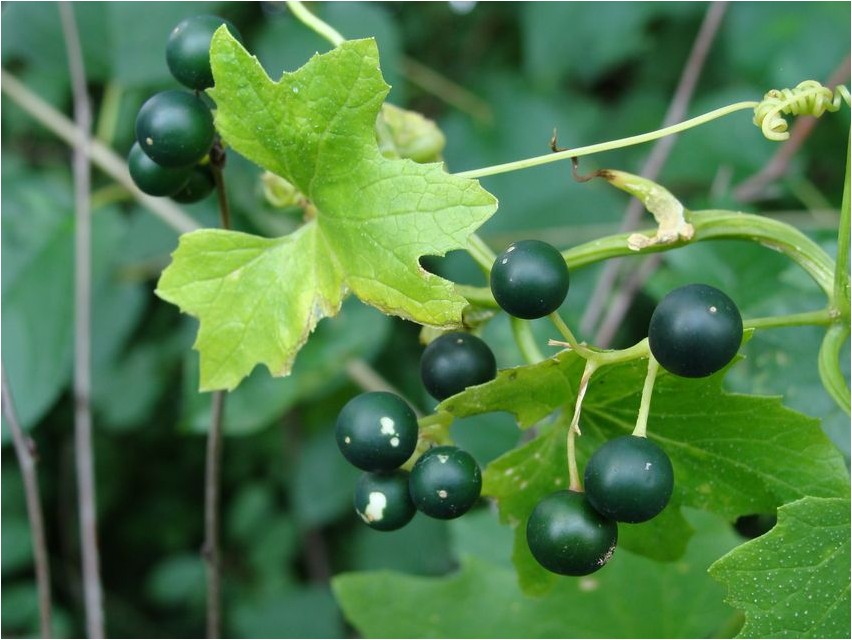
Bryonia, or Crossstep (lat. Bryonia) is a genus of perennial herbaceous plants of the Cucurbitaceae family. In nature, Bryonia is found in the Mediterranean, Western Europe, Central Asia and the European part of Russia.
The most common species is white bryonia, or white step (lat. Bryonia alba).
Characteristics of culture
Bryonia is a herbaceous plant with thick radish-like roots and climbing stems. Leaves are separate or lobed. The flowers are small, yellowish-white or yellowish-green, collected in axillary inflorescences. The fruit is a small berry, with a thin skin, reaches 0. 5-1 cm in diameter, and may have a reddish, greenish or black color.
White bryonia (lat. Bryonia alba) — the species is represented by perennial plants with a rather large tuberous root and flexible stems that climb along the support due to tendrils. The leaves are dark green, five-lobed, pubescent with sparse, harsh hairs. The flowers are small, yellow, and have no decorative properties. The fruit is a juicy black berry.
Features of cultivation
Bryonia is propagated by seeds. They are sown on previously prepared and fertilized areas. You can sow bryonia in close proximity to fences, gazebos and other buildings. The location is preferably open, sunny, the soil is light, loamy, fertile, moderately moist and drained. Sandy loam soils are not prohibited. It is undesirable to sow bryonia in saline, waterlogged and swampy soils. The culture can be propagated by dividing the tuberous root. This procedure is carried out in the fall.
Caring for bryonia consists of abundant watering, followed by removing weeds and loosening. Before flowering, fertilize with chicken manure diluted in water in a ratio of 1:15. It is recommended to apply organic fertilizers in early spring. Mulching the tree trunk area is useful, but not necessary. Bryonia is cultivated for decorative purposes; its berries are poisonous. For the winter, the plants are covered with spruce branches. All work with bryonia should be carried out with gloves. Children should not come into contact with the plant, much less consume its berries.

Application
Bryonia is suitable for vertical decoration of balconies, arches, fences and gazebos. Bryonia alba is used in folk medicine, but is not used in scientific practice at all due to the toxicity of all aerial parts. For medicinal purposes, the stems and leaves are cut into small pieces, dried under shady canopies and placed in a tightly closed container. Bryonia roots are also beneficial. In the fall, they are dug up, washed thoroughly in cool water, cut into pieces 10-15 cm long, and dried in a special dryer at a temperature of 50C. The roots are stored in the same way as the stems. The shelf life of medicinal raw materials is 3 years.
Decoctions and infusions from the roots are used externally in the treatment of migraines, gout, chronic inflammation of muscles and joints, as well as the removal of warts. Dry bryonia root powder is used as a wound healing agent. Decoctions of roots and stems are useful for bronchitis, headaches and inflammation of the pleura and lungs. The use of infusions is indicated for diseases of the gastrointestinal tract, tuberculosis, edema of various types and tumors.





