Oxidendrum
Oxydendrum (lat. Oxydendrum) is a genus of shrubs and trees of the Heather family. The genus includes one species — Oxydendrum arboreum.
Natural range: eastern North America. In its homeland it is used to create heather gardens and oak-heather forests.
Characteristics of culture
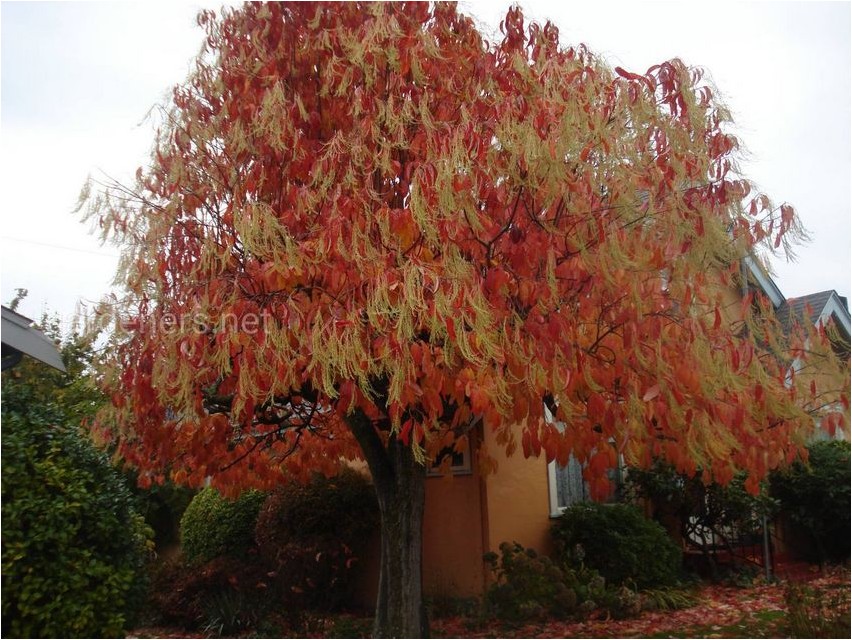
Oxidendrum is a highly decorative deciduous tree or shrub up to 12 m high with smooth brown-red bark. Young shoots are light green. The leaves are dark green, numerous, oblong-oval, up to 20 cm long, with jagged edges, arranged in a spiral. In autumn, the foliage turns bright orange with hints of red.
The flowers are small, bell-shaped or goblet-shaped, fragrant, collected in dense drooping paniculate inflorescences up to 25 cm long. The fruit is a multi-seeded pubescent capsule. Oxidendrum has a very attractive and unusual appearance; it is excellent for landscaping garden plots. The plant is winter-hardy and can be grown in temperate climates.
Growing conditions
Shady areas are most suitable for culture. In sunny areas, the flowering of oxidendrum will be short-lived and not abundant. Soils are preferably drained, light, acidic, moderately moist, peaty, without lime. It is not forbidden to use a mixture made up of sand, peat, pine soil or tree bark compost. The plant does not accept lowland plants with stagnant melt water. Alkaline, swampy and saline soils are also not suitable for cultivation. It can be grown on clay soils, provided there is good drainage.

Reproduction
Like all representatives of the Heather family, oxidendrum reproduces by seeds, layering and cuttings. Oxidendrum seeds are very small, and they must be sown in seedlings, without planting them in the soil under glass. The optimal temperature is 18-20C. The substrate is prepared from coniferous soil, peat and sand in a ratio of 1:1:1. Shoots appear in 1-1. 5 months. In the summer, seedlings are kept in the garden, and with the onset of cold weather they are brought indoors. The formed seedlings are planted in a permanent place.
Oxidendrum cuttings are carried out at the end of summer. The cuttings are rooted in a mixture of sand and peat. The substrate is regularly moistened; it is advisable to cover the containers with cuttings with film. The film should not come into contact with the planting material. Periodically, the film cover is removed for ventilation. Systematic foliar feeding with a weak urea solution is important. The addition of microelements is also acceptable.
Reproduction by layering is an effective and simple method. At the end of spring or beginning of summer, mature shoots of oxidendrum are bent to the soil surface, fixed and sprinkled with peat. Abundant watering is important for successful rooting. Once the root system appears in the cuttings, they are separated from the mother plant and transplanted to a permanent place or for growing in pots.
Care
Oxidendrum is a moisture-loving plant; watering should be frequent and plentiful, especially if there is no rainfall for a long time. Lack of moisture can affect the condition of the bush. The thing is that the root system of oxydendrum is shallow, and the roots are not capable of extracting soil. Fertilizing is carried out in the spring. Fertilizers are applied to the tree trunk area very carefully. For fertilizing, it is recommended to use complex fertilizers, but in limited quantities. Weeding of the tree trunk zone is carried out together with loosening.
Mulching is mandatory. Experienced gardeners advise using only natural materials, for example, pine bark, large sawdust, wood chips, fern soil, pine litter, peat. The film should not be used as mulch. Mulch will protect plants from overheating and drying out. Oxidendrum is pruned in the spring. Pruning is necessary to remove old, broken and thickening branches, as well as to give plants a beautiful decorative crown. In winter, the tree trunk area is mulched with peat with a layer of at least 10-15 cm. Young plants should be covered with spruce branches.
Application
In Russia, oxidendrum is rarely used for landscaping gardens, and this despite the fact that the plant is highly decorative. It looks great in single plantings. Oxidendrum is appropriate in autonalia, since with the onset of autumn the foliage acquires a beautiful crimson color. The leaves of the plant are eaten raw.