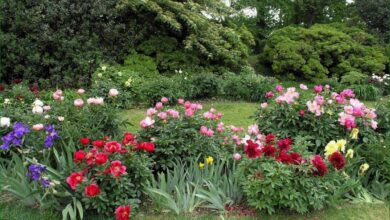
Kalmia angustifolia
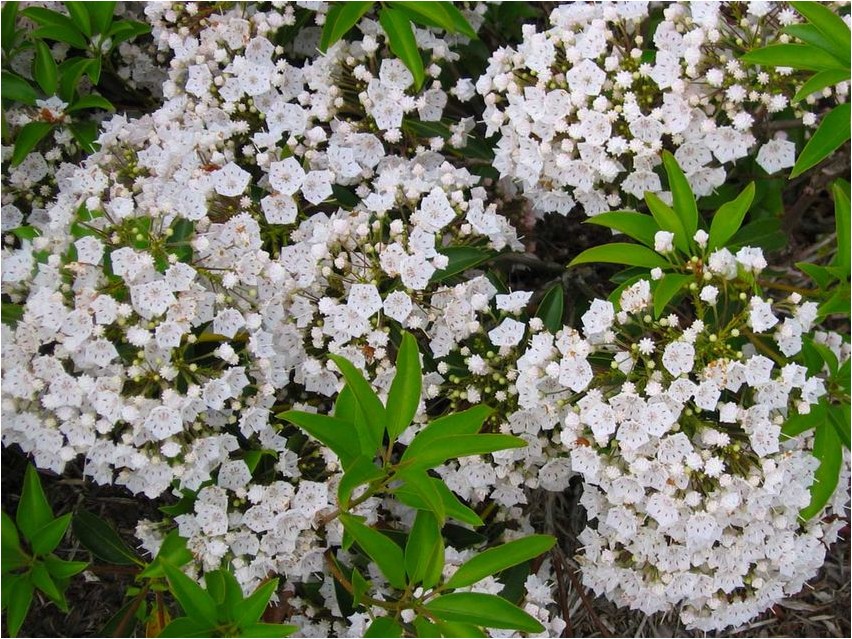
Kalmia angustifolia (lat. Kalmia angustifolia) is an evergreen shrub from the genus Kalmia, classified by botanists in the heather family (lat. Ericaceae).
At the beginning of summer, Kalmia angustifolia delights the world with dense clusters of corymbose inflorescences, consisting of small raspberry-pink flowers, graceful and attractive.
What”s in your name
Carl Linnaeus, following the established tradition when choosing names for plants — using the names and surnames of his botanist acquaintances, named a genus of beautiful flowering shrubs after his student, Per Kalm, a Swedish botanist. The name was not chosen by chance. It was this botanist who was the first to grow plants of the Kalmia genus in Europe, taking for this purpose roots (rhizome with dormant buds), petioles and seed capsules of plants from a trip to America. In those days there were no customs inspections, which would certainly take away the collected “trophies” from the botanist, as happens everywhere today.
The typical name of the species, “narrow-leaved,” specifies the shape of the leaves of this plant, since representatives of the genus Kalmia love to make the world richer by decorating different species of the genus with leaves of various shapes.
The presence of toxic substances in wild plants of Kalmia angustifolia that can kill sheep, calves, and pigs became the reason for folk art in the creation of such names as “Sheep Laurel,” “Pig Laurel,” and “Cal Killer.”
Description
The main part of the evergreen perennial shrub is the underground rhizome. On it, buds originate and develop, which begin to grow during the hot period of the year, revealing new shoots to the surface of the earth.

Narrow-lanceolate, short-petioled leaves prefer to be grouped in groups of 3, forming whorls. Unlike most plants, in which the inflorescences are located at the ends of the shoots, the woody stem of Kalmia angustifolia ends not with an inflorescence, but with another leafy whorl.
From the whorls of leaves located below the apical whorl, at the beginning of summer a peduncle with a luxurious raceme of corymbose inflorescence is born. An abundance of small, lovely raspberry-pink flowers (there are varieties with white, scarlet, and lilac petals) entangles the branched bush like bright belts. The height of bushes in the wild varies from 15 to 90 cm. In cultivation, under very favorable conditions, it can grow up to 1. 5 meters.
The growing season ends with the birth of pubescent 5-lobed capsules. Almost 180 seeds are hidden inside each of them.
Conditions for successful growth
Under natural conditions, Kalmia angustifolia grows in the northern coniferous forests of America, characterized by dry soils.
Like our Ivan-tea, with which it has some external resemblance, Kalmia angustifolia is one of the first to populate areas that have been subjected to massive deforestation or devastated by fire. She heals earthly wounds, trying to heal them with her lush bushes with elegant flowering.
To compensate for the poor composition of the soil, Kalmia angustifolia acquired evergreen leaves, which work all year round for the benefit of the entire plant, converting the sun”s rays into organic matter for its nutrition. In addition, it is friends with beneficial mushrooms, forming mycorrhizal associations with them.
But Kalmia angustifolia does not behave too friendly with its plant neighbors, following the example of its other relatives. Its roots release chemical elements into the soil that have a depressing effect on neighbors. This behavior of Kalmia angustifolia should be taken into account when choosing a planting site for it in a summer cottage.
The positive aspects of the plant are its resistance to heat and frost (withstands temperatures down to minus 45 degrees), drought resistance, shade tolerance, unpretentiousness to soils provided there is no dampness.