Viburnum common
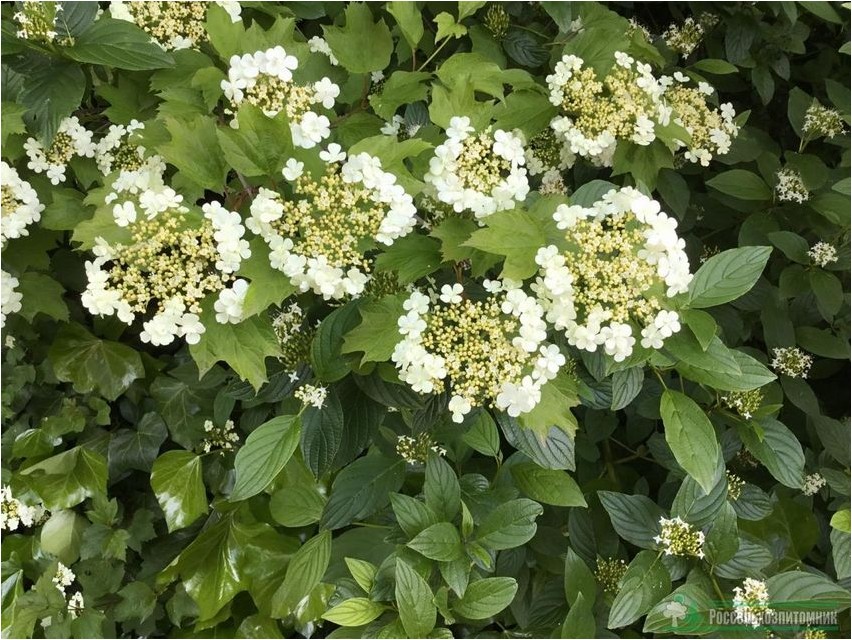
Viburnum viburnum is one of the plants of the family called honeysuckle; in Latin the name of this plant will be as follows: Viburnum opulus L.
As for the name of the viburnum family itself, in Latin it will be: Caprifoliaceae Juss.
Description of Viburnum
Viburnum viburnum is a highly branched shrub, the bark of which is colored brown and is endowed with cracks. Young branches and the lower surface of the leaves of this plant are painted in gray tones and are hairy. The leaves of this plant are opposite, coarsely toothed, they can be either three- or five-lobed. It is noteworthy that at the top of the plant the leaves will be pointed. The inflorescences of the common viburnum are corymbose and they are painted white. The flowers of this plant can be of two types: the large marginal ones are five-lobed and sterile with a wheel-shaped corolla, and also the small middle ones, endowed with a bell-shaped corolla. The last leaves will bear pistils and stamens, and will also form oval and juicy fruits, endowed with a flat stone.
Flowering viburnum occurs in the period from May to June, while the fruits will ripen approximately in August-September. For growth, this plant prefers river valleys, forest edges, places along ravines, clearings, clearings, and for the most part the plant will choose damp places.
Description of the medicinal properties of viburnum
In medicine, the bark of the branches and trunks of this plant, fruits and flowers are widely used. The presence of such valuable healing properties is explained by the content in the bark of this plant of resin, starch, bitter glycoside viburnin, valeric acid, tannins, phlobaphen, phytosterol, isovaleric acid, vitamin K, carotene, triterpene saponins, ascorbic acid, as well as the following acids: formic, caprylic and palmitic.
When taken internally, the bark of this plant has analgesic, hemostatic, and sedative effects, and also improves uterine muscle tone. It is noteworthy that for this reason, the bark of this plant is effective for heavy menstruation and uterine bleeding, and can also be used for neurasthenia, as the valerianic and isovaleric acids in this plant reduce excitability of the central nervous system. Viburnum can be used as an antiseptic and vasoconstrictor for periodontal disease, stomatitis, and gingivitis.

It is important to remember that long-term use of viburnum-based preparations will cause a decrease in blood cholesterol. For this reason, such preparations are recommended for high blood pressure and atherosclerosis. When combined with other medicinal plants, viburnum is very effective for hemorrhoidal bleeding. In addition, the plant can be used as a multivitamin and tonic for gastritis, which is accompanied by increased acidity. For preventative purposes, such remedies can be used for stomach cancer and gastric ulcers, and also as an anti-inflammatory, diuretic, laxative, and sedative.
For colds, eating viburnum berries with honey is quite effective; the berries should also be taken for painful menstruation. The berries can be eaten fresh or drunk in tea. For dyspepsia, a decoction of the plant’s seeds can be used as an astringent. An aqueous infusion of this plant can be used to treat eczema, various rashes, and carbuncles.
Viburnum





