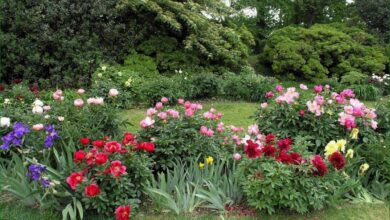
Pansies
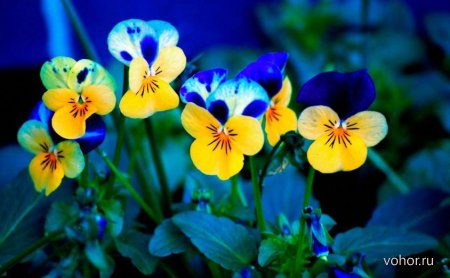
Pansies, or Viola as they are scientifically known, are biennial plants. There”s a folktale about the origin of this unusual flower and its equally unusual name. The flowers are prized for their unique color.
The pansy genus contains over 450 varieties, and many varieties of Viola have been developed, including varieties with variegated or solid colors, ruffled or orchid-like varieties, and others. Florists cultivate large-flowered varieties of Viola, but the smaller, giant varieties are also in demand. These plants are distinguished not only for their ornamental qualities, but also for their medicinal properties. Care and Growing of Pansies
Pansies prefer sunny or slightly shaded areas with soft, loamy soil. However, growing pansies in the shade is not recommended, as the flowers will be few and the blooming period will be quite slow. The flowers love moisture, but overwatering is detrimental to the plant. Pansies do not thrive on mineral fertilizers, such as nitrogen or potassium, or organic fertilizers, such as compost or humus (though not bad ones). However, it is better to use mineral fertilizers for pansies. The first feeding is done before budding, and the second during the period of active flowering. To prolong flowering, faded flowers are removed. Viola is a frost-resistant plant, but in central Russia, pansies don”t always survive the winter and rot. To speed up flowering, the beds are covered with plastic. After flowering, the Viola bushes are dug up and other flowers are planted in the vacated area. In hot weather, pansies are sprayed with water to protect against overheating, and the area in front of the plant is mulched.
Propagation
Pansies are propagated by grains, green cuttings, and self-sowing. Sowing of viola grains (Viola) is carried out in late June or early July before planting in public land. Subsequently, the plants are planted for 2-3 weeks, and in late August they are planted in the same area at a distance of approximately 25 cm. Plants do not dive in an incident when viola plantings are wonderful. The seedlings are transplanted together with a lump of soil into small holes previously spilled with water. When planting, the plants are not buried deep. Near the roots, the plant can be sprinkled with peat. When sowing grains for winter, the plantings are mulched to avoid damping off of the grains. Pansies can also be grown as annual plants. Here the sowing of grains is judged in February in boxes with soil. Seedlings are planted in hospitable soil in early May. The presence of multiplication by green cuttings is taken from shoots with 2-3 nodes from May to July. The cuttings are planted in public soil in a shaded space. The cuttings are planted close to each other about half a millimeter apart. After planting, the plant is sprayed with water. During only the rooting period, pansy cuttings are constantly watered, sprayed, and weeded. Rooting of cuttings occurs after 3-4 weeks. Multiplication by green cuttings guarantees the preservation of the discharge and makes it possible to obtain a large number of planting material.
Diseases and pests
Pansies just languish through such a disease like a black leg, and for no reason the stem and root rot, powdery sediment, spotting. Among the pests, violas secrete aphids. cutworm, spider mite.
Pansies