Kashmir Cypress
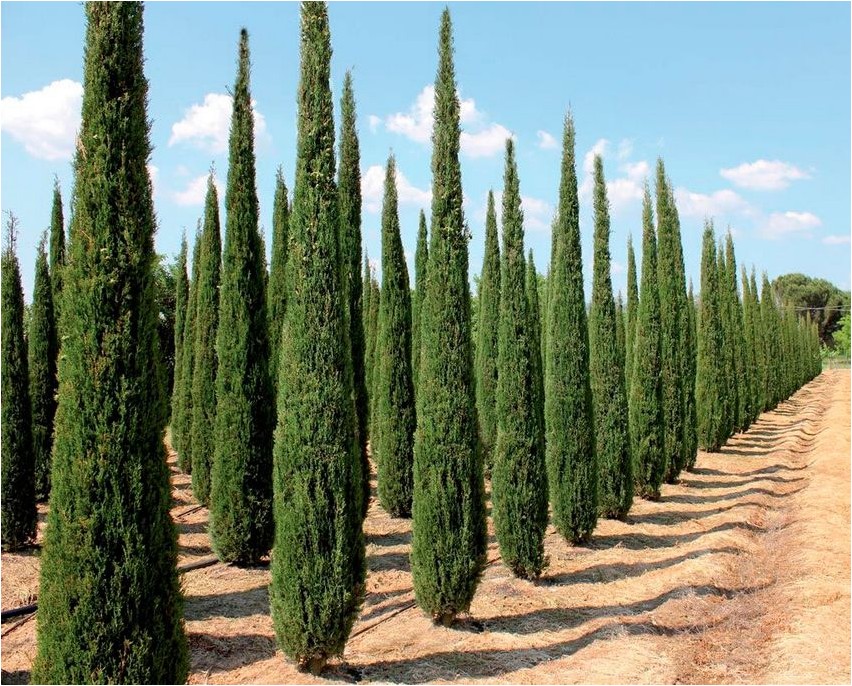
Kashmir Cypress (Cupressus cashmeriana) is a species of the genus Cupressus, belonging to the Cypress family (Cupressaceae). It is considered by admirers to be the most beautiful and graceful not only among all the Cypresses, but perhaps among all the conifers on our planet.
The blue-green and highly fragrant foliage of the Kashmir Cypress hangs gracefully from the branches, reminiscent of the Weeping Willow. However, while the Willow sheds its leaves in winter, the Kashmir Cypress delights with its fabulous appearance year-round. There is only one drawback to this species: the Kashmir Cypress is very heat-loving and therefore refuses to grow in areas with cold winters.
What”s in a name?
There are several versions of the name of the genus Cypress. Some of them are associated with legends in which the gods, in a rather original way, relieve people of their everyday problems and worries by transforming them into trees. The names of the transformed people seamlessly merge into the names of the trees. For example, a young man named Cypress, tormented by his conscience for accidentally killing his beloved deer, was transformed into a tree by a god. He was relieved of his remorse by giving his name to a slender evergreen tree.
There is a theory that explains the genus name “Cypress” by the name of an island in the Mediterranean Sea, which 3, 000 years ago was famous for its forests, located at the crossroads of international trade routes, and a tasty morsel for those who loved to conquer other people”s lands. This is the island of Cyprus. Since then, the forests on the island have noticeably thinned, but Cypress trees continue to adorn it with their evergreen needles.
The species name “cashmeriana” (“Kashmiri”) refers to the place of origin of this species. Description
The Kashmir Cypress is a stunningly beautiful tree with less rigid branches than other Cypress species. Its broad, conical crown resembles the bowing branches of a weeping willow, and individual mature specimens resemble the majestic figure of Buddha. It”s no wonder that the Kashmir Cypress is so popular with Buddhists, who use these trees to decorate the grounds of their temples and monasteries. Unlike the willow, which only graces the banks of bodies of water during the warmer months and sheds its leaves in winter, the Kashmir Cypress is a true natural wonder all 12 months of the year.
In favorable conditions, Kashmir cypress grows very quickly in the first 10 years, reaching a height of 6 meters. Subsequently, growth slows down because Cypress trees live a long time. By the age of 70, the height of the tree can be 25 meters and continue to grow up to 45 meters, in rare cases above 45 meters. Recently information appeared that a tree whose height was 95 meters had been found. But botanists are waiting to test the measurement.

The unusual shape of the crown of the Kashmir Cypress is complemented by the amazingly beautiful blue-green color of its scale-like fragrant foliage. Young trees up to 5 years of age have soft, needle-like leaves ranging from 0. 3 to 0. 8 cm in length.
Ovoid seed cones up to 2. 1 cm long and up to 1. 9 cm wide, dark green. As they mature, which lasts up to 24 months from the moment of pollination, the cones become dark brown in color. When ripe, the protective scales, the number of which varies from 8 to 12 pieces, open to release the seeds.
Usage
Kashmir cypress is a very popular ornamental tree not only in its native region, but throughout the world, where the climate is favorable for it. It can be seen both in private gardens and public parks.
It looks stunning when planted alone and is also used as an evergreen screen or barrier in landscaping.
Varieties have been bred with bright blue or silvery-gray foliage.
Kashmir cypress cypress