Eucalyptus Gunni (or Ganna)
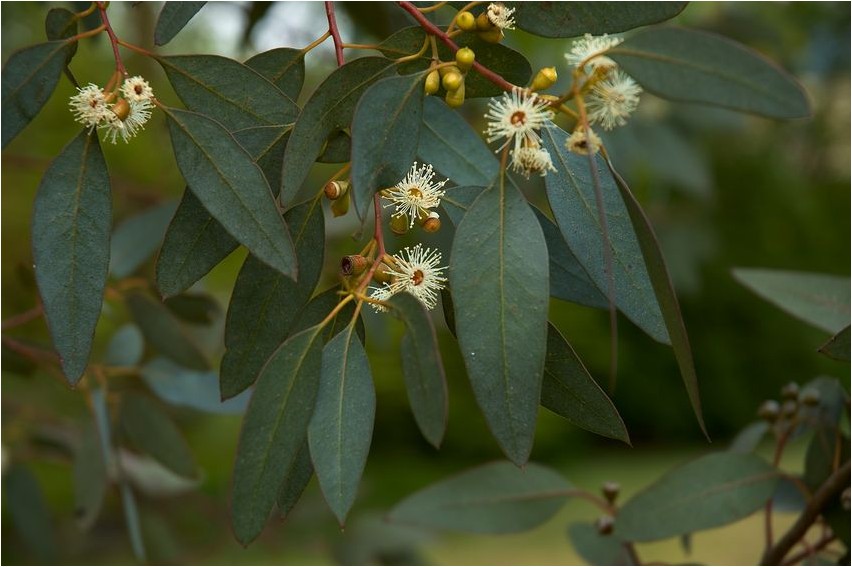
Eucalyptus Gunni (or Ganna) (Latin: Eucalyptus gunnii) is an evergreen tree of the genus Eucalyptus in the Myrtaceae family. It produces traditional leaves rich in essential oils with powerful antiseptic properties.
This species also has several advantages not found in its relatives. It produces sweet sap and edible manna, and is also resistant to subzero temperatures, making it suitable for growing in Russian climates.
Description
Eucalyptus Gunni does not reach for the sky like Eucalyptus regnans and Eucalyptus versicolor, but is a low- to medium-sized tree. This allows it to more easily tolerate temperatures down t o-20°C (-4°F). Furthermore, if the tree is grown from seed directly in a cold climate, its frost resistance increases even further. When transplanting a seedling into open ground, extreme care must be taken to avoid damaging its roots, as this is extremely damaging to the plant and can lead to its death.
The massive, short trunks of mature plants are complemented by large, spreading branches. Sturdy bark envelops the trunk like a thin, gray stocking. The bark may peel off, revealing a smooth, yellowish-spotted (or pinkish-gray or greenish) surface.
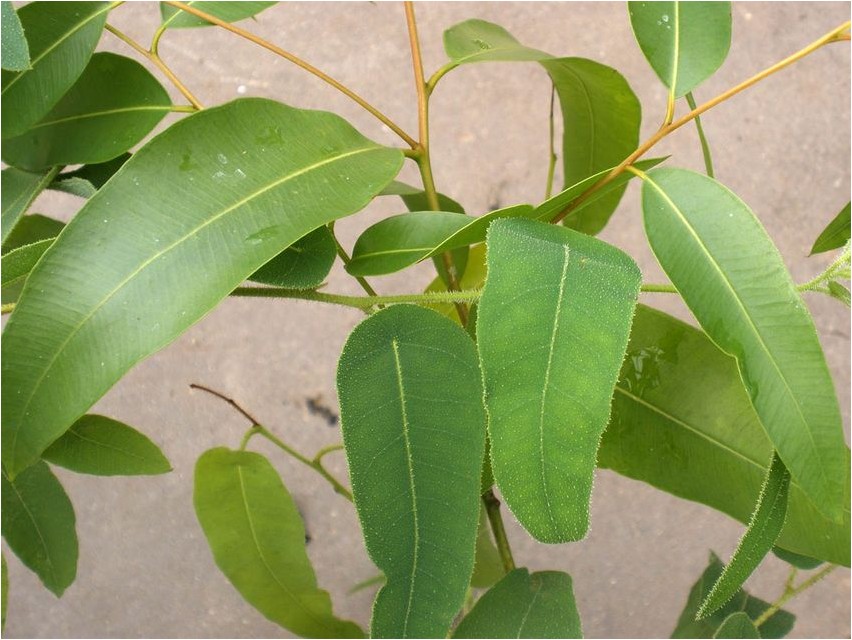
As the tree grows, the shape of its leaves changes. The branches of juvenile (young) specimens are covered with blue, round, aromatic leaves with a waxy coating on the surface. If the plant is destined to remain a shrub, the leaves will remain so. If the plant matures into a tree, its leaves will grow, becoming longer and greener.
In midsummer, white flowers appear on the tree, rich in nectar, attracting industrious bees. The fruits of Eucalyptus gunna are quite small (up to 1 cm long), bell-shaped or spherical, and almost sessile. The seeds retain their viability for a long time.

Living Conditions
Eucalyptus gunna prefers to grow in a sunny location, protected from the wind. Therefore, it prefers to settle in forests where neighbors can provide shelter from the wind without blocking the sun, as the tree does not like to grow in the shade.
The soil should be well-drained and moderately fertile. The tree does not thrive in clay and calcareous soils, but it thrives in other soil types. Even soils with low mineral content are suitable for Eucalyptus gunna.
The tree is drought and frost resistant. This is one of the hardiest types of eucalyptus in relation to negative temperatures. Eucalyptus does not tolerate sudden cold spells, but if the temperature drops gradually, as happens in wooded areas, then growth stops and the tree goes into hibernation, thereby successfully waiting out the frosty period. To help your Eucalyptus survive frosts, you should prevent the soil from freezing by creating a thick layer of mulch over the plant”s roots.
Eucalyptus Ganna is a very ornamental tree and is therefore popular in southwestern Europe. It also grows in England.
In the first years of life, Eucalyptus Ganna quickly rushes to the skies, increasing the height of the trunk by a meter, or even more than a meter, in 12 months in favorable conditions.
Drought resistance is combined in the tree with the ability to absorb a lot of moisture from the soil. This quality of wood is used by people to drain swamps, which are a breeding ground for the malaria mosquito.
Usage
Eucalyptus Gunn leaves are traditionally used to produce essential oil containing antifungal agents.
Trees are widely used to drain swampy areas to deprive the malaria mosquito of favorable breeding conditions.
The wood, dried for a year, is used as a building material.
The abundant growth serves as fuel for the local population.
Eucalyptus Gunnii-Eucalyptus gunnii.