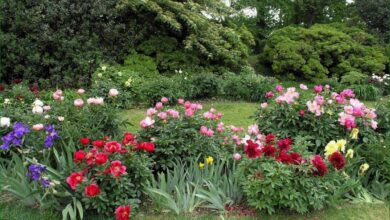
Lespedeza
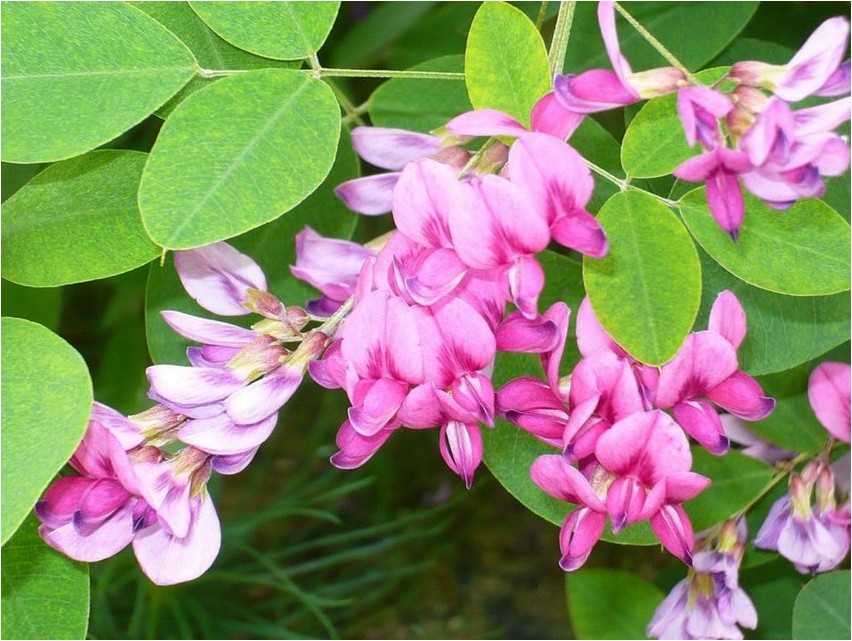
Lespedeza (Latin: Lespedeza) is a genus of herbaceous plants, subshrubs, and shrubs in the legume family. The genus comprises approximately 50 species.
In the wild, plants are found in North America, Southeast and East Asia, and other temperate and tropical regions.
Cultural Characteristics
Members of the genus have pendulous or creeping shoots, often covered with soft hairs over their entire surface. The leaves are opposite and imparipinnate. The flowers are small, zygomorphic, pentamerous, and collected in racemose inflorescences. Some flowers hang from the stems, which typically end in small leaflets. The calyx is bell-shaped, five-petaled, with the petals fused at the base. The corolla is papilionaceous. The fruit is a single-seeded pod that does not split when ripe. Of the existing representatives of the genus, only three species have been cultivated, the most widespread of which is Lespedeza bicolor. This species was brought to Russia by the renowned botanist K. I. Maksimovich in 1856. Today, Lespedeza bicolor grows primarily in the Far East, Transbaikal, as well as in Korea, Mongolia, and China.
Growing Conditions
Lespedeza is a sun-loving plant, tolerating light shade. It is undemanding regarding soil conditions, but grows best in well-drained, moderately moist soils. It tolerates poor soils and tolerates lack of moisture.
In rich soils, Lespedeza looks more than attractive and blooms vigorously; under optimal growing conditions, even annual shoots bloom. Generally, the plant is cold-hardy, but in severe winters, it freezes to the soil surface. With the onset of warm weather, the plants quickly recover and produce numerous shoots.
Propagation and Planting

Lespedeza is propagated by seeds, root suckers, and layering, the latter of which are produced in large quantities. Cuttings are also acceptable, but they are ineffective. Lespedeza seedlings are planted in the spring; fall is not recommended. Fill the planting hole one-third full with fertile soil, pre-mixed with nitrogen, phosphorus, and potassium fertilizers.
Highly acidic soils should be limed beforehand. Potassium fertilizers are especially important, as they promote better overwintering of still-fragile plants. After planting, water the plants generously and mulch with pebbles or gravel. If neither is available, use dry soil as mulch.
Care
The main procedures for caring for lespedeza are weeding and loosening the tree trunk area, watering during dry periods and regular fertilizing. By fulfilling all these requirements, the plants will reward you in return with bright and abundant flowering and a healthy appearance. Watering in the first year after planting should be frequent (as the soil in the tree-trunk circle dries); subsequently, plants are watered only during drought. Lespedeza is fed in the spring with organic matter, nitrogen and phosphorus fertilizers, and in the fall with mineral fertilizers.
In winter, the soil in the tree trunk zone is mulched with inert materials, for example, fine gravel, pebbles or carbonate rocks. Wood chips, peat and bark are not recommended because they acidify the soil when they decompose. To retain moisture for a longer period, the soil is also mulched. Lespedeza tolerates pruning without any problems, so both formative and sanitary pruning are not prohibited. Representatives of the genus are not affected by pests and diseases, so they do not need preventive treatments.
Application
Lespedetsa looks harmonious in single and group plantings in gardens, squares and forested areas. Plants are also planted as hedges. Lespedeza has unique healing properties; the aerial parts of the plant are used for diseases of the bladder and kidneys. Lespedeza infusions are useful for boosting immunity. In addition, the culture boasts anti-inflammatory, antitumor and diuretic properties.
LESPEDEZA. Spring pruning, feeding. Lespedeza spring pruning