Metasequoia glyptostroboides
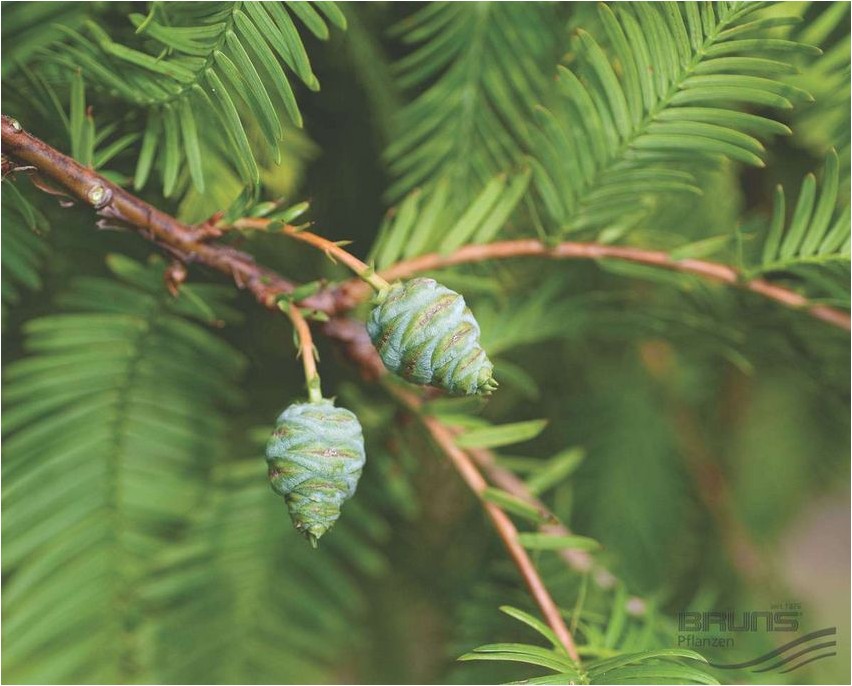
Metasequoia glyptostroboides (lat. Metasequoia glyptostroboides) is the only species of coniferous trees of the genus Metasequoia (lat. Metasequoia), belonging to the Cypress family (lat. Cupressaceae).
A deciduous tree that sheds its needles in winter. One of the oldest inhabitants of our planet, which appeared one hundred and forty-five million years ago and has long been considered a fossil species, like the Ginkgo biloba tree, which is almost twice as old as this species. In addition to the fact that this is a very ancient earthly tree, it is also a long-lived and rapidly growing representative of the coniferous kingdom of the planet.
What”s in your name
The Latin name of the genus “Metasequoia” consists of two parts. If the first part of “Meta” is easy to understand, since this word is based on the Greek “meta”, meaning “between” or “among”, indicating the proximity of this type of tree to the genus Sequoia, then there is no consensus among botanists about the Latin name “Sequoia”.
Some believe that Stefan Endlicher, an Austrian botanist, named the genus “Sequoia” in honor of the Cherokee Indian chief Sequoia, famous for inventing the alphabet and publishing a newspaper in the native Cherokee language. But there are other, more prosaic versions, based on different approaches of botanists to plants when studying their structure.
Metasequoia differs from the evergreen Sequoia by the needles that fall off in the winter. In this, it is similar to plants of the genus Glyptostrobus (lat. Glyptostrobus), which is why it was initially assigned to this genus, from which it later received its specific epithet “glyptostroboides”. The specific epithet is made up of two words: the Greek “glypto”, which translates as “sculpture”, and the Latin “strobus”, meaning “pine”.
Description
Metasequoia glyptostroboides is a fast-growing conifer that, like Larch, loses its needles during the winter. Found in nature in just one place on the globe, in Chinese forests inaccessible to humans, today Metasequoia grows in many parts of the world, including in Russia. The cold resistance of the plant allows it to grow in the temperate zone, if frosts down to minus 32 degrees Celsius are not prolonged. The rapid growth of the tree made it possible in a relatively short time to increase the quantitative presence of the planet”s centenarian on the globe.

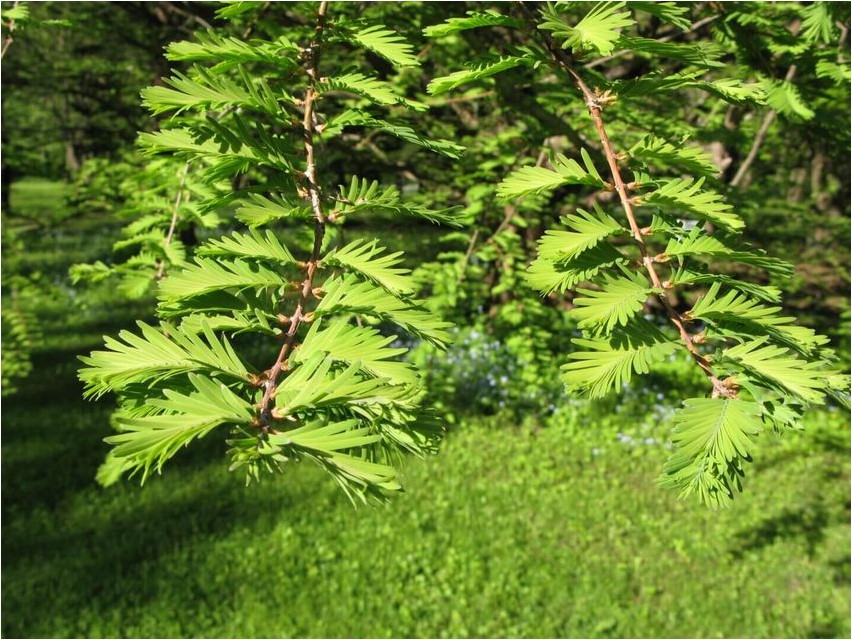
In those distant times, when year-round summer reigned on the earth”s land, Metasequoia was most likely an evergreen tree. Climate disasters have taught the tree to shed its green needles during the cold period in order to preserve the life of the entire plant, which gives birth to new greenery with the arrival of warmth. Forty-meter tall giants with reddish-brown bark by autumn change the color of their lush pyramidal green crown to bronze, dropping shortened shoots with needles to the surface of the ground. The tree bark peels off from the trunk in the form of long fibers.
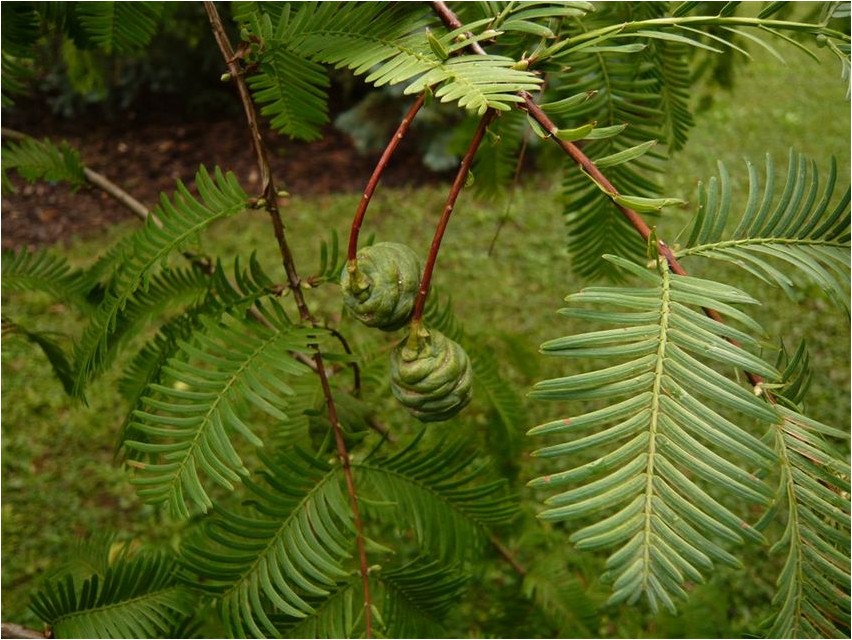
Being a monoecious plant, the tree harbors both male and female flowers, which appear in March along with soft new needles. After pollination, the female inflorescences turn into round green cones, which turn brown when the seeds are fully ripe and droop towards the ground.
Usage
The hardiness, frost resistance and rapid growth of Metasequoia glyptostroboides have turned the oldest tree on earth into a popular crop in the construction of parks and gardens in many countries of the world, including Russia (Crimea, the Caucasus and up to the Moscow region and the glorious city of St. Petersburg), Canada, and the United States of America. For such purposes, several special garden forms of the plant have been bred. Propagation by cuttings is more productive.





