Smithianta – home care

smithiantha is a herbaceous plant of the Gesneriaceae genus, native to the mountainous regions of South and Central America. The Gesneriaceae family includes about 8 plant species. The plant acquired this name in honor of Matilda Smith, an artist from the private Kew Botanical Gardens in England.
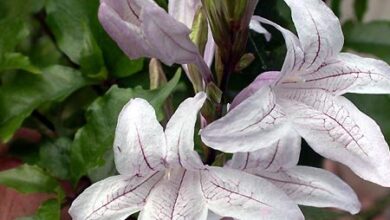
Smithiantha is a perennial herbaceous plant with a scaly rhizome. The shoots are straight, pubescent up to 30-70 cm high. The densely pubescent leaves are heart-shaped or oval, have a velvety surface to the touch, are brown-green in color, the leaves are located asymmetrically on a straight stem. Flowers in a racemose inflorescence are concentrated in a cluster, bell-shaped, hanging, a significant part of natural species are orange-red, hybrid varieties are also pink, white, yellow, red with pronounced spots in the throat, therefore growing smithiant requires knowledge of certain aspects of care.
Lighting
Smithianta is light-loving. For successful growth, Smithiant needs bright light, without direct sunlight on hot summer days.
Temperature
In the spring-summer period, the most favorable air temperature is about 23-25°C. Smithiantha receives a period of rest, with the end of flowering. During the rest period, a temperature of at least 20°C is required.
Humidity
Smithianta requires increased humid air. However, due to the heap of pubescent leaves, it is useless to spray it, therefore, in order to increase air humidity, you should place the pot in a spacious tray with wet expanded clay, but the bottom of the pot should not touch the water. When air humidity is low, Smithianta leaves begin to curl.
Watering
During the active period of its growth, Smithianta is watered abundantly, during the period of drying of the top layer of soil, but it is recommended to avoid stagnation of water in the roots. For irrigation, use soft water at room temperature. So that water does not fall on the leaves when watering, it is better to pour water into a tray. During the period when Smithiantha enters a dormant period and the shoots, leaves, and watering die off, it is necessary to limit watering only so that the rhizomes do not dry out until new shoots appear in the spring, in which case watering is resumed.
Fertilizer
From April to October, fertilizing is carried out systematically with a solution of mineral fertilizers. Feeding is done once every two weeks. Fertilizer is dosed twice as much as when applied to ordinary indoor plants. During the dormant period, no fertilizing is prohibited.