Bismarck Palm
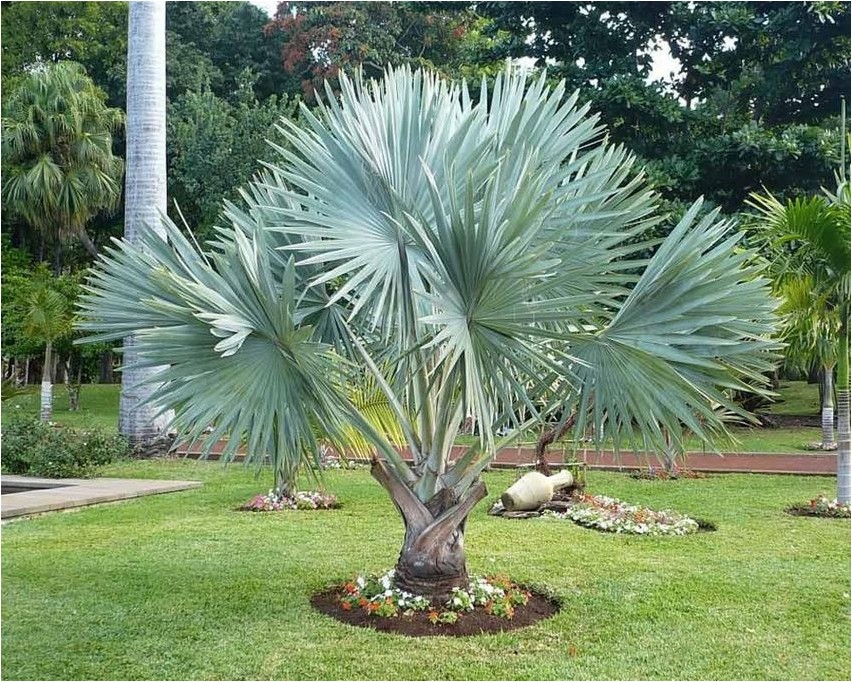
The Bismarckia palm (lat. Bismarckia nobilis) is the only representative of the genus Bismarckia (lat. Bismarckia) of the Palm family (lat. Palmaceae).
If we translate the Latin name of the plant “Bismarckia nobilis” literally, then the Russian name will sound as follows — “Noble Bismarckia”. A picturesque palm tree with large fan leaves, born on the island of Madagascar, today has moved to many tropical parts of the globe to decorate the streets, parks and gardens of cities and towns.
What”s in your name
As for the Latin word “Palma”, it is translated into Russian as the word “palm”. Indeed, the spreading crown of large evergreen leaves resembles a human outstretched palm.
The Latin word “Bismarckia” does not refer to the palm”s appearance. It’s just that botanists decided to perpetuate the name of a German politician who went down in history as the “Iron Chancellor,” who managed to unite Germany into a single empire. The name of this man is known to any schoolchild who has not skipped history classes; this is Otto von Bismarck.
The specific epithet “nobilis” again returns the viewer to the appearance of the plant, which with its lush foliage inspires its noble character, because the word is translated from Latin into Russian by the word “noble”.
Description
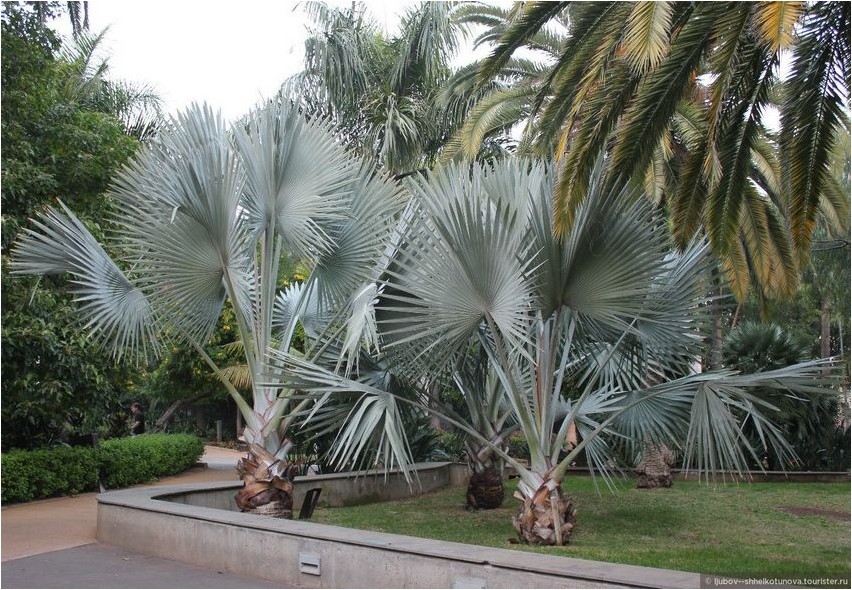

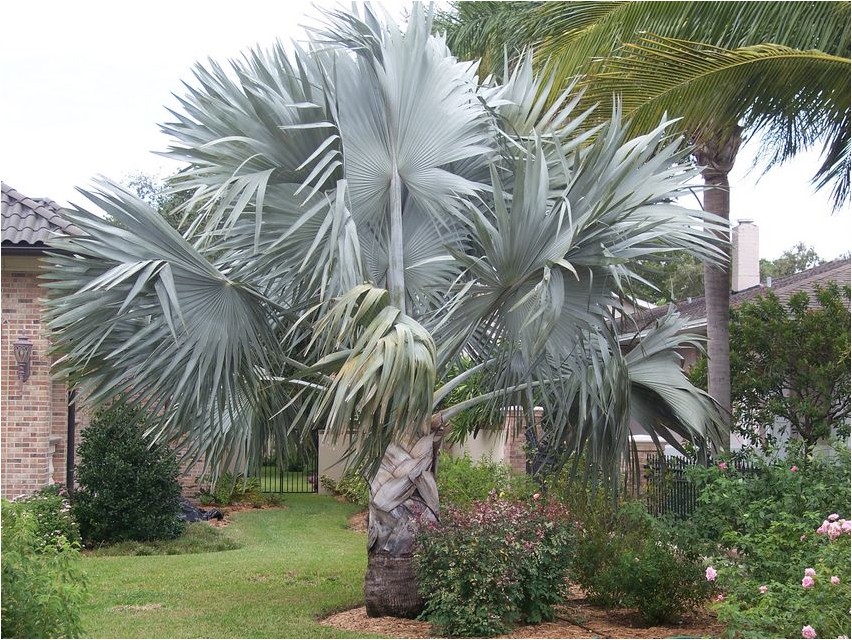
The Bismarck palm, like most palm trees, has a single trunk, which is formed from the ringed remains of leaf bases that have served their life. The surface of such a trunk can have a color from gray to reddish-brown. The trunk diameter varies from 30 to 45 centimeters and has only fresh leaves located at the top of the trunk.
The height of the Bismarck Palm in natural conditions of life on the island of Madagascar can reach more than 25 meters, but when grown in parks and gardens, as a rule, trees above 12 meters must be demolished because they become dangerous to people, for example, in strong winds.
The huge, almost rounded leaves reach three meters in width at maturity and consist of once bent hard segments of 20 or more, which at a distance of approximately two-thirds from the center of the leaf split into freely disintegrating sharp-nosed “blades”.
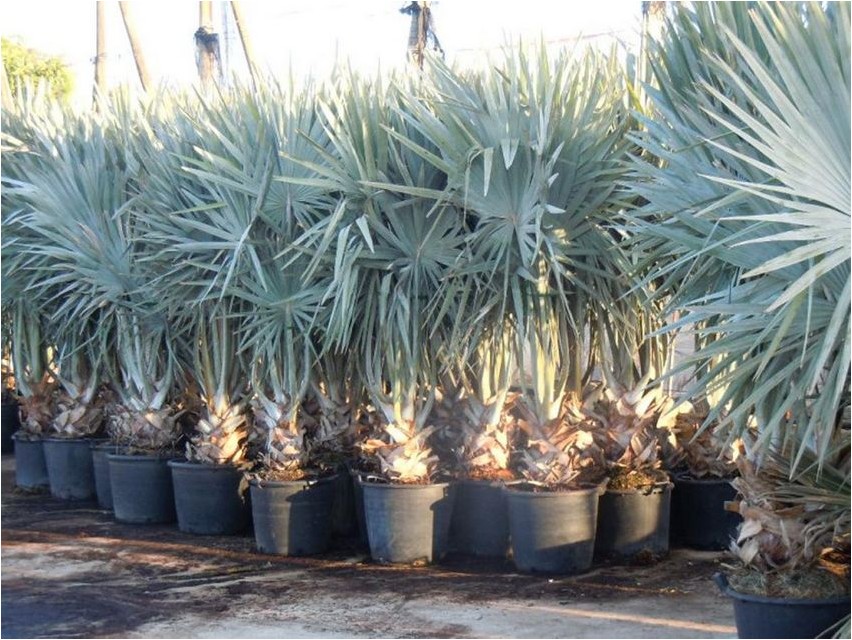
The leaves are located on two to three-meter strong petioles, the surface of which has a waxy white coating and is covered with brown cone-shaped scales. Several of these sheets form a palm tree crown up to 7. 5 meters wide and up to 6 meters high.
A distinctive feature of cultivated Bismarck Palms is the silver-blue color of the leaves, although you can also find green leaves that are less cold-resistant. If green leaves can withstand a drop in temperature only to zero degrees Celsius, then silver-blue leaves can withstand a drop to minus three degrees, and can also return to life after a short drop to minus six degrees.
The Bismarck palm is a dioecious plant, meaning male and female flowers grow on different individuals. The inflorescences are formed by small brown flowers, which in female plants mature into an ovoid brown seed, inside of which there is one seed.
Growing conditions
When choosing a planting site for the Bismarck Palm, you need to remember about the massive crown of the tree, which requires a lot of free space.
Although Bismarck Palms on the island of Madagascar suffer from drought, they still show all their power and beauty of leaves in areas with sufficient rainfall, or require artificial watering. Moreover, you should water directly under the root of the plant, plus ensure good drainage, since stagnation of water provokes root rot.
Palma is not picky about the composition of the soil.