Pueraria beans
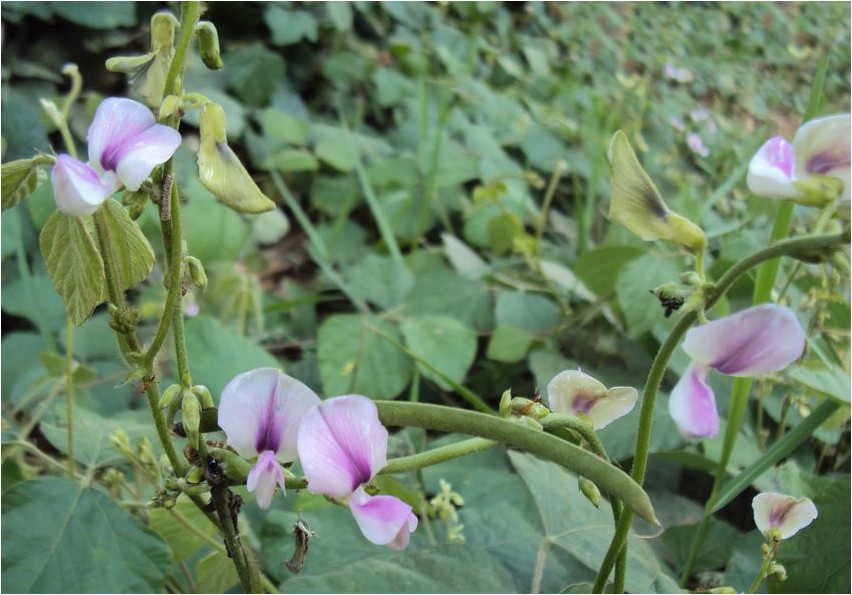
Bean-shaped Pueraria (lat. Pueraria phaseoloides) is a perennial herbaceous plant of the genus Pueraria (lat. Pueraria) from the legume family (lat. Fabaceae).
A typical legume plant with large trifoliate leaves, characteristic purple flowers and a pod containing beans. Nutritious forage plant, excellent ground cover, has healing powers
What”s in your name
The Latin name of the genus “Pueraria” is dedicated to a Swiss botanist named Marc Nicolas Puerari, whose life spanned two centuries at once (from the mid-18th to the mid-19th). The botanist devoted his long creative life to the description of earthly vegetables and their distribution according to classification shelves.
The plant received the specific epithet “phaseoloides” (“bean-shaped”) for the appearance of the seeds, reminiscent of beans.
Description
Pueraria beans originates from Southeast Asia, from where it has successfully naturalized in the humid tropics of Australia, America and Africa.
The perennial liana-like plant has long roots that go deep into the soil to obtain food for its fast-growing above-ground parts, as well as moisture during periods of drought. At the same time, long and branched roots help the plant survive in waterlogged soil. Under favorable conditions, the stems of Pueraria beans add 30 centimeters every day, growing up to 20 meters in length over the summer. Clinging to the support, the plants rise above other participants in the country flower garden.

Pueraria bean-shaped has large compound leaves, consisting of three simple whole leaves of an oval or triangular shape. The size of the sheet plates ranges from (2×2) to (20×15) centimeters. In the subtropics, the growing season lasts from early spring until the onset of winter, and in the warm tropics it lasts all year round.
Typical of plants of the legume family, small flowers are located in scattered pairs on the inflorescence. The color of the flowers is from lilac to purple.
The fruit of the plant is bean pods, which can be straight or slightly curved, ranging from 4 to 11 centimeters in length. The surface of the pods is covered with hairs and becomes black when fully ripe. Each pod is filled with 10 to 20 seeds. The shape of the seeds resembles beans with rounded corners and is colored brown or black.
Usage
Pueraria bean is a very multifunctional legume plant that will feed, heal, and decorate the garden or yard.
The plant”s healing properties are used by humans to combat ailments and to heal soil depleted by nutrient-hungry crops or scorched by fire. Pueraria bean-like plants enrich the soil with life-giving nitrogen compounds.
Like all plants in the legume family, the above-ground parts of Pueraria bean-like plants are rich in protein and are readily eaten by livestock. Therefore, people sow fields with this fast-growing plant to utilize the abundant green mass as fodder for livestock.
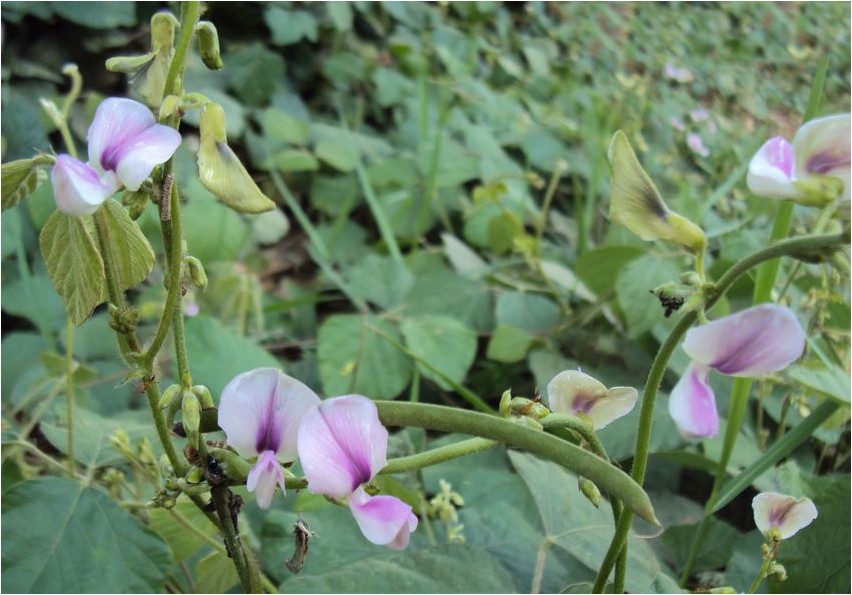
The plant”s long stems, growing along the ground rather than upward, make Pueraria bean-like plants a wonderful groundcover, protecting the trunks of fruit trees from the drying effects of the sun”s rays. And when grown vertically, they can decorate unassuming outbuildings or add a romantic touch to a garden gazebo. Growing Conditions
Thanks to its long, active roots, the plant is undemanding of soil conditions and can even grow in marshy areas, unaffected by stagnant water. However, for proper root development, the soil needs adequate levels of calcium, magnesium, and phosphorus. Low levels of these elements dramatically reduce crop yields.
For more abundant flowering, a sunny location is best, but Pueraria bean-like can also grow in partial shade.
Pueraria bean-like Pueraria