Large buttercup
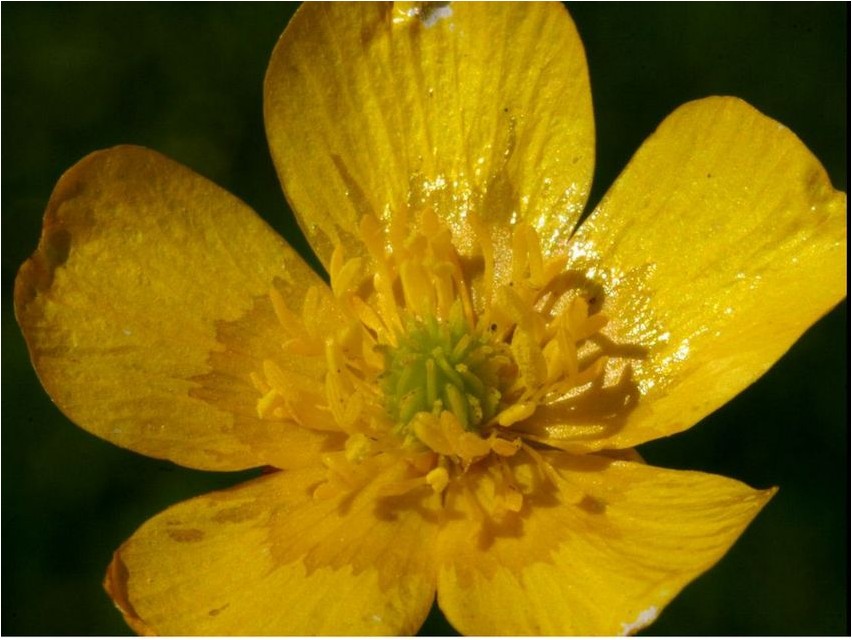
Large buttercup is one of the plants of the family called Ranunculaceae; in Latin, the name of this plant will be as follows: Ranunculus grandis Honda (R. japonicus auct.).
As for the name of the large buttercup family itself, in Latin it will be: Ranunculaceae Juss.
Description of large buttercup
Large buttercup is a perennial herbaceous plant. The rhizome of such a plant is shortened, and sometimes it can also be endowed with underground elongated smooth shoots, which will be colored brownish. The stems of large buttercup are grooved and covered with bristly hairs. The basal leaves of this plant will mostly be long-petiolate and large, while the lower stem leaves of the large buttercup will be petiolate, while the upper leaves are tripartite and sessile. The peduncles of this plant will be more or less hairy, thin, appressed and elongated. Large buttercup flowers are yellow in color and are about two to two and a half centimeters in diameter. The sepals of this plant will be hairy, protruding, the petals of a large buttercup are wedge-shaped, tapered towards the very base and obovate, and on top such petals will be glossy yellow. The fruits of this plant are endowed with a short nose, which is triangularly widened towards the very base, after which it will be hooked.
Large buttercup blooms from June to July. Under natural conditions, this plant is found in the Far East: on Sakhalin, the Southern Kuril Islands, the Amur region and Primorye. This plant prefers meadows, forests and shrubs to grow.
Description of the medicinal properties of buttercup
Large buttercup is endowed with very valuable healing properties, and it is recommended to use the herb of this plant for medicinal purposes. The concept of grass includes the leaves, stems and flowers of this plant.
The presence of such valuable healing properties should be explained by the content of coumarins, trans-aconitic acid, essential oil and the following gamma-lactones in the composition of the buttercup herb: anemonin and protoanemonin. As for Tibetan medicine, this plant is quite widespread here. Large buttercup herb is recommended for use for headaches, swelling, gastroenteritis, ascites, numerous female diseases, and Tibetan medicine also recommends the herb of this plant as an abscess remedy.

The leaves and flowers of large buttercup should also be used topically as a wound healing agent. It is noteworthy that this plant will be endowed with very effective antibacterial properties. In addition, it should be noted that buttercup is a poisonous condition, for this reason the use of this plant requires the utmost degree of caution.
For all of the above diseases, it is recommended to use a very effective remedy based on large buttercup: to prepare such a remedy, you will need to take one teaspoon of crushed herbs of this plant per two glasses of boiling water. The resulting healing mixture should be infused for one hour, after which the mixture based on this plant should be filtered very carefully. Take the resulting healing remedy based on large buttercup three times a day, one tablespoon. Crushed fresh herbs of this plant are used topically for carbuncles and furunculosis. It should be noted that this application is very effective, and the positive result is noticeable quite quickly.





