Cyclantera
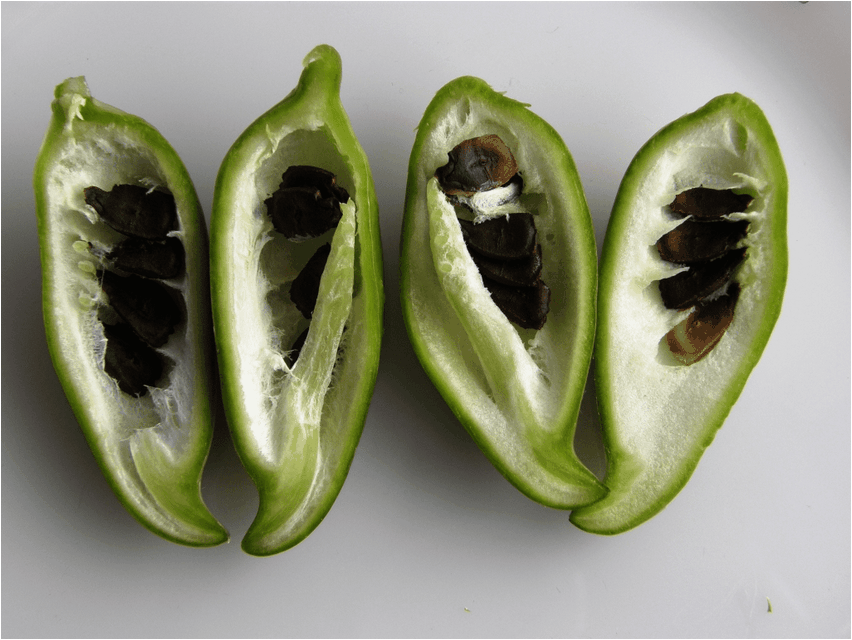
Cyclanthera (lat. Cyclanthera) is a genus of herbaceous vines of the Cucurbitaceae family. Another name is Peruvian cucumber. The genus contains about 75 species.
In nature, cyclantera grows in the mountainous regions of Peru, Ecuador and Brazil. Cyclantera was introduced into the culture back in 1989, but over time it was no longer cultivated, and more recently scientists have again shown interest in this unusual plant. Cyclantera appeared in Russia relatively recently, and is grown by amateur gardeners on their personal plots.
Characteristics of culture
Cyclantera is a powerful annual vine that forms a pubescent stem and a huge number of shoots with deeply dissected five or seven-lobed leaves, giving the plant a special decorative appearance. The shoots reach 7-8 m in length. The flowers are dioecious, green, white or yellow, have no nectaries, and are pollinated by the wind. Male flowers are collected in small clusters or corymbs, female flowers are larger and are located singly in the leaf axils.
The fruits are fleshy, oval or pepper-shaped, up to 7-8 cm long, equipped with thorns on one side. As they ripen, they acquire a yellow color and then crack with two flaps that bend back. Seeds are black, angular. Productivity – 4-5 kg per plant. The plant is resistant to diseases and pests.
Growing conditions

The preferred soil for growing cyclantera is light, permeable, fertile, well aerated, with a pH of at least 6. Sandy loam and loamy soils are optimal. The culture does not accept heavy clay soils, as well as areas with close groundwater.
The cyclantera does not impose increased requirements on temperature and air humidity. The best predecessors are green manure, all types of cabbage, potatoes, tomatoes, legumes and onions. It is unacceptable to plant cyclantera after representatives of the Pumpkin family.
Sowing
In general, the agricultural technology of cyclantera is similar to the technology of growing cucumbers, although there are some differences. The crop is grown directly by sowing seeds in open ground or through seedlings. For seedlings, seeds are sown in plastic cups or any other container filled with a mixture consisting of fertile soil, humus and coarse sand (in a ratio of 2:2:1, respectively) in early April. Before sowing, the soil mixture is fertilized with small doses of phosphorus fertilizers, for example, superphosphate. Sow 2 seeds in one glass. Planting depth is 2-3 cm.
For disinfection, crops are sprayed with a weak solution of potassium permanganate. Before germination, the crops are kept in a warm room and then placed on the windowsills. Watering the seedlings is carried out regularly and moderately; waterlogging should not be allowed. Seedlings are planted in open ground in the second half of May. Holes are formed on the ridges and a vertical trellis is prepared along which the cyclantera will climb as it grows. By the time of planting, the plant should have about 5-6 true leaves and 2-3 tendrils.
Care and harvesting
After planting, young plants are fed with urea (20 g per 10 liters of water). In the future, it is important to carry out another 3-4 feedings with mullein and nitrophoska solutions. The last feeding is carried out 15-20 days before the last fruit harvest. To obtain a harvest, at least two plants must be planted on one ridge, otherwise there will be no fruit. Do not forget about watering, weeding and loosening in the stem zone. During flowering, the amount of watering is increased to 3 times a week.
When the fruits turn yellow, they begin to be collected. Unripe fruits are eaten. Cyclantera seeds are harvested after the first frost. The leaves and stems of the crop are suitable for laying a compost heap; they quickly decompose and turn into good organic fertilizer.
Application
Cyclanthera is widely used in cooking and folk medicine. The fruits of the plant have mild choleretic and diuretic properties; they increase the motor and secretory functions of the stomach. Cyclanter is beneficial for kidney and liver diseases, anemia, atherosclerosis, urolithiasis, etc.