Forest anemone
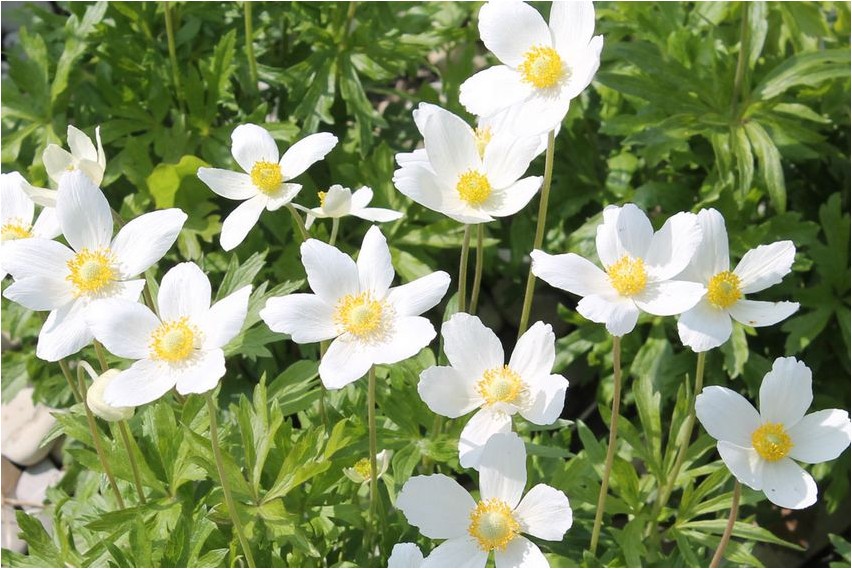
Anemone is one of the plants of the family called Ranunculaceae; in Latin the name of this plant will be as follows: Anemone silvestris L.
As for the Latin name of the family itself, it will be: Ranunculaceae Juss.
Description of the forest anemone
Forest anemone is a perennial herbaceous plant, the height of which will be about thirty to forty-five centimeters. This plant will have a short rhizome. At the base of the stem of this plant there will be two to five leaves, which are basal and collected in a rosette. Such leaves of the anemone are on long petioles; the leaves can be palmate, three to five-parted, and their lobes are rhombic, incised-toothed. Under the flowers of this plant there is a blanket of three thrice-dissected and also whorled leaves with linear lobes. The flowers of the forest anemone will be single and quite large; such flowers are white in color. The fruits of this plant will be nut-shaped, and also flattened, white-tomentose, and their spout is quite short.
This plant has become widespread in the European part of Russia in all regions with the exception of the Lower Volga region. In addition, wood anemone can also be found in Western Siberia, in the Far East in the west of the Amur region, as well as in Belarus, Moldova, Ukraine, Central Asia and the Caucasus: namely in Dagestan and Ciscaucasia.
For growth, this plant prefers dry open hills, dry steppe meadows, fallow lands, light coniferous forests, shrubs, edges and rocky cliffs. As for the soil, the plant prefers carbonate or sandy soil. This plant is decorative; it is often used in various group plantings, and also when arranging rocky areas. Among other things, there are also garden forms of wood anemone. It is noteworthy that this plant is also poisonous.
Description of the medicinal properties of anemone
It should be noted that forest anemone is endowed with quite valuable medicinal properties. It is noteworthy that anemone has very effective antibacterial properties. In folk medicine, anemone has found quite wide application. In particular, a decoction prepared from this plant has found use for various nervous diseases, syphilis, gonorrhea, white skin diseases, rheumatism, headaches, toothaches, and itchy skin. Among other things, this decoction is also used for various joint diseases, and also as a diuretic.

Anemone also has a diaphoretic, antiseptic and anti-inflammatory effect. For this reason, the plant is also particularly effective for colds of both the upper respiratory tract and throat. As for Tibetan medicine, here anemone is used for hearing and vision impairment. The flowers of this plant can be used externally for abscesses.
To prepare a very valuable remedy, you will need to take ten fresh leaves of anemone or two teaspoons of crushed dry leaves of this plant per glass of cold water. This resulting mixture should be infused for approximately twenty-four hours; at the end of this period of time, this mixture should be filtered. This remedy will be especially effective for hearing loss: the remedy should be taken throughout the day. However, it should be noted that such a remedy should be used with a very significant degree of caution.





